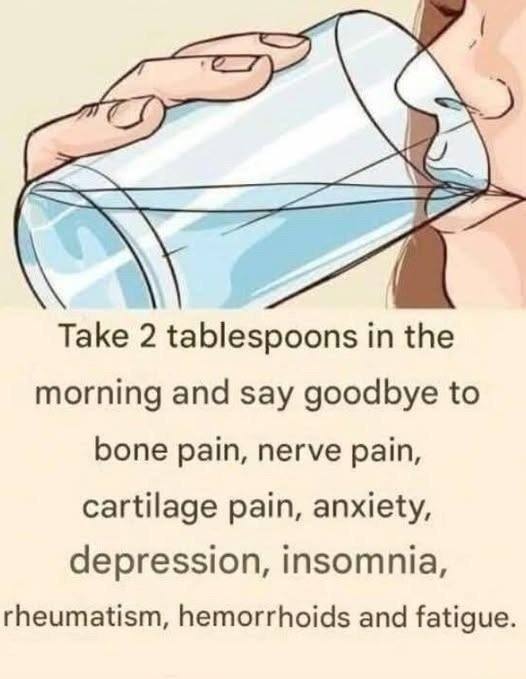
“Two Spoons in the Morning and Forget About Bone Pain, Diabetes, Nerves, and Depression?” Here’s the Truth Backed by Experts
Can “two spoons in the morning” really fix bone pain, diabetes, nerves, and depression? Discover the facts, safe habits, and what actually works.
☀️ The Viral Claim Everyone Is Talking About
“Just take two spoons every morning and say goodbye to bone pain, diabetes, nerve issues, and even depression.”
It sounds powerful. Simple. Almost too good to ignore.
But here’s the reality: no single food, supplement, or “two-spoon remedy” can cure or prevent multiple complex conditions at once.
If that feels disappointing, don’t worry—there are practical, science-backed ways to support your body. They just don’t come in miracle shortcuts.
Let’s unpack what this claim usually refers to, what doctors actually say, and how you can build a routine that genuinely supports your health.
🧠 Why These Claims Spread So Fast
The promise taps into something very real:
- Chronic pain is frustrating
- Managing blood sugar is hard
- Mental health struggles are personal
- People want simple solutions
That’s why “two spoons” remedies—often involving honey, oils, seeds, or herbal mixes—go viral. They offer hope in a quick, easy format.
But conditions like bone pain, diabetes, nerve health issues, and depression are complex and require individualized care.
⚠️ Important Reality Check (Backed by Experts)
Organizations like the Centers for Disease Control and Prevention and National Institutes of Health consistently emphasize:
There is no single food or home remedy that can treat or cure chronic diseases.
That doesn’t mean nutrition isn’t important—it absolutely is. But it works as part of a broader lifestyle, not as a standalone fix.
🥄 What Are “Two Spoons” Remedies Usually Made Of?
Most versions include combinations like:
- Honey
- Olive oil
- Flaxseeds or chia seeds
- Turmeric
- Apple cider vinegar
These ingredients do have beneficial properties—but let’s look at them realistically.
🌿 Do These Ingredients Have Benefits?
1. Honey
- Contains antioxidants
- Provides quick energy
👉 But it’s still sugar—important for people managing blood sugar levels.
2. Olive Oil
- Rich in healthy fats
- Supports heart health
👉 Often linked to Mediterranean-style diets.
3. Flaxseeds / Chia Seeds
- High in fiber
- Contains omega-3 fatty acids
👉 May support digestion and heart health.
4. Turmeric
- Contains curcumin (anti-inflammatory properties)
👉 Effects are modest and depend on absorption.
5. Apple Cider Vinegar
- May help with blood sugar response (in some cases)
👉 Needs to be diluted and used carefully.
⚖️ The Honest Breakdown: Benefits vs. Reality
✅ What “Two Spoons” Might Help With
- Adds nutrients to your diet
- Supports digestion (depending on ingredients)
- Encourages a consistent morning routine
❌ What It Will NOT Do
- Cure diabetes
- Eliminate chronic bone pain
- Repair nerve damage
- Treat depression
🧪 Real-Life Scenario: What Actually Makes a Difference
Case Example:
David, a 50-year-old from Illinois, started taking a morning mix of honey and flaxseed.
But here’s what really changed his health:
- He improved his diet overall
- Began walking daily
- Followed his doctor’s advice for blood sugar management
After several months, he felt better—but it wasn’t because of “two spoons alone.”
👉 It was the combination of habits.
💡 What Doctors Actually Recommend
Instead of focusing on quick fixes, healthcare professionals emphasize:
🦴 For Bone Health
- Adequate calcium and vitamin D
- Weight-bearing exercise
- Regular checkups
🩸 For Blood Sugar Management
- Balanced meals
- Portion control
- Monitoring glucose levels
🧠 For Nerve Health
- Proper nutrition (especially B vitamins)
- Managing underlying conditions
- Physical activity
🌿 For Mental Health
- Sleep quality
- Stress management
- Professional support when needed
🚫 Common Mistakes to Avoid
1. Replacing Medical Treatment
Natural remedies should never replace prescribed care.
2. Overconsuming “Healthy” Ingredients
Even healthy foods can cause issues in excess.
3. Believing One Solution Fits All
Every body is different.
🔄 2026 Health Trend: Moving Away from “Miracle Fixes”
There’s a growing shift toward:
- Evidence-based wellness
- Personalized health routines
- Sustainable lifestyle habits
People are becoming more aware that long-term health comes from consistency—not shortcuts.
🔮 Future Outlook: Smarter, Safer Wellness Choices
As access to information improves, more people are learning to:
- Question viral health claims
- Look for credible sources
- Focus on realistic, long-term strategies
This is a positive shift—and one that leads to better outcomes.
❓ FAQs (People Also Ask)
1. Can two spoons cure multiple health conditions?
No. There’s no scientific evidence supporting that.
2. Are these ingredients safe?
Generally yes, in moderation—but individual needs vary.
3. Can natural remedies replace medication?
No. Always follow your healthcare provider’s guidance.
4. Do these mixes have any benefits?
They can support nutrition but are not treatments.
5. Is honey safe for people with diabetes?
It should be consumed carefully and under guidance.
6. Can turmeric reduce pain?
It may help slightly, but it’s not a cure.
7. Should I try these remedies?
You can include them as part of a balanced diet—but not as a solution.
8. What’s the best approach to overall health?
Consistent, evidence-based habits tailored to your needs.
✅ Action Checklist
- Focus on balanced nutrition
- Stay physically active
- Get regular medical checkups
- Be cautious with viral health claims
- Build sustainable daily habits
The idea of “two spoons in the morning” fixing multiple health issues is appealing—but it’s not grounded in medical reality.
That doesn’t mean you’re powerless.
In fact, the most effective approach is also the most reliable: small, consistent, science-backed habits practiced daily.
No shortcuts. No hype. Just real progress.
There’s no miracle two-spoon remedy—but a balanced lifestyle can significantly support your overall health over time.
Have you come across viral health remedies like this?
Share your thoughts, save this guide for clarity, and pass it along to someone who values real, trustworthy health advice over quick fixes.