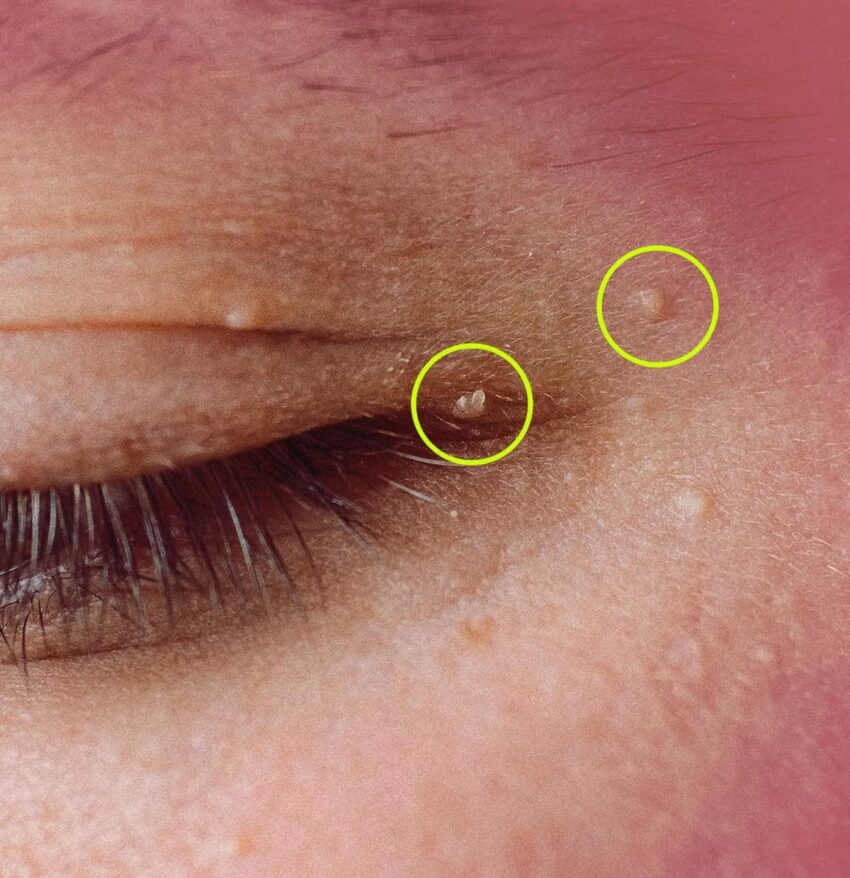
How to Get Rid of Milia (Those Tiny “Fat Cysts” on Your Skin) Safely and Effectively
Learn what causes milia, why they appear as small white bumps, and safe, dermatologist-approved ways to remove and prevent them.
When Tiny White Bumps Suddenly Show Up on Your Face
You’re getting ready in the mirror and notice them again—small, firm, white bumps around your eyes, cheeks, or nose.
They don’t hurt. They don’t itch. But they also don’t go away.
Naturally, you start wondering:
- Is this acne?
- Is it clogged pores?
- Why won’t they pop?
These stubborn little bumps are most likely milia.
And despite how they look, they are not pimples and not “fat cysts” in the way many people describe them online.
They are something simpler—but also something you should treat carefully.
Let’s break it down clearly so you know exactly what they are and how to handle them safely.
What Exactly Are Milia?
Milia are tiny, white or yellowish cysts that form when keratin (a protein in skin) becomes trapped under the surface.
They often appear as:
- Small, firm bumps
- White or pearl-like spots
- Non-inflamed and painless lesions
They commonly show up on:
- Under the eyes
- Cheeks
- Nose
- Forehead
- Sometimes even on the chest or genitals
Why Milia Are NOT Acne
This is where many people get confused.
Unlike acne:
- Milia are not caused by bacteria
- They are not infected pores
- They do not contain pus
- They do not respond to popping
Instead, they are trapped skin cells that formed a tiny cyst beneath the surface.
Trying to squeeze them often makes things worse.
Why Do Milia Form?
Milia can appear for several reasons:
1. Skin Cell Trapping
Dead skin cells don’t shed properly and become trapped under the skin.
2. Heavy Skincare Products
Thick creams or oils can block natural skin shedding.
3. Sun Damage
UV exposure can thicken skin and slow cell turnover.
4. Skin Injury
Burns, rashes, or irritation can trigger secondary milia.
5. Natural Aging
As skin renewal slows, milia become more common.
The Big Mistake Most People Make
Let’s be very clear:
❌ Do NOT try to squeeze milia at home.
Unlike pimples, milia are firm and sealed under the skin. Popping them can cause:
- Scarring
- Infection
- Skin damage
- Permanent marks
This is one of the most common skincare mistakes seen in dermatology clinics in the United States.
Safe Ways to Get Rid of Milia
Now let’s talk about what actually works.
1. Let Them Heal Naturally (Small or New Milia)
Many milia disappear on their own within weeks to months.
This is especially true if they are:
- Small
- Recent
- Not clustered
What helps:
- Gentle skincare
- Avoid heavy creams near the area
- Keep skin clean and hydrated
2. Gentle Exfoliation (Helps Prevention and Mild Cases)
Exfoliation helps skin shed dead cells properly.
Recommended options:
- Salicylic acid (BHA)
- Glycolic acid (AHA)
- Lactic acid (gentler option)
Use 2–3 times per week.
Important Tip
Over-exfoliating can irritate skin and worsen milia. Balance is key.
3. Retinoids (Dermatologist-Backed Option)
Topical retinoids help speed up skin cell turnover.
They may:
- Prevent clogged keratin buildup
- Improve skin texture
- Reduce recurrence
These include prescription or OTC retinol products.
4. Professional Extraction (Fastest Removal)
Dermatologists or licensed professionals can safely remove milia using a sterile tool.
What happens:
- Tiny opening is made in the skin
- Cyst is gently extracted
- Minimal downtime
This is the most effective immediate solution.
5. Light Chemical Peels (For Multiple Milia)
In some cases, chemical peels help:
- Remove dead skin buildup
- Improve overall texture
- Reduce new formation
What NOT to Do
Avoid these common mistakes:
- ❌ Popping with fingernails
- ❌ Using harsh scrubs
- ❌ Applying heavy oils on affected areas
- ❌ Using unapproved “DIY extraction tools”
These often make the problem worse.
Why Milia Often Appear Around the Eyes
The skin under your eyes is:
- Thin
- Sensitive
- Prone to buildup
- Easily irritated
Heavy eye creams are a common trigger.
Can Lifestyle Affect Milia?
Yes, indirectly.
Helpful habits include:
- Drinking enough water
- Using sunscreen daily
- Choosing non-comedogenic skincare
- Avoiding overly rich creams on the face
How to Prevent Milia From Coming Back
Simple prevention routine:
- Cleanse gently twice daily
- Use lightweight moisturizers
- Exfoliate 1–3 times weekly
- Apply sunscreen daily
- Avoid layering too many heavy products
Realistic Timeline for Removal
| Method | Time to See Results |
|---|---|
| Natural resolution | Weeks to months |
| Exfoliation | 2–6 weeks |
| Retinoids | 4–12 weeks |
| Professional extraction | Immediate |
When You Should See a Dermatologist
Seek professional help if:
- Milia are spreading quickly
- They are near the eyes and persistent
- You are unsure about the diagnosis
- Home care is not working after several months
Frequently Asked Questions
1. Are milia dangerous?
No, they are harmless and cosmetic.
2. Can I pop milia at home?
No, this can cause scarring and infection.
3. Why do I suddenly get milia?
They often appear due to skincare changes, sun exposure, or skin renewal slowdown.
4. Do milia go away on their own?
Yes, many do over time.
5. What is the fastest way to remove them?
Professional extraction by a dermatologist.
6. Are milia a type of acne?
No, they are completely different.
7. Can makeup cause milia?
Heavy or occlusive makeup can contribute in some cases.
8. Do children get milia?
Yes, especially newborns, but it usually resolves naturally.
Action Checklist
✔ Use gentle skincare daily
✔ Avoid heavy creams around eyes
✔ Exfoliate lightly and consistently
✔ Apply sunscreen every day
✔ Avoid picking or squeezing
✔ Consult a dermatologist if persistent
Conclusion: Small Bumps, Simple Solutions
Milia may look frustrating, but they are one of the most harmless skin conditions you can experience.
The key is patience and proper care—not aggressive treatment.
With the right routine, most people can reduce, prevent, and even eliminate them safely without damaging their skin.
Milia are small, harmless keratin cysts that usually improve with gentle skincare, exfoliation, or professional removal—not squeezing or harsh treatment.
If this helped you understand your skin better, feel free to share it—because sometimes the best skincare solution is simply knowing what you’re dealing with.