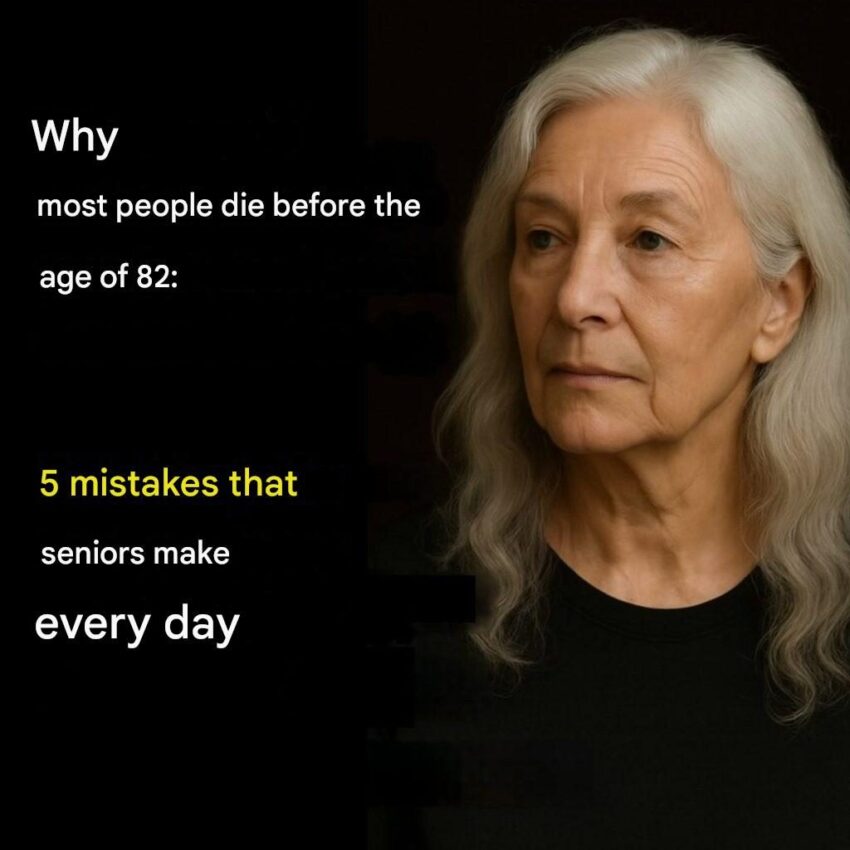
Why Many People Don’t Reach Their 80s: 5 Everyday Mistakes Older Adults Commonly Make (And How to Avoid Them) 🧠🏡
Discover five common daily habits that may affect healthy aging and longevity, plus expert-backed ways to support better energy, mobility, and well-being after 60.
Most people don’t think about aging in terms of daily habits.
It usually feels distant—something that happens “later.”
But doctors, geriatric specialists, and public health researchers often see a different pattern in real life: long-term health in later decades is rarely about one big factor. Instead, it’s shaped by small, repeated behaviors that quietly build up over years.
Not everyone who lives into their 80s does everything “right.” And not everyone who doesn’t reach that age did something wrong.
But there are patterns that show up often in studies of healthy aging across populations in the United States and globally.
Things like movement, nutrition, sleep, social connection, and medication habits all play a role in how people maintain independence and energy as they get older.
This article is not about fear or blame.
It’s about awareness—five everyday habits that may gradually impact quality of life in later years, and practical ways to adjust them for healthier aging.
Why This Topic Matters in the United States
According to the CDC, life expectancy in the U.S. has fluctuated in recent years due to a mix of lifestyle, chronic disease, and healthcare access factors. While many people live well into their 80s and beyond, the difference in healthspan—the years lived in good health—varies widely.
The key issue experts focus on is not just lifespan, but:
- Mobility in older age
- Independence in daily tasks
- Cognitive health
- Chronic disease management
Small daily habits often influence these outcomes more than people expect.
Mistake #1: Sitting for Long Periods Every Day
One of the most common patterns among older adults is reduced movement.
It often starts subtly:
- Watching more TV
- Sitting after meals longer
- Avoiding walks due to stiffness or habit
Over time, prolonged sitting can affect:
- Muscle strength
- Joint flexibility
- Circulation
- Energy levels
What experts suggest instead
You don’t need intense workouts.
Small movement changes matter:
- Stand up every 30–60 minutes
- Short 10–15 minute walks after meals
- Light stretching in the morning
Even low-impact activity supports mobility and balance.
Mistake #2: Eating Too Little Protein or Too Little Variety
Dietary patterns often shift with age. Appetite may decrease, cooking energy may drop, and meals can become repetitive.
A common issue is not just eating less—but eating less variety.
This may lead to:
- Reduced muscle maintenance
- Lower energy
- Slower recovery after illness or injury
What nutrition experts often recommend
A balanced plate becomes more important with age:
- Lean protein (eggs, fish, chicken, beans)
- Vegetables of different colors
- Healthy fats (olive oil, nuts)
- Whole grains in moderation
It’s not about strict diets—it’s about consistency and nutrient coverage.
Mistake #3: Ignoring Strength and Balance Exercises
Walking is good. But it doesn’t fully replace strength training.
As people age, muscle mass naturally declines—a process known as sarcopenia in medical literature.
Without resistance or balance work, this can affect:
- Stability
- Fall risk
- Daily independence (stairs, lifting, standing)
Simple improvements that make a difference
- Chair exercises
- Light resistance bands
- Standing on one foot (with support nearby)
- Gentle yoga or tai chi
These activities are widely recommended in senior fitness guidelines because they support balance and confidence in movement.
Mistake #4: Poor Sleep Quality Becoming “Normal”
Many older adults accept disrupted sleep as unavoidable.
But sleep changes are not always harmless.
Chronic poor sleep can influence:
- Mood stability
- Memory function
- Immune system support
- Blood pressure regulation
Common contributing factors
- Irregular sleep schedule
- Excess screen time at night
- Late caffeine intake
- Daytime inactivity
Practical improvements
- Consistent bedtime routine
- Morning sunlight exposure
- Reducing screens before bed
- Light daytime activity
Sleep quality is closely tied to overall health, not just rest.
Mistake #5: Social Isolation and Reduced Engagement
One of the most underestimated health factors in aging is social connection.
As people retire or experience life changes, social circles can shrink unintentionally.
Research from public health institutions and universities has consistently linked strong social engagement with better cognitive and emotional health outcomes.
Isolation may contribute to:
- Low mood
- Reduced motivation
- Cognitive decline over time
- Less physical activity
Healthy alternatives
- Community centers or local groups
- Walking with friends or neighbors
- Volunteering activities
- Regular family interaction
- Online communities for hobbies
Human connection plays a powerful role in daily well-being.
A Real-Life Scenario
Consider a typical retired individual living in a suburban U.S. neighborhood:
- Spends most of the day sitting
- Eats simple, repetitive meals
- Walks only occasionally
- Sleeps irregularly
- Sees others less frequently over time
None of these habits feel alarming day-to-day.
But together, they gradually affect energy, mobility, and overall health.
Now compare that to someone with similar age who:
- Walks daily
- Eats balanced meals
- Maintains light strength exercises
- Sleeps on a routine
- Stays socially active
The difference is not dramatic overnight—but it becomes meaningful over years.
Pros and Cons of Making Lifestyle Changes Later in Life
Pros
- Improved mobility
- Better energy levels
- Enhanced independence
- Improved mood and mental clarity
Cons
- Requires consistency
- Small effort to build new routines
- Progress may be gradual
The key takeaway: improvement is still possible at any age.
Common Mistakes People Make When Trying to “Age Better”
1. Trying to change everything at once
Small, consistent changes are more sustainable.
2. Relying only on supplements
Lifestyle habits matter more than isolated products.
3. Avoiding movement due to discomfort
Gentle movement often reduces stiffness over time.
4. Assuming decline is inevitable
Many aspects of aging are influenced by daily behavior.
Expert Insight on Healthy Aging
Organizations like the CDC and National Institute on Aging emphasize three core pillars:
- Regular physical activity
- Balanced nutrition
- Social engagement
These are consistently associated with better long-term outcomes—not as guarantees, but as supportive factors for healthier aging.
Simple Action Checklist
- Move every day, even lightly
- Include protein in meals
- Add balance or strength exercises weekly
- Maintain a consistent sleep routine
- Stay socially connected
FAQs
1. Are these habits guaranteed to affect lifespan?
No. They influence health and quality of life, not fixed outcomes.
2. Is it too late to change habits after 60?
No—benefits can still occur with gradual changes.
3. How much exercise is enough for older adults?
Even light daily movement is beneficial when consistent.
4. Do social activities really impact health?
Yes, research links social engagement with cognitive and emotional well-being.
5. What is the most important habit for aging well?
There isn’t one—it’s a combination of movement, diet, sleep, and connection.
6. Should older adults take supplements?
Only when recommended by healthcare providers based on individual needs.
7. Is slowing down with age normal?
Some changes are natural, but lifestyle still plays a major role.
8. Can small habits really make a difference?
Yes—consistency matters more than intensity.
Aging is not defined by one decision or one moment.
It is shaped quietly by thousands of small daily choices—how much we move, what we eat, how we sleep, and who we stay connected with.
The encouraging part is that these are not fixed patterns. They are habits, and habits can evolve at any stage of life.
Small adjustments today can support better energy, mobility, and independence in the years ahead.
Not to add fear—but to add awareness and control over how those years feel.
Healthy aging is less about avoiding a specific age and more about daily habits that support strength, connection, and consistency over time.
If this resonated with you, share it with someone who values healthy living—and start a conversation about the small habits that shape long-term well-being.