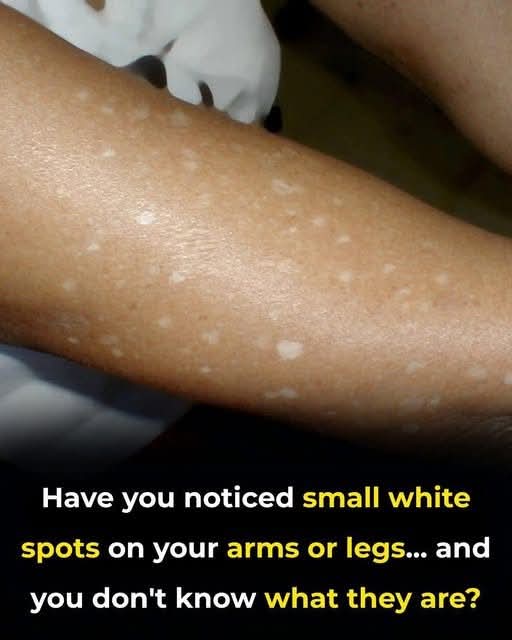
Small White Spots on Arms and Legs You Need to Know: Causes, Meaning, and What Experts Say
Small white spots on arms and legs can have several causes—from sun damage to skin conditions. Learn what they mean and when to seek care.
When Small White Spots Suddenly Appear
You’re getting dressed in the morning, and something catches your eye in the mirror.
Tiny white spots on your arms… maybe a few on your legs. They weren’t really noticeable before. Or maybe they were, but now they seem more visible.
Naturally, the questions start:
- What are these spots?
- Are they dangerous?
- Why are they showing up now?
In most cases, small white spots on the skin are not dangerous, but they can be confusing, especially when they appear without warning.
Dermatologists in the United States see this concern frequently, particularly among adults over 30 with long-term sun exposure.
This guide breaks everything down in a simple, honest way so you understand what might be happening—and what to do next.
What Small White Spots on Skin Usually Mean
White spots on arms and legs typically happen when melanin (your skin’s pigment) decreases in small patches.
This can happen for several reasons:
- Sun damage over time
- Mild skin inflammation or irritation
- Fungal overgrowth
- Natural aging changes
- Skin conditions affecting pigment production
The key point: white spots are a symptom, not a diagnosis.
Let’s explore the most common causes dermatologists look for.
1. Idiopathic Guttate Hypomelanosis (Sun-Related White Spots)
One of the most common causes in adults is a condition called
Idiopathic Guttate Hypomelanosis.
What it looks like:
- Small white or light-colored spots
- Usually 2–5 mm in size
- Most common on forearms, shins, and legs
- More noticeable in people with sun exposure history
Why it happens:
This condition is strongly linked to long-term sun exposure and aging skin. Over time, pigment cells in small areas become less active.
Who gets it:
- Adults over 40 (but can appear earlier)
- People who spend a lot of time outdoors
- Fair to medium skin tones, though it can affect anyone
Is it harmful?
No. It is cosmetic only, but it can increase with time.
What helps:
- Sunscreen (prevention is key)
- Moisturizers with barrier support
- Dermatologist treatments (if desired)
2. Fungal-Related Light Patches
Another possible cause is a common skin fungus called
Tinea Versicolor.
What it looks like:
- Light or white patches (sometimes slightly scaly)
- Can blend or spread slowly
- More noticeable after sun exposure
Where it appears:
- Upper arms
- Chest
- Back (less common on legs but possible)
Why it happens:
A naturally occurring yeast on the skin grows out of balance, affecting pigmentation.
Common triggers:
- Hot, humid weather
- Sweating
- Oily skin
Is it dangerous?
No, but it may require treatment.
Typical treatments:
- Antifungal creams
- Medicated washes
- Dermatologist-prescribed solutions
3. Pityriasis Alba (Often Seen in Younger People)
Another mild condition is
Pityriasis Alba.
What it looks like:
- Light, dry patches
- Slightly rough or scaly texture
- Often fades slowly over time
Who it affects:
- Children and teenagers
- Sometimes young adults with sensitive skin
Common locations:
- Upper arms
- Face
- Neck
Cause:
Often linked to mild eczema or skin dryness.
Treatment approach:
- Moisturizers
- Gentle skincare routines
- Sunscreen to reduce contrast
4. Vitiligo (Less Common but Important to Recognize)
A more widely known condition is
Vitiligo.
What it looks like:
- Clearly defined white patches
- Can grow or spread over time
- Often symmetrical
Common areas:
- Hands
- Arms
- Legs
- Face
Why it happens:
Vitiligo occurs when pigment-producing cells stop functioning.
Is it dangerous?
No, it is not physically harmful, but it can have emotional impact due to visibility.
Treatment options:
- Light therapy
- Topical medications
- Cosmetic camouflage
- Dermatologist support
5. Post-Inflammatory Hypopigmentation
Sometimes white spots appear after skin injury or irritation.
This is called post-inflammatory hypopigmentation.
Causes include:
- Acne
- Scratches
- Rashes
- Insect bites
- Eczema flare-ups
What happens:
After skin heals, pigment may temporarily decrease in that area.
Good news:
- Often temporary
- Pigment may return gradually over months
6. Keratosis Pilaris (White Bumpy Spots)
A very common condition in the U.S. is
Keratosis Pilaris.
What it looks like:
- Small rough bumps
- Sometimes white or skin-colored
- Feels like “chicken skin”
Where it appears:
- Upper arms (very common)
- Thighs
- Sometimes cheeks
Cause:
Blocked hair follicles due to keratin buildup.
Treatment:
- Moisturizers with urea or lactic acid
- Gentle exfoliation
- Consistent skincare routine
When White Spots Are NOT a Concern
In many cases, small white spots are harmless if:
- They are not spreading rapidly
- They are not itchy or painful
- Skin otherwise feels normal
- They remain stable over time
Often, they are simply a cosmetic variation in pigmentation.
When You Should See a Dermatologist
You should consider professional evaluation if:
- Spots are spreading quickly
- New patches appear suddenly
- Skin texture changes significantly
- You experience itching or discomfort
- You are unsure of the cause
A dermatologist can visually assess and, if needed, run simple tests.
Step-by-Step: What You Can Do at Home First
Step 1: Observe the Spots
Take note of:
- Size
- Color
- Location
- Changes over time
Step 2: Check Sun Exposure History
Ask yourself:
- Do I spend a lot of time outdoors?
- Do I use sunscreen regularly?
Step 3: Start Basic Skin Care
- Moisturize daily
- Use sunscreen (SPF 30+)
- Avoid harsh soaps
Step 4: Avoid Self-Diagnosing Harsh Treatments
Don’t use strong medications without guidance.
Step 5: Monitor for 2–4 Weeks
If changes continue, consult a dermatologist.
Common Mistakes People Make
1. Assuming All White Spots Are Vitiligo
Most are not.
2. Overusing Skin Bleaching Products
This can worsen uneven tone.
3. Ignoring Sun Protection
Sun exposure can make spots more visible.
4. Panic-Googling Symptoms
Online images often exaggerate worst-case scenarios.
Expert Tips Dermatologists Often Recommend
- Daily sunscreen prevents worsening contrast
- Moisturizing helps restore skin balance
- Gentle skincare is more effective than aggressive treatments
- Early evaluation prevents confusion and stress
Lifestyle Factors That May Influence Skin Pigmentation
- Sun exposure habits
- Skin dryness
- Sweating patterns
- Genetics
- Age-related changes
2026 Skincare Trends in the U.S.
- Barrier-repair skincare routines
- “Skin minimalism” (less product, more consistency)
- Increased awareness of sun protection year-round
- Dermatologist-backed skincare personalization
Future Outlook: Better Understanding, Less Fear
As skincare education improves in the U.S., more people are realizing:
- Not all skin changes are dangerous
- Pigmentation variation is normal
- Early awareness reduces anxiety
The trend is moving toward education over panic.
Frequently Asked Questions
1. Are small white spots on skin serious?
Most are harmless, but a dermatologist can confirm the cause.
2. Can vitamin deficiency cause white spots?
Some deficiencies may affect skin health, but they are not the most common cause.
3. Do white spots go away on their own?
Some do, especially after inflammation or mild irritation.
4. Is sun damage responsible for white spots?
Yes, especially in long-term exposure cases.
5. Can stress cause white spots?
Stress may worsen certain skin conditions but is rarely the sole cause.
6. Are white spots contagious?
Most causes are not contagious.
7. Can I treat white spots at home?
Basic skincare may help, but diagnosis matters first.
8. Do white spots spread?
Some conditions can spread; others remain stable.
9. Should I be worried about vitiligo?
It is not harmful but should be professionally evaluated.
10. What is the fastest way to improve skin appearance?
Sun protection and consistent moisturizing are key.
Action Checklist
- Observe your skin carefully
- Note any changes over time
- Use sunscreen daily
- Maintain gentle skincare
- Seek medical advice if unsure
Conclusion: Most White Spots Are Harmless—But Awareness Matters
Seeing small white spots on your arms or legs can be unsettling at first. But in most cases, they are simply the skin’s response to sun exposure, aging, or mild irritation—not something dangerous.
Understanding what’s happening removes fear and replaces it with clarity.
And in skincare, clarity is everything.
Small white spots are usually harmless, often common, and frequently treatable or manageable with simple skincare habits.
If you’ve noticed changes in your skin, share your experience or questions—real stories help others understand they’re not alone in this.