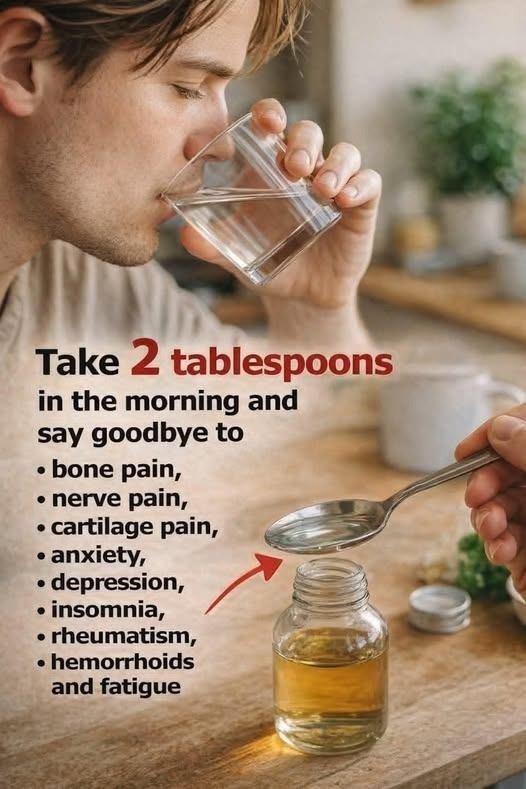
“Take 2 Tablespoons in the Morning?” The Truth About Viral Remedy Claims—and What Actually Helps Pain, Sleep, and Energy
A viral claim says 2 tablespoons can cure pain, anxiety, and insomnia. Here’s the truth, what may help, and safer daily habits backed by experts.
You’ve probably seen it before:
“Take 2 tablespoons every morning and say goodbye to bone pain, nerve pain, anxiety, depression, insomnia…”
It sounds simple. Almost too simple.
And that’s exactly the problem.
When one remedy claims to fix everything at once, it’s worth pausing—not out of skepticism for natural solutions, but out of respect for your health. Because bone pain, nerve pain, sleep issues, and mood disorders don’t all come from the same cause… and they rarely respond to a single fix.
Let’s unpack what’s really going on behind these viral claims—and more importantly, what actually works in real life.
Why These “2 Tablespoons” Claims Go Viral
These posts spread fast because they tap into real frustrations:
- Ongoing pain with no quick relief
- Sleep that never feels restorative
- Low energy that lingers all day
- The desire for something simple and natural
They offer a promise: one easy habit, total transformation.
But the human body is more complex than that.
The Honest Truth: One Remedy Can’t Fix Everything
Conditions like:
- Osteoarthritis (bone and cartilage pain)
- Neuropathy (nerve pain)
- Insomnia
- Depression
- Hemorrhoids
…all have different causes, different mechanisms, and different treatments.
No single food, drink, or “2 tablespoons” solution can realistically address all of them at once.
That doesn’t mean natural approaches are useless—it just means they need to be targeted, consistent, and realistic.
So What Are These “2 Tablespoons” Usually Referring To?
Most viral versions of this claim point to mixtures like:
- Olive oil + lemon juice
- Honey + apple cider vinegar
- Herbal infusions or seed oils
These ingredients can offer modest benefits, but they are supportive, not curative.
Let’s look at what they can do.
Potential Benefits (When Used Realistically)
1. Digestive Support
Some mixtures may:
- Stimulate digestion
- Reduce mild bloating
- Support gut regularity
2. Anti-Inflammatory Effects
Ingredients like olive oil contain compounds that may:
- Help reduce low-grade inflammation
- Support joint comfort over time
3. Mild Energy Boost
Natural sugars (like honey) can:
- Provide quick energy
- Help reduce morning sluggishness
4. Sleep Support (Indirect)
Better digestion and reduced inflammation can sometimes:
- Improve overall sleep quality
- Support relaxation
But this is indirect—not a cure for insomnia.
What Actually Helps These Conditions (Real-World Approach)
Instead of chasing a single fix, think in layers.
For Bone & Cartilage Pain
- Regular low-impact movement (walking, stretching)
- Adequate calcium and vitamin D
- Strength training for joint support
For Nerve Pain
- Blood sugar management
- Physical therapy
- Medical evaluation if persistent
For Anxiety & Depression
- Consistent sleep routine
- Sunlight exposure
- Therapy or counseling when needed
Organizations like Harvard University emphasize that mental health conditions require multi-factor support, not quick fixes.
For Insomnia
- Fixed sleep schedule
- Reduced screen time at night
- Limiting caffeine
For Fatigue
- Hydration
- Balanced meals
- Regular movement
A More Realistic Morning Routine (That Actually Helps)
If you like the idea of a morning ritual, here’s a balanced approach:
Step-by-Step
- Drink a glass of water
- Optional: 1 tablespoon olive oil or a simple natural mix
- Light stretching (5–10 minutes)
- Get natural light exposure
- Eat a balanced breakfast
This supports your body without unrealistic expectations.
Real-Life Scenario
A 68-year-old man tried a viral “2 tablespoons” remedy for joint pain and sleep issues.
After weeks, there was little change.
What finally helped?
- Daily 20-minute walks
- Improved sleep routine
- Reducing late-night screen use
The result: better sleep, less stiffness, and more energy.
Not instant—but real.
Pros and Cons of These Remedies
Pros
- Easy to try
- Low cost
- Can support general wellness
Cons
- Overhyped claims
- Not condition-specific
- May delay proper treatment
- Results are often minimal
Common Mistakes to Avoid
- Expecting immediate results
- Replacing medical care with home remedies
- Overconsuming mixtures
- Ignoring underlying causes
Expert Insight
Health improvements rarely come from one dramatic change.
They come from:
- Small habits
- Repeated consistently
- Over time
That’s less exciting—but far more effective.
2026 Trend: Moving Away from “Miracle Fixes”
There’s a growing shift toward:
- Evidence-based wellness
- Personalized routines
- Sustainable habits
People are becoming more aware that quick fixes rarely last.
FAQs (People Also Ask Style)
1. Can 2 tablespoons of anything cure multiple conditions?
No. It may support health, but not cure complex conditions.
2. Are natural remedies useless?
Not at all—they’re helpful when used appropriately.
3. Is olive oil in the morning beneficial?
It can support digestion and heart health in moderation.
4. Can this help with depression?
No single remedy replaces proper mental health care.
5. What about joint pain relief?
Movement, nutrition, and medical guidance are key.
6. Is it safe to try these mixtures?
Generally yes, in small amounts—but check for allergies or conditions.
7. Why do these claims feel convincing?
They promise simple solutions to complex problems.
8. Can I include this in my routine?
Yes—as a supplement, not a solution.
9. When should I see a doctor?
If symptoms are persistent or worsening.
10. What’s the best long-term strategy?
Consistent, balanced lifestyle habits.
Action Checklist
- ✔ Be cautious of “miracle cure” claims
- ✔ Focus on consistent daily habits
- ✔ Use natural remedies as support—not replacement
- ✔ Monitor your body’s response
- ✔ Seek professional advice when needed
The idea of fixing pain, sleep, mood, and energy with just “2 tablespoons” is appealing.
But real health doesn’t work that way.
Your body isn’t looking for shortcuts—it’s responding to patterns.
And the patterns that matter most are the ones you repeat every day.
There’s nothing wrong with simple natural habits.
Just don’t expect them to do everything.
Real progress comes from combining small, realistic actions—and sticking with them long enough to matter.
Have you tried any of these remedies? Did they help—or fall short? Share your experience below and join the conversation.