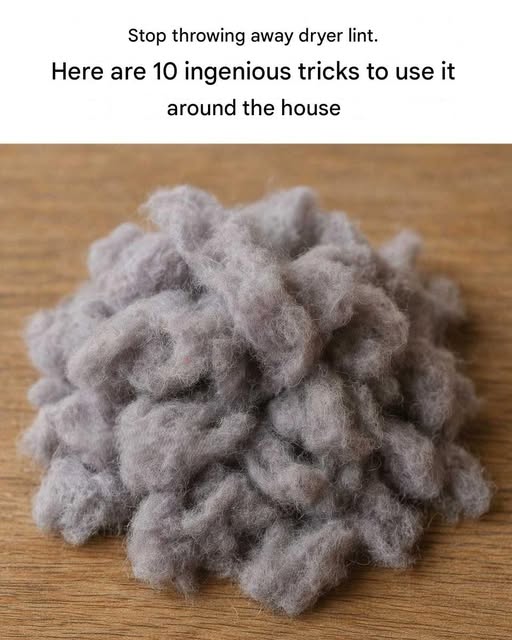
Stop Throwing Away Dryer Lint! 10 Ingenious Ways to Reuse It Around Your Home ♻️🏡
Discover 10 practical and creative ways to reuse dryer lint at home, from fire starters to cleaning hacks, and reduce household waste easily.
Most people don’t think twice about it.
You clean out the lint trap after doing laundry, glance at that fluffy gray pile, and throw it straight into the trash.
Done.
But what if that “waste” actually had more uses than you’d expect?
Dryer lint is one of those overlooked household materials that quietly builds up every week in almost every home in the United States. And while it may look like dust, it’s actually a mix of natural fibers like cotton and wool, making it surprisingly useful in practical, everyday ways.
Of course, safety matters here. Not all lint is suitable for reuse (especially if it comes from synthetic fabrics or dryer sheets), but when handled properly, it can be repurposed in simple, resourceful ways.
Let’s explore how something most people throw away without thinking can actually be reused around the house in smart, eco-friendly ways.
Before You Reuse Dryer Lint: Safety First ⚠️
Not all lint is equal.
Before using it, keep these points in mind:
- Only use lint from natural fibers (cotton, wool, linen) when possible
- Avoid lint mixed with dryer sheets or synthetic-heavy fabrics for fire-related uses
- Store lint in a dry, sealed container
- Never use near open flames unless specifically intended as fire starter material
A little caution goes a long way.
10 Ingenious Uses for Dryer Lint
1. Natural Fire Starters 🔥
One of the most common and practical uses.
Dryer lint catches fire easily, making it useful for:
- Campfires
- Fire pits
- Wood stoves
How to use:
Place lint inside an empty cardboard toilet paper roll and twist the ends.
It lights quickly and helps kindling burn more efficiently.
2. Compost Booster (in small amounts) 🌱
If your lint is from natural fabrics, it can sometimes be added to compost in tiny quantities.
Why it works:
- Adds carbon-rich material
- Breaks down over time
Important:
Avoid synthetic lint—only natural fibers should be used.
3. Packing Material 📦
Instead of bubble wrap or foam, lint can cushion fragile items.
Best for:
- Shipping small household items
- Storing ornaments
- Filling gaps in boxes
It’s soft, lightweight, and reusable.
4. Homemade Paper-Making Material 📝
Dryer lint can be blended into recycled paper projects.
Use it for:
- DIY craft paper
- Handmade greeting cards
- Art projects
It adds texture and a handmade look.
5. Pet Bedding Filler 🐾
In small controlled amounts, lint can be used as stuffing material.
Suitable for:
- Pet beds
- Toy stuffing (for non-chewers)
- Craft pet projects
Caution:
Only use clean, chemical-free lint.
6. Cleaning Dust Collector 🧽
Dryer lint is naturally fluffy and slightly sticky, making it useful for dusting tight spaces.
Use it to:
- Reach corners
- Clean blinds
- Wipe baseboards
It acts like a disposable dust cloth.
7. Garden Mulch Additive 🌿
When mixed properly, natural lint can help retain moisture in soil.
Benefits:
- Helps soil retain water
- Adds organic material
- Slowly decomposes
Warning:
Use sparingly and avoid synthetic fibers completely.
8. Homemade Stuffing for Crafts 🧸
Crafters often use lint as a free stuffing material.
Perfect for:
- Handmade dolls
- Cushion repairs
- Soft toy projects
It’s lightweight and easily shaped.
9. Oil Spill Absorber (Small Scale) 🛢️
Lint is highly absorbent.
Use it for:
- Small kitchen spills
- Garage oil drips
- DIY cleanup tasks
It absorbs liquids quickly before disposal.
10. Emergency Kindling Backup 🏕️
If you ever need to start a fire quickly, lint can be a backup ignition source.
Why it helps:
- Burns fast
- Ignites easily
- Works even in slightly damp conditions when combined with wax or paper
Real-Life Example
Imagine a typical household in the U.S.:
Laundry is done 3–4 times per week.
That means:
- A small handful of lint each time
- Nearly a jar full of lint per month
Instead of throwing it away, that lint could be used for:
- Outdoor fire starters during camping trips
- DIY crafts with kids
- Packaging fragile holiday decorations
Small waste becomes small usefulness.
Pros and Cons of Reusing Dryer Lint
Pros
- Reduces household waste
- Free and readily available
- Useful in crafts and outdoor activities
- Supports recycling mindset
Cons
- Not all lint is safe for reuse
- Can contain chemicals from dryer sheets
- Not suitable for food-related uses
- Requires proper storage
Common Mistakes People Make
1. Using all lint blindly
Synthetic fibers should not be used for compost or fire.
2. Storing it in damp areas
Moist lint can develop odor or mold.
3. Overusing it in compost
Too much lint can slow decomposition.
4. Using it near flames without preparation
Loose lint burns too fast and can be unsafe if uncontrolled.
Expert Eco-Friendly Insight
Sustainability experts often highlight small household changes like this as part of “micro-recycling.”
While dryer lint alone won’t solve waste issues, it reflects a broader idea:
- Reducing landfill waste
- Reusing everyday materials
- Rethinking “trash” as potential resource
These habits collectively make a meaningful environmental difference over time.
FAQs
1. Is dryer lint safe to reuse?
Yes, depending on its source and how it is used.
2. Can I compost dryer lint?
Only if it comes from natural fibers and is chemical-free.
3. Is lint flammable?
Yes—very flammable, which is why it works as a fire starter.
4. Can I store lint long-term?
Yes, in a dry, sealed container.
5. Is dryer lint biodegradable?
Natural lint is biodegradable; synthetic lint is not.
6. Can it be used for insulation?
Not recommended for home insulation purposes.
7. Is it safe for pets?
Only in controlled craft use, not ingestion or free roaming.
8. What’s the safest use overall?
Fire starters and packing material are most common.
What we call “waste” is often just a material without a purpose yet.
Dryer lint is a perfect example—something most people discard daily without realizing it can still be useful in simple, practical ways.
From fire starters to crafts to cleaning hacks, small changes like this encourage a more mindful and resourceful way of living.
Not everything needs to be thrown away immediately.
Sometimes, it just needs a second purpose.
Dryer lint can be safely reused in multiple household and outdoor applications, including fire starters, packing material, cleaning, and crafting—helping reduce waste and encourage smarter home habits.
If this gave you a new way of thinking, share it with someone who does laundry every week—and challenge them to save their lint for one month and see what they can do with it.