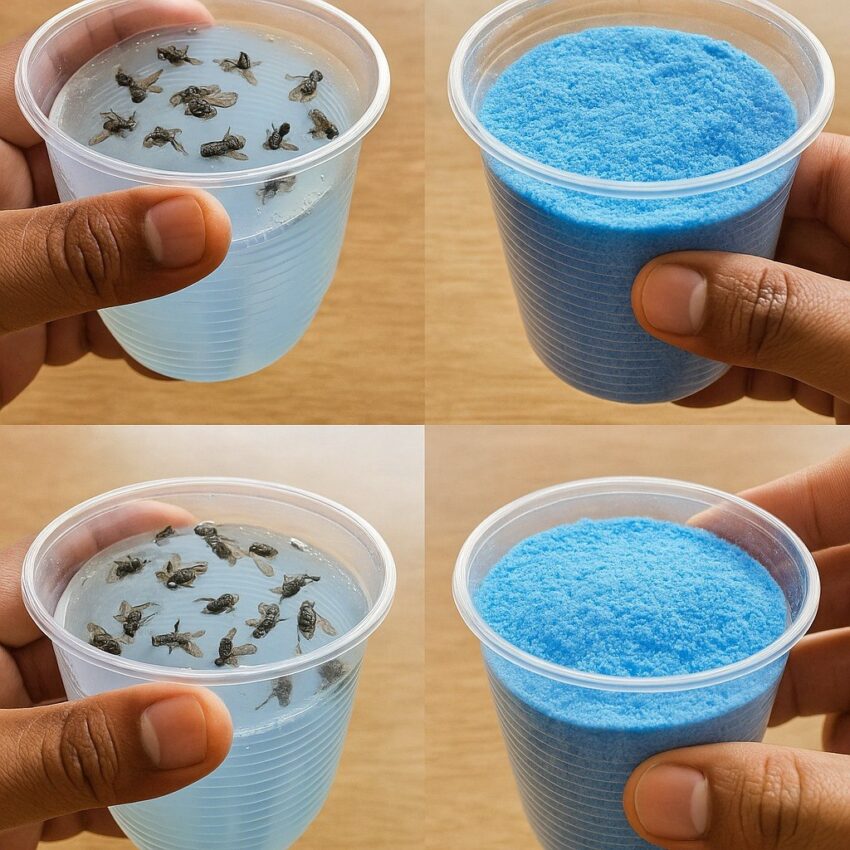
🪰 Not a Fly Will Be Left Behind: A Simple, Powerful DIY Trap to Catch Insects Fast (US Home Guide)
Discover a simple DIY insect trap that actually works. Learn how to catch flies fast using safe household ingredients and proven home strategies.
🪰 The Summer Problem No One Escapes: Flies That Just Won’t Leave
If you’ve ever lived through a warm summer afternoon in the United States—with the windows open, food on the counter, and a single fly suddenly turning into ten—you already know the frustration.
One moment everything feels calm. The next, there’s that constant buzzing that follows you from kitchen to living room like it has personal plans for your day.
You swat. It dodges.
You spray. It disappears… then returns like nothing happened.
And somehow, no matter how clean your home is, flies still show up.
Here’s the truth most homeowners eventually realize:
👉 You don’t need harsh chemicals or expensive pest control for most fly problems.
👉 You need a smarter attraction + trapping system.
This guide walks you through a simple, highly effective DIY fly trap that uses everyday household ingredients—plus the behavioral science behind why it works so well.
By the end, you’ll understand not just how to catch flies, but why they keep coming in the first place.
🧠 Why Flies Are Such a Persistent Problem in American Homes
Before jumping into solutions, it helps to understand what you’re dealing with.
Houseflies are not random visitors. They are guided by strong survival instincts tied to:
- Food odors
- Moisture sources
- Warm temperatures
- Organic waste
According to environmental health insights referenced by agencies like the U.S. Environmental Protection Agency, flies are naturally drawn to decomposing organic matter and sugary or protein-rich food sources.
That means your kitchen—no matter how clean—can still accidentally signal “food available.”
Common attractants include:
- Fruit on countertops
- Trash bins without tight lids
- Dirty dishes in the sink
- Pet food bowls
- Compost bins
Understanding this is key because the trap only works when you think like a fly, not like a human.
🪰 The Simple DIY Fly Trap That Actually Works
This method is effective, low-cost, and safe for households.
It works because it uses attraction science + escape prevention.
🧪 What You’ll Need (Household Ingredients)
- 1 small glass jar or cup
- ½ cup apple cider vinegar (120 ml)
- 1 tablespoon dish soap (15 ml)
- 1 tablespoon sugar (optional boost)
- Plastic wrap or paper funnel
- Toothpick or fork (for holes)
🪤 Why These Ingredients Work
Each component plays a psychological role in trapping flies:
🍎 Apple Cider Vinegar
Mimics fermenting fruit—a major fly attractant.
🍬 Sugar
Enhances scent strength, increasing attraction radius.
🧼 Dish Soap
Breaks surface tension so flies sink instead of escaping.
🫙 Container Shape
Helps concentrate odor and guide entry.
This combination creates a “false food source” flies cannot resist.
🧭 Step-by-Step: How to Build the Fly Trap
🪰 Step 1: Prepare the Liquid Base
In a jar or cup, mix:
- Apple cider vinegar
- Sugar (optional but recommended)
- Dish soap
Stir gently.
👉 The goal is not foam—it’s scent distribution.
🪰 Step 2: Create the Entry System
Choose one method:
Option A: Plastic Wrap Method
- Cover jar tightly with plastic wrap
- Secure with rubber band
- Poke 5–8 small holes
Option B: Funnel Method
- Roll paper into cone shape
- Place narrow end down into jar
- Leave a small opening at bottom
🪰 Step 3: Place Strategically
Location matters more than people realize.
Best placement spots:
- Near kitchen trash bin
- Close to fruit bowls
- Near windows or entry points
- Patio doors or garage areas
Avoid placing it directly in strong airflow (fans or vents reduce effectiveness).
🪰 Step 4: Wait and Observe
Within hours, flies begin entering the trap.
They:
- Detect scent
- Enter through holes
- Become disoriented
- Cannot escape due to liquid surface tension
It’s simple—but extremely effective.
🏡 Real-Life Example: Why This Works So Well
A homeowner in Texas noticed persistent flies every summer despite cleaning daily.
After switching from sprays to this DIY trap:
- Fly activity dropped significantly within 48 hours
- Kitchen remained fly-free for days at a time
- No chemical odor indoors
- Reduced need for repeated cleaning cycles
The key difference wasn’t cleanliness—it was behavioral attraction control.
⚖️ Pros and Cons of DIY Fly Traps
✔️ Pros
- Extremely low cost
- Safe for kids and pets (when placed correctly)
- No toxic chemicals
- Easy to set up in minutes
- Highly effective for small infestations
❌ Cons
- Requires regular replacement
- Less effective for severe infestations
- Needs proper placement strategy
- Works best indoors or semi-enclosed areas
⚠️ Common Mistakes (And How to Fix Them)
❌ Mistake 1: Using Too Much Soap
Fix: Only 1 tablespoon is needed—too much reduces attraction.
❌ Mistake 2: Poor Placement
Fix: Move trap closer to food sources or entry points.
❌ Mistake 3: Using Plain Water
Fix: Always use fermented scent (vinegar or fruit base).
❌ Mistake 4: Not Refreshing Trap
Fix: Replace every 3–5 days for best results.
🧠 Expert Tips Most People Don’t Know
🔥 1. Add Fruit Peels for Stronger Attraction
Banana or apple peels increase effectiveness significantly.
🌬️ 2. Reduce Competing Smells
Don’t place traps near strong cleaning chemicals—they repel flies.
🪟 3. Control Entry Points First
Even the best trap works better when windows and doors are sealed properly.
🧊 4. Use Multiple Traps in Larger Homes
One trap rarely covers an entire kitchen or open space.
📊 2026 Trend: Smarter, Chemical-Free Pest Control
Across U.S. households, there is a growing shift toward:
- Natural pest control solutions
- Reduced chemical exposure indoors
- DIY household science hacks
- Eco-friendly home maintenance
According to home improvement trend analyses from platforms like Forbes, consumers are increasingly prioritizing low-toxicity home solutions over traditional sprays.
This makes DIY traps not just a hack—but part of a broader lifestyle shift.
🔮 Future Outlook: The Rise of Behavioral Pest Control
The future of home pest management is moving toward:
- Attraction-based traps
- Smart monitoring systems
- Non-toxic deterrent design
- Environmentally safe solutions
Instead of “killing pests,” the goal is becoming:
👉 Redirecting and controlling behavior naturally
❓ FAQs (People Also Ask Style)
1. What attracts flies the most in a house?
Food odors, especially fruit, trash, and organic waste.
2. Does apple cider vinegar really kill flies?
It attracts them; dish soap is what actually traps them.
3. How long does a DIY fly trap last?
Typically 3–5 days before needing replacement.
4. Where should I place a fly trap indoors?
Near kitchens, trash bins, and entry points.
5. Why are flies still in my house after cleaning?
They may be coming from drains, trash, or outdoor entry points.
6. Can I use white vinegar instead?
Apple cider vinegar works better due to stronger scent attraction.
7. Are DIY fly traps safe for pets?
Yes, when placed out of reach.
8. How quickly does the trap work?
Often within a few hours.
🧾 Action Checklist Summary
- Prepare vinegar-based mixture
- Add dish soap correctly
- Choose proper container
- Place near attractant zones
- Refresh every few days
- Use multiple traps if needed
Flies may be small, but their presence can completely disrupt the comfort of your home.
The good news? You don’t need complicated solutions or harsh chemicals to take control.
This simple DIY fly trap works because it aligns with natural insect behavior—not against it.
And once you understand that principle, you’re not just solving a fly problem… you’re learning how to make your home naturally less inviting to pests in the first place.
A simple vinegar-based trap, when placed correctly, can significantly reduce indoor flies by using attraction science and safe household ingredients—no chemicals required.
Have you tried DIY fly traps before? Did they work in your home?
Share your experience, pass this guide along to someone dealing with flies, and explore more natural home solutions that actually work 🪰✨