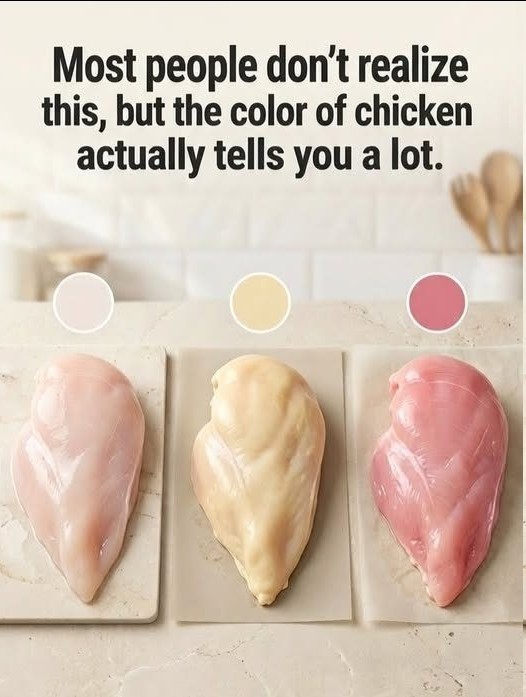
What Chicken Color Really Means: 7 Truths Most Americans Still Get Wrong About Quality
Does chicken color reveal quality or safety? Discover 7 expert-backed truths about chicken color, freshness, and what really matters before you buy.
The Moment That Makes You Question Everything
You’re standing in the grocery store, staring at two packages of chicken.
One is pale pink. The other is a deeper yellowish hue.
They look… different. And suddenly, doubt creeps in.
Is one fresher? Healthier? Safer? Better quality?
If you’ve ever hesitated in that exact moment, you’re not alone. Across the United States, millions of shoppers unknowingly use color as a shortcut for quality—even though it’s one of the most misunderstood signals in food buying.
And here’s the surprising truth: chicken color alone tells you far less than you think—and sometimes, it can even mislead you.
This guide breaks down exactly what chicken color does mean, what it doesn’t, and how to confidently choose the best chicken every time you shop.
Why This Topic Matters More Than You Think (Especially in the U.S.)
Chicken is one of the most consumed proteins in America. According to data from the United States Department of Agriculture, the average American eats over 100 pounds of chicken per year.
That means even small misunderstandings—like judging quality by color—can impact:
- Food safety decisions
- Grocery spending habits
- Nutrition choices
- Cooking outcomes
In a country where supermarket options vary widely—from organic and free-range to conventional and air-chilled—visual cues can be confusing without the right knowledge.
The Big Myth: “Darker or Yellower Chicken Is Better”
Let’s clear this up immediately:
Chicken color is NOT a reliable indicator of quality, safety, or freshness.
It can tell you something—but not what most people assume.
Here’s why.
What Actually Determines Chicken Color
1. Diet of the Chicken
This is the #1 factor.
Chickens that eat corn or marigold-rich feed often develop:
- Yellow fat
- Slightly yellow skin
Chickens on a wheat or soy diet tend to look:
- Pale pink
- Less yellow
Important: Neither is inherently better. It’s just diet.
2. Breed and Genetics
Some chicken breeds naturally produce:
- Darker meat tones
- More pigmented skin
This has nothing to do with freshness or safety.
3. Processing Methods
In the U.S., processing techniques vary:
- Air-chilled chicken often appears darker and firmer
- Water-chilled chicken can look lighter due to moisture absorption
This affects appearance—but also texture and taste slightly.
4. Oxygen Exposure
Fresh chicken can change color based on air exposure:
- Bright pink → freshly cut
- Slightly dull → normal oxidation
This is similar to how beef changes color.
5. Freezing and Thawing
Previously frozen chicken may appear:
- Slightly grayish
- Uneven in tone
This doesn’t automatically mean it’s bad—but it does affect texture.
What Chicken Color Does NOT Tell You
Let’s eliminate the biggest misconceptions:
| Assumption | Reality |
|---|---|
| Yellow chicken is healthier | ❌ Not necessarily |
| Pale chicken is low quality | ❌ Often completely normal |
| Darker color means fresher | ❌ Can be misleading |
| Color indicates safety | ❌ Absolutely not |
Bottom line: Color is a visual trait, not a quality guarantee.
How to Actually Tell If Chicken Is Fresh (Step-by-Step)
Instead of relying on color, use this proven checklist:
1. Check the Smell
Fresh chicken should have:
- Little to no odor
Avoid if:
- Sour or sulfur-like smell
2. Feel the Texture
Fresh chicken:
- Slightly moist
- Not sticky or slimy
Sliminess is a strong warning sign.
3. Look at the Packaging
Check for:
- Excess liquid (can indicate breakdown)
- Tight, intact seal
4. Check the Date
Always review:
- Sell-by date
- Use-by date
Don’t rely on appearance alone.
5. Observe Color (But Carefully)
Safe chicken can be:
- Light pink
- Slightly yellow
- Even mildly grayish (if fresh and properly stored)
Real-Life Scenario: A Common Grocery Store Mistake
A shopper in Texas once chose yellow-skinned chicken over a pale one, assuming it was “more natural.”
But the truth?
- The yellow chicken came from corn-fed poultry
- The pale one was organic, air-chilled, and fresher
The decision was based on visual bias—not actual quality indicators
This happens more often than most people realize.
Pros and Cons of Using Color as a Guide
Pros
- Quick visual comparison
- Can hint at diet or processing
Cons
- Easily misleading
- Doesn’t reflect safety
- Doesn’t indicate freshness
- Influenced by multiple variables
Conclusion: Color should be your last consideration—not your first.
Expert Tips Most Shoppers Don’t Know
✔ Tip 1: Look for Air-Chilled Labels
Air-chilled chicken:
- Has better texture
- Retains natural flavor
- Contains less water
✔ Tip 2: Organic Doesn’t Mean Yellow
Organic chicken can be:
- Pale or yellow
- Depends on feed—not certification
✔ Tip 3: Packaging Matters More Than Color
Vacuum-sealed or well-packed chicken:
- Lasts longer
- Maintains better quality
✔ Tip 4: Trust Your Nose Over Your Eyes
Smell is a far more accurate indicator than color.
Common Mistakes Americans Still Make
- Judging quality based on color alone
- Assuming yellow chicken is “farm fresh”
- Ignoring smell and texture
- Overlooking processing labels
- Confusing thawed appearance with spoilage
Avoid these, and your food decisions instantly improve.
2026 Trends: How Chicken Buying Is Changing
The U.S. poultry market is evolving rapidly.
Key trends:
- Increased demand for air-chilled chicken
- Growth in antibiotic-free labeling
- More transparency in sourcing
- Consumer education around food myths
Organizations like the Food Safety and Inspection Service are also emphasizing proper handling over visual judgment.
Future Outlook: Smarter Food Choices Ahead
As awareness grows, consumers are shifting from:
“What looks good?” → “What is actually better?”
Expect future grocery experiences to include:
- More labeling transparency
- QR codes for sourcing info
- Better education on freshness indicators
Color-based assumptions will likely fade—but only if awareness continues to grow.
Quick Action Checklist
Before buying chicken, remember:
- ✔ Ignore color as a primary factor
- ✔ Check smell (if possible)
- ✔ Look at packaging integrity
- ✔ Verify sell-by dates
- ✔ Choose trusted brands
- ✔ Understand labeling (organic, air-chilled, etc.)
Frequently Asked Questions (People Also Ask)
1. Is yellow chicken better than white chicken?
No. The color usually reflects diet, not quality or safety.
2. Why is my chicken gray?
It may be due to oxidation or freezing. Check smell and texture before discarding.
3. Does chicken color affect taste?
Slightly—diet and processing can influence flavor, but not dramatically.
4. Is pale chicken unhealthy?
Not at all. Pale chicken is completely normal in many cases.
5. Can chicken be safe even if it looks different?
Yes. Always rely on smell, texture, and storage conditions.
6. What color should raw chicken be?
Typically light pink, but variations are normal.
7. Why does organic chicken sometimes look different?
Because of feed and processing—not necessarily quality differences.
8. Is frozen chicken lower quality?
Not necessarily, but it may have texture changes after thawing.
9. Does packaging liquid mean it’s bad?
Not always—but excessive liquid can indicate breakdown.
It’s easy to trust what we see—especially in something as visual as food.
But when it comes to chicken, color is one of the least reliable indicators you can use.
Real quality comes down to:
- Proper handling
- Freshness
- Storage
- Processing methods
Once you understand that, grocery shopping becomes simpler—and smarter.
Chicken color can mislead you. Freshness, smell, texture, and proper labeling tell the real story.
Next time you’re in the grocery store, pause for a moment.
Look beyond the color.
Use what you’ve learned here—and make a more confident choice.
If this changed how you shop, share your experience below.
Did you used to judge chicken by color? What surprised you most?
Your insights might help someone else make better decisions too.