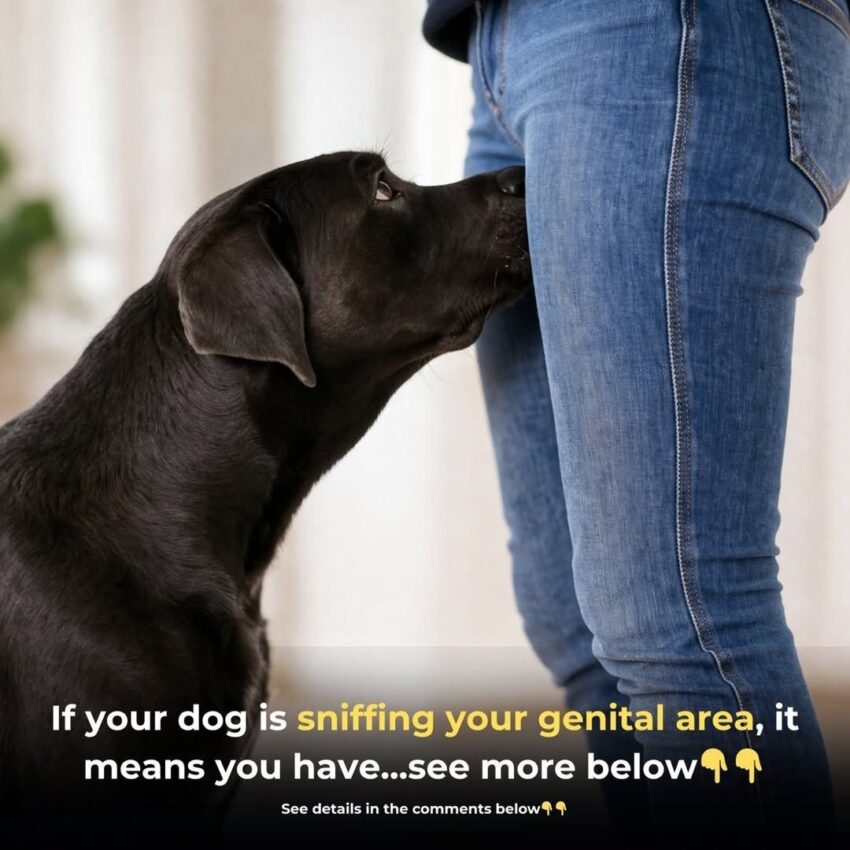
Why Dogs Sniff Your Genital Area: 9 Real Reasons Behind the Behavior (It’s Not What You Think)
Wondering why your dog sniffs your private area? Discover the real reasons behind this behavior, what it means, and how to respond appropriately.
That awkward moment every dog owner experiences
You’re standing there—maybe talking to a friend or greeting someone—and suddenly your dog goes straight for your crotch.
It’s embarrassing.
It feels invasive.
And it can make you wonder: “Does this mean something is wrong with me?”
Short answer: No. It doesn’t mean you have a disease or any hidden condition.
What it does mean is actually much simpler—and a lot more fascinating.
Why Dogs Sniff That Area in the First Place
Dogs experience the world through scent in a way humans simply can’t.
While we rely on sight, dogs rely on smell—heavily.
They have up to 300 million scent receptors (humans have about 5–6 million), and their brains are wired to analyze smells in incredible detail.
9 Real Reasons Your Dog Sniffs Your Genital Area
1. It’s a Concentration of Scent Glands
The human body has apocrine sweat glands in areas like:
- Armpits
- Groin/genital region
These glands release scent compounds that are especially strong and unique.
To a dog, this area is basically a “high-information zone.”
2. They’re Gathering Information About You
Dogs can pick up on:
- Your identity
- Emotional state
- Hormonal changes
That quick sniff is like reading a detailed profile about you.
3. You Smell Different Than Usual
Dogs may be more interested if:
- You just exercised
- You’re on your period
- You recently had sex
- You used new hygiene products
Any change = more curiosity.
4. Hormonal Changes Catch Their Attention
Dogs are surprisingly sensitive to hormones.
They may notice:
- Ovulation
- Menstruation
- Pregnancy
But this does not mean anything is wrong—just that your scent profile changed.
5. It’s Normal Greeting Behavior
Dogs often greet each other by sniffing the rear or genital area.
When they do it to humans, they’re just applying the same social rule.
To them, it’s completely normal—not inappropriate.
6. Height Makes It Convenient
Especially for medium or large dogs, your genital area is:
- At nose level
- Easy to access
So they go for the most informative spot without thinking twice.
7. They’re Curious (Not Judgmental)
Dogs don’t attach social meaning to this behavior.
They’re not:
- Trying to embarrass you
- Detecting something “bad”
- Making assumptions
They’re just curious.
8. Attention-Seeking Behavior
If your reaction is strong (laughing, yelling, pushing them away), your dog may learn:
“This gets a response!”
And repeat it.
9. They Might Detect Subtle Health Changes (But Not Reliably)
Dogs can sometimes detect certain illnesses through scent, and research has explored this in fields like cancer detection.
However:
- This requires special training
- Casual sniffing is not a diagnosis tool
So no—your dog sniffing you does not mean you have a disease.
Why This Myth Exists
The idea that “dogs sniff you = something is wrong” likely comes from:
- Stories about trained medical detection dogs
- Misinterpretation of natural behavior
- General discomfort leading to overthinking
It’s understandable—but not accurate.
How to Handle It (Without Making It Weird)
If you want to reduce or stop the behavior:
1. Stay Calm
Big reactions reinforce the behavior.
2. Redirect Immediately
Guide your dog to:
- Sit
- Fetch a toy
- Move away
3. Reinforce Good Behavior
Reward them when they:
- Greet appropriately
- Stay calm around guests
4. Train Basic Commands
Commands like:
- “Sit”
- “Leave it”
…can prevent awkward moments.
5. Manage Introductions
When guests arrive:
- Keep your dog on a leash
- Give clear instructions
- Set boundaries early
Real-Life Scenario
A guest walks into your home. Your dog immediately goes for an enthusiastic sniff.
Instead of panicking, you calmly say “sit,” guide the dog away, and reward them.
Over time, the dog learns:
Greeting calmly = reward
Sniffing aggressively = no reward
Behavior improves without stress.
Common Mistakes to Avoid
- ❌ Yelling or punishing harshly
- ❌ Laughing and encouraging it
- ❌ Assuming it means a health issue
- ❌ Ignoring repeated behavior
Consistency matters more than intensity.
Expert Insight Most People Don’t Know
- Dogs use a specialized organ (Jacobson’s organ) to analyze scent deeply
- They can detect chemical changes humans aren’t aware of
- But context matters—most sniffing is routine, not diagnostic
Frequently Asked Questions
1. Does this mean I have an infection or disease?
No. Normal sniffing behavior is not a medical indicator.
2. Why does my dog do this more to certain people?
Those people may have stronger or different scent cues.
3. Do female dogs do this too?
Yes. Both male and female dogs exhibit this behavior.
4. Is it a dominance thing?
No. It’s primarily scent-driven curiosity.
5. Can dogs smell periods?
Yes, they can detect hormonal and scent changes during menstruation.
6. Should I be concerned if it happens often?
Only from a training/behavior standpoint—not a health standpoint.
7. Can I train my dog to stop?
Absolutely, with consistent redirection and reinforcement.
8. Why do dogs sniff each other this way?
It’s their normal way of gathering information.
9. Is it rude in dog behavior terms?
Not at all—it’s completely natural for them.
10. Will my dog grow out of it?
Some do, but training helps speed up the process.
Action Checklist
- ✔ Understand it’s normal dog behavior
- ✔ Don’t assume it signals a health issue
- ✔ Stay calm and avoid big reactions
- ✔ Redirect and reinforce better behavior
- ✔ Use training commands consistently
When your dog sniffs your genital area, it doesn’t mean you “have something.”
It means your dog is doing exactly what dogs are built to do—gather information through scent
It may feel awkward in the moment, but this behavior says far more about your dog’s incredible sense of smell than it does about you.
With a little understanding (and some training), you can manage it easily—and maybe even appreciate just how fascinating your dog’s nose really is.
If this helped clear things up, share it with another dog owner who’s had the same awkward question—and feel free to drop your experience below.