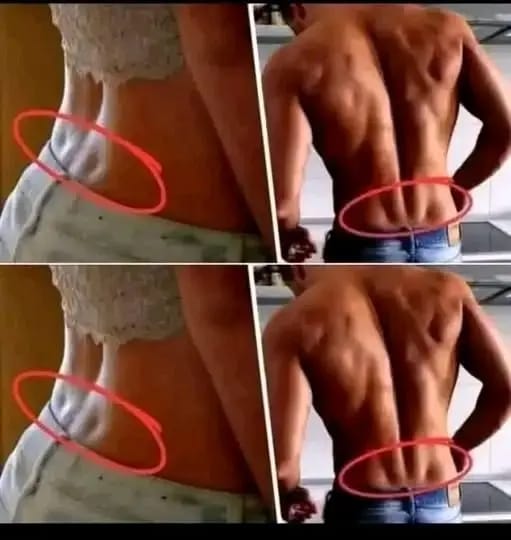
If You Have These “Two Holes” in Your Lower Back, Here’s What It Actually Means
Discover what the two small dimples on your lower back may indicate, why they appear, and when they’re completely normal—or worth checking medically.
First, Let’s Clear Up the Confusion
If you’ve ever noticed two small indentations or “holes” in your lower back, especially just above the buttocks, you’re not alone—and it’s natural to wonder what they mean.
Online, these features are often surrounded by myths, spiritual claims, and alarming guesses. Some say they are “signs,” others link them to health problems, and some even give them dramatic interpretations.
The reality is much simpler—and far less mysterious.
In most cases, these dimples are:
A normal anatomical variation that millions of people have.
But there are a few important distinctions you should understand so you know when they are harmless—and when they deserve medical attention.
Let’s break it down clearly, calmly, and accurately.
What Are These “Two Holes” in Your Back?
What people commonly describe as “two holes” are usually one of the following:
1. Dimples of Venus (Completely Normal)
These are small, symmetrical indentations located:
- On the lower back
- Just above the buttocks
- Near the pelvic bone area
They are medically associated with the posterior superior iliac spine (PSIS)—a bony structure in the pelvis.
2. Sacral Dimples (Often in Childhood, Sometimes Persist Into Adulthood)
These appear:
- Lower on the back, closer to the spine
- Sometimes deeper or less symmetrical
- Occasionally present from birth
Most are harmless, but a small percentage can be associated with spinal conditions in infants.
Why This Topic Confuses So Many People
In the United States and online communities, these dimples are often misrepresented as:
- “Energy points”
- “Spiritual marks”
- “Rare genetic signs”
- Or even health warnings
The truth is more grounded:
They are usually just part of normal human anatomy.
But because they’re visually noticeable and relatively uncommon in appearance, they attract curiosity.
Dimples of Venus: The Most Common Explanation
Let’s start with the most likely answer.
What They Are
Dimples of Venus are small indentations located on the lower back, typically symmetrical on both sides.
They occur where skin is naturally tethered to underlying pelvic bones.
Why They Form
These dimples are influenced by:
- Genetic structure
- Skin attachment points
- Fat distribution in the lower back
You cannot “create” or “lose” them through exercise—they are simply part of your anatomy.
Who Has Them?
They are more commonly seen in:
- Lean individuals
- People with lower body fat
- Some athletes
However, they can appear in anyone.
Are They Rare?
Not particularly. They are just more noticeable on some body types than others.
Sacral Dimples: The Other Possibility
Now let’s talk about the second type.
What They Are
A sacral dimple is a small indentation in the lower back, typically:
- Located near the spine
- Present from birth
- Sometimes shallow, sometimes deeper
When They Are Completely Harmless
Most sacral dimples are:
- Superficial
- Small
- Not connected to any underlying issue
In fact, they are very common in newborns and often go unnoticed into adulthood.
When Doctors Pay Attention
In rare cases, sacral dimples may be associated with spinal development issues in infants, especially if they are:
- Very deep
- Large
- Accompanied by skin discoloration
- Located high above the buttocks
- Associated with hair growth or skin tags
In adults, if you’ve had them your entire life without symptoms, they are almost always harmless.
The Key Difference Between the Two Types
| Feature | Dimples of Venus | Sacral Dimples |
|---|---|---|
| Location | Upper buttock area | Lower spine |
| Symmetry | Usually symmetrical | May be asymmetrical |
| Cause | Bone structure | Congenital skin variation |
| Medical concern | None | Rare in specific cases |
| Appearance | Soft indentations | Can vary in depth |
Should You Be Worried?
In the vast majority of cases:
No. These are normal physical features, not a health warning.
However, awareness is important.
You should consider a medical opinion if the dimples are accompanied by:
- Chronic lower back pain
- Numbness or tingling in legs
- Difficulty walking
- Loss of bladder or bowel control
- Unusual skin changes around the area
These symptoms are not caused by dimples themselves but could indicate unrelated spinal conditions.
Why Some People Suddenly Notice Them Later in Life
You might not have paid attention to them before, but they can become more visible due to:
- Weight loss
- Aging skin changes
- Increased muscle definition
- Posture changes
- Lighting and shadow effects
Many people in their 20s, 30s, or later suddenly “discover” them and assume they are new.
They were likely always there.
The Internet Myths You Should Ignore
Let’s clear up a few misconceptions:
❌ Myth 1: They indicate spiritual abilities
There is no scientific or medical evidence for this.
❌ Myth 2: They are “rare genetic marks”
They are fairly common anatomical traits.
❌ Myth 3: They mean something is wrong with your spine
Not true in most cases.
❌ Myth 4: You can develop them through exercise
They are not created by workouts—they are structural.
A Realistic Example
A 32-year-old office worker in Texas noticed two small indentations on her lower back after starting gym workouts. She became concerned and assumed something had changed in her body.
After consulting a physician, she learned:
- They were pre-existing dimples of Venus
- Weight loss and muscle tone made them more visible
- There was no medical issue at all
This is a very common experience.
Why These Dimples Fascinate People So Much
From a psychological standpoint, humans are naturally drawn to:
- Symmetry
- Unusual body features
- Patterns that stand out
Add social media curiosity, and even normal anatomy can become “mysterious.”
But medically speaking:
Not everything noticeable is meaningful in a clinical sense.
When to Get It Checked (Simple Guide)
You don’t need to worry unless you notice:
- Pain in the lower back
- Neurological symptoms in the legs
- Skin abnormalities (swelling, discharge, or growths)
- Sudden changes in appearance
If none of these exist, there is typically no reason for concern.
Expert Insight (Simplified)
Medical professionals generally classify these dimples as:
- Benign anatomical variations
- Incidental findings
- Non-pathological features in adults
In simple terms:
They are part of normal human variation, not disease.
Common Mistakes People Make
- Googling symptoms and assuming worst-case scenarios
- Confusing normal anatomy with medical conditions
- Believing social media myths
- Over-monitoring harmless body features
How to Think About It Calmly
Instead of worrying, a better mindset is:
- “This is just how my body is built.”
- “Most people have variations like this.”
- “If there were a problem, there would be symptoms.”
Frequently Asked Questions
1. Are the two holes in my back normal?
Yes, in most cases they are completely normal anatomical features.
2. What are they called?
They are usually called dimples of Venus or sacral dimples.
3. Do they mean I have a health problem?
Not unless they are accompanied by other symptoms.
4. Can exercise create these dimples?
No, they are structural, not muscle-based.
5. Are they rare?
No, they are fairly common but more visible in some people.
6. Can they disappear over time?
They may become less visible with weight gain or aging changes.
7. Should I see a doctor?
Only if you have pain, neurological symptoms, or skin changes.
8. Are they genetic?
Yes, anatomy and genetics influence their appearance.
Action Checklist: What You Should Do
✔ Observe without anxiety
✔ Check for symptoms (not just appearance)
✔ Avoid misinformation online
✔ Consult a doctor only if unusual symptoms exist
✔ Accept normal body variation
Conclusion: Not Everything Unusual Is a Problem
It’s easy to worry when you notice something unfamiliar on your body. But in this case, those small “holes” or dimples on your lower back are usually just:
A normal, harmless part of human anatomy.
Understanding your body reduces unnecessary fear and helps you focus on what truly matters—your overall health, not cosmetic variations.
Two small dimples in the lower back are most often harmless anatomical features known as dimples of Venus or sacral dimples.
They are common, natural, and usually not a sign of any medical issue.
If this helped clarify your concern, consider sharing it—because sometimes the biggest relief comes from simply understanding what’s normal.