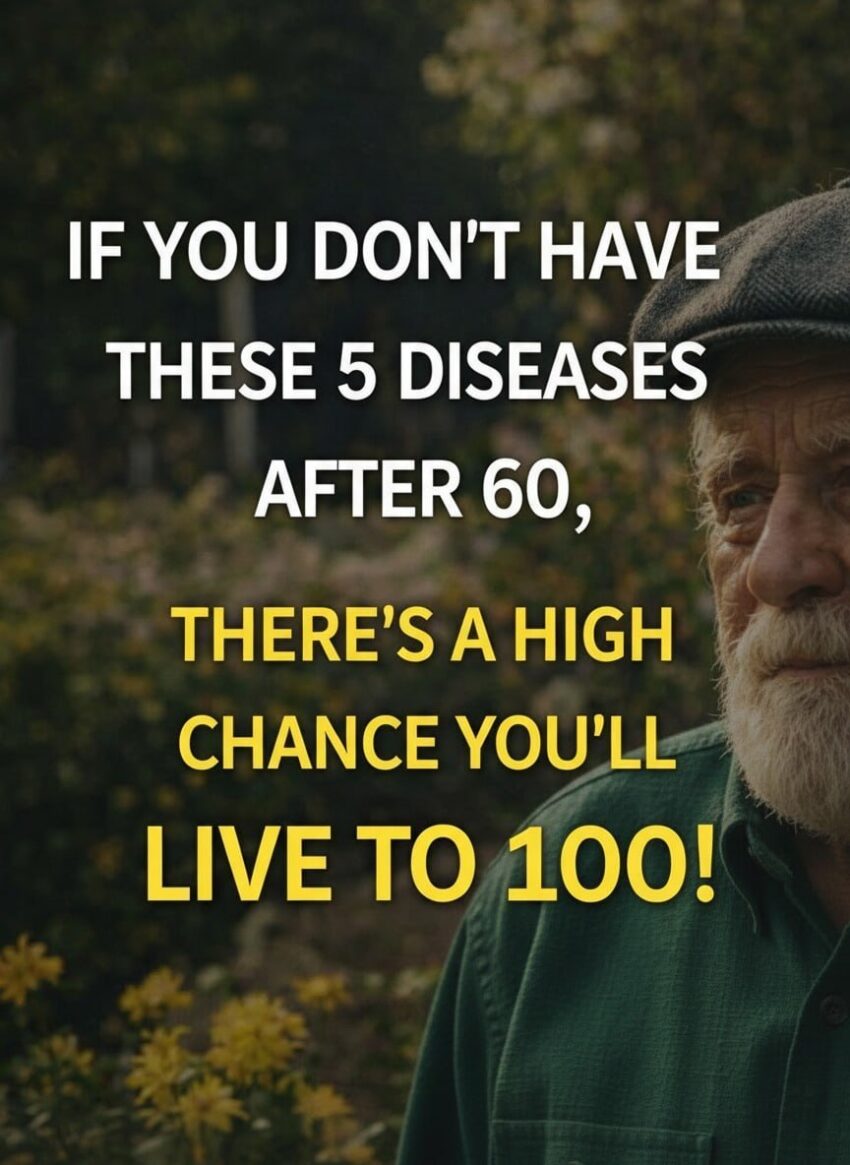
If You Don’t Have These 5 Conditions After 60, Your Chances of Living to 100 May Be Higher (Here’s Why)
Discover 5 major health conditions that influence longevity after 60—and what science says about improving your chances of living to 100.
Turning 60 often comes with a quiet question in the back of your mind:
How many healthy years do I really have left?
While no one can predict lifespan with certainty, long-term studies on aging suggest something encouraging—your health at 60 can be a powerful indicator of how well you’ll age into your 80s, 90s, and even 100.
You may have seen bold claims like:
“If you don’t have these 5 diseases, you’ll live to 100.”
That’s an oversimplification—but there’s a meaningful truth behind it.
Certain chronic conditions significantly impact longevity. And avoiding or managing them well can dramatically improve not just how long you live—but how well you live.
Let’s explore what research actually shows.
The Reality Behind Longevity Predictions
Living to 100 isn’t just about luck or genetics.
According to institutions like Harvard T.H. Chan School of Public Health, longevity is influenced by:
- Lifestyle habits
- Chronic disease risk
- Social and mental well-being
- Access to healthcare
So instead of guarantees, think in terms of probabilities and patterns.
The 5 Major Conditions That Strongly Influence Longevity
Avoiding or effectively managing these after 60 is associated with a higher likelihood of extended lifespan.
1. Heart disease
Why it matters:
Heart disease remains the leading cause of death in the United States.
If your cardiovascular system is strong at 60+, you’re already ahead.
Key risk factors:
- High blood pressure
- High cholesterol
- Sedentary lifestyle
What helps:
- Regular walking
- Balanced diet
- Routine checkups
2. Type 2 diabetes
Why it matters:
Poor blood sugar control can affect multiple organs over time.
Avoiding or managing diabetes reduces risks of:
- Nerve damage
- Kidney issues
- Vision problems
What helps:
- Stable eating habits
- Weight management
- Regular monitoring
3. Cancer
Why it matters:
While not all cancers are preventable, lifestyle and early detection play a major role.
What helps:
- Routine screenings
- Avoiding tobacco
- Maintaining a healthy weight
4. Chronic obstructive pulmonary disease (COPD)
Why it matters:
This condition affects breathing and overall energy levels.
Often linked to:
- Smoking history
- Long-term environmental exposure
What helps:
- Avoiding smoking
- Clean air environments
- Pulmonary care if needed
5. Dementia
Why it matters:
Longevity isn’t just about years—it’s about mental clarity and independence.
Cognitive decline can significantly impact quality of life.
What helps:
- Mental stimulation
- Social interaction
- Physical activity
Why Being “Free” of These Conditions at 60 Matters
If you reach 60 without these major conditions—or with them well-controlled—it often means:
- Your body systems are functioning efficiently
- You’ve maintained healthier habits over time
- Your risk of complications is lower
This doesn’t guarantee living to 100.
But it tilts the odds in your favor.
What Long-Lived People Tend to Have in Common
Research into longevity (including studies of centenarians) shows patterns:
- Moderate, consistent activity
- Strong social connections
- Balanced eating habits
- Purpose or meaning in daily life
Interestingly, extreme measures aren’t the norm—consistency is.
Real-Life Scenario
A 67-year-old retiree with no major chronic conditions maintains:
- Daily walks
- Regular social engagement
- Balanced meals
Compared to peers with multiple unmanaged conditions, he experiences:
- Better mobility
- Higher energy
- Greater independence
The difference isn’t dramatic—it’s cumulative.
What You Can Do Starting Today
Even if you already have one or more conditions, you still have influence.
Focus on:
- Movement: Aim for daily activity
- Nutrition: Whole, balanced foods
- Sleep: Prioritize consistent rest
- Checkups: Stay proactive with health screenings
- Mental health: Stay connected and engaged
Pros and Cons of Longevity Predictions
Pros
- Encourages proactive health habits
- Highlights preventable risks
- Promotes awareness
Cons
- Can feel overly deterministic
- Doesn’t account for individual differences
- May oversimplify complex health realities
Common Mistakes to Avoid
- Thinking it’s “too late” after 60
- Ignoring early warning signs
- Relying on genetics alone
- Chasing extreme diets or trends
Expert Insight
Longevity isn’t built in one big decision.
It’s built in small, repeated choices over time.
And after 60, those choices still matter—more than most people think.
2026 Trend: Healthy Longevity vs. Just Living Longer
There’s a growing shift toward:
- Extending healthspan (healthy years), not just lifespan
- Preventative care over reactive treatment
- Personalized health strategies
People aren’t just asking “How long will I live?”
They’re asking:
“How well can I live?”
FAQs (People Also Ask Style)
1. Can I still improve my chances after 60?
Yes—lifestyle changes still have a meaningful impact.
2. Do I need to be disease-free to live to 100?
No—many people live long lives with well-managed conditions.
3. Is genetics the main factor?
Genetics play a role, but lifestyle is equally important.
4. What’s the most important habit?
Consistency in movement and diet.
5. Are supplements necessary?
Not always—focus on basics first.
6. How often should I get checkups?
At least annually, or as advised by your doctor.
7. Does mental health affect longevity?
Yes—strongly.
8. Is walking enough exercise?
For many people, yes—especially when done consistently.
9. Can stress reduce lifespan?
Chronic stress can negatively impact health over time.
10. What’s the biggest takeaway?
Small habits matter more than big promises.
Action Checklist
- ✔ Stay physically active daily
- ✔ Monitor key health markers
- ✔ Maintain social connections
- ✔ Eat balanced meals
- ✔ Schedule regular checkups
The idea that avoiding five conditions guarantees a 100-year life is too simple.
But the deeper message is powerful:
Your health at 60 is not the end of the story—it’s a turning point.
The habits you maintain now can shape not just how long you live, but how well you experience those years.
You don’t need perfection to age well.
You need consistency, awareness, and realistic choices.
And if you’re already on a healthy path after 60—you’re doing more right than you might think.