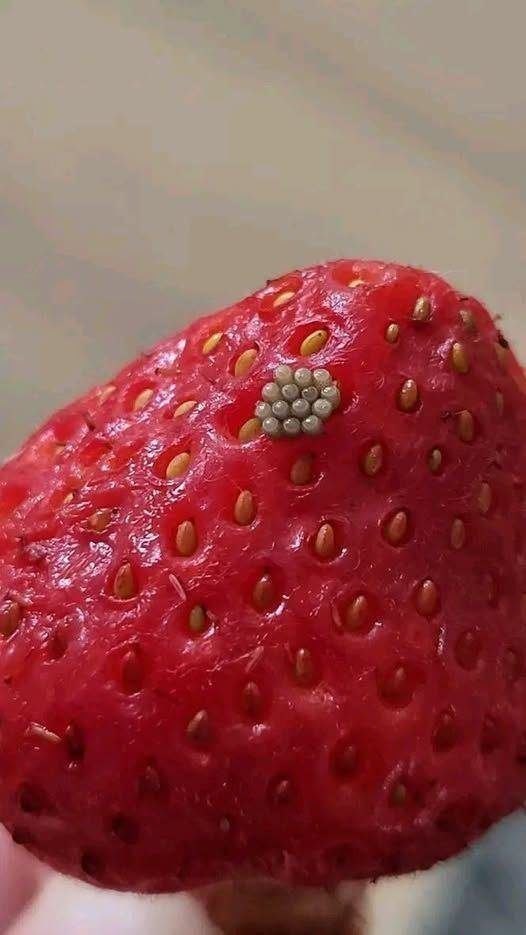
I Soaked My Berries in Salt Water and Saw White Wiggling Things Come Out—Should I Throw Them Away?
Seeing white worms in berries after soaking them in salt water? Learn what they are, whether your fruit is safe, and when to throw it away or keep it.
When “Healthy Eating” Turns Into a Shock in Your Kitchen
You did everything right.
You bought fresh-looking strawberries, blueberries, or raspberries from the grocery store or farmers market. You planned a healthy snack. Maybe even a smoothie or a yogurt bowl.
Then you saw a viral tip online: soak your berries in salt water to clean them more thoroughly.
So you did.
And within minutes, something unsettling happened.
Tiny white, wiggling shapes started emerging from your fruit.
That moment is usually followed by the same thoughts:
- “Are these worms?”
- “Did I just eat contaminated fruit before this?”
- “Is this dangerous?”
- “Should I throw everything away immediately?”
If that happened to you, you’re not alone—and your reaction is completely normal.
What you saw is real. But the situation is also more common, more understood, and less dangerous than it first appears.
In this guide, we’ll break down exactly what those white wiggling things are, whether your berries are safe, when you should throw them away, and how to prevent it from happening again—without panic or guesswork.
First: What Are the White Wiggling Things in Your Berries?
Let’s address the uncomfortable truth first.
In most cases, those white moving specks are fruit fly larvae, most commonly from a species called Drosophila suzukii, also known as the spotted wing drosophila.
These are not earthworms. Not parasites that infect humans. And not a sign that your fruit is “toxic.”
They are simply insect larvae that develop inside soft fruits like berries.
Why berries are especially vulnerable
Berries are:
- Soft-skinned
- Moist
- Often grown close to the ground
- Frequently harvested in large outdoor fields
This makes them an ideal target for fruit flies, which lay eggs directly into ripe or ripening fruit.
Once the eggs hatch, the larvae feed on the fruit’s interior—completely hidden from view until you soak or crush the fruit.
Why Salt Water Makes Them Show Up
Salt water doesn’t “create” the larvae. It simply reveals them.
Here’s what’s actually happening:
- You soak berries in salt water
- The larvae, if present, react to the solution
- They become more active and detach from the fruit
- You notice movement that was previously hidden
This is why people online are often shocked after doing this “cleaning hack.”
It’s not a sign the fruit suddenly became infested—it just exposes what was already inside.
Should You Be Worried About Eating Them?
This is where most people panic unnecessarily.
From a health standpoint:
The reassuring truth
- Fruit fly larvae are not dangerous to human health
- They are not known to transmit diseases to humans
- If accidentally consumed, they are generally digested like any other protein
According to food safety guidance commonly referenced by organizations like the U.S. Food and Drug Administration (FDA), small amounts of insect contamination in produce can occur and are typically not considered a health hazard when properly handled.
But here’s the important distinction:
Safe does not always mean acceptable.
So… Should You Throw the Berries Away?
This depends on what you found and how much infestation there is.
Let’s break it down clearly.
You should discard the berries if:
- You see multiple larvae in several berries
- The fruit has a sour or fermented smell
- The berries are mushy, leaking, or collapsing
- There is visible mold (white, green, or fuzzy patches)
- You feel uncomfortable eating them (this matters more than people admit)
You can salvage them if:
- Only a few berries show signs of infestation
- Most fruit appears firm and fresh
- No mold is present
- You are planning to cook or blend them
In many U.S. households, lightly affected berries are often used in:
- Smoothies (after thorough rinsing)
- Jam or cooked sauces (heat kills larvae)
- Baking (muffins, pies)
A practical rule of thumb:
If you feel uncertain or grossed out, it is completely reasonable to discard them. Food safety is not only physical—it’s also psychological comfort.
Why This Happens More in the United States Than People Realize
This issue is not rare in the U.S., especially during warmer months.
Here’s why:
1. Warmer growing seasons
Fruit flies thrive in warm, humid environments. Many U.S. states experience long growing seasons ideal for infestation.
2. Large-scale outdoor farming
Berries are often grown in open fields, not sealed environments.
3. Organic and pesticide-reduced farming trends
While healthier in many ways, reduced pesticide use can sometimes increase insect exposure.
4. Delayed refrigeration during transport
Even short delays between harvest and refrigeration can allow eggs to hatch.
This is not a “dirty food supply” issue. It’s a natural agricultural reality.
Step-by-Step: What You Should Do Right Now
If you just discovered this in your kitchen, here’s a calm, practical approach:
Step 1: Stop and assess
Don’t panic or immediately toss everything.
Step 2: Separate berries
Sort them into:
- Clearly clean berries
- Suspicious berries
- Damaged or mushy berries
Step 3: Salt water soak (10–15 minutes)
- Use cold water
- Add 1–2 tablespoons of salt per quart
- Gently agitate
Step 4: Observe
If larvae appear:
- Re-evaluate quantity
- Decide if salvage is worth it
Step 5: Rinse thoroughly
Always rinse under running water afterward.
Step 6: Dry properly
Moisture speeds spoilage, so dry before storage.
The Biggest Mistake People Make
The most common mistake is assuming that washing alone guarantees complete “purity.”
Even advanced cleaning methods:
- Salt water
- Vinegar rinses
- Baking soda washes
…cannot reverse internal infestation.
If eggs are already inside the fruit, washing only reveals the issue—it doesn’t erase it.
Vinegar vs Salt Water: What Actually Works Better?
Many Americans swear by vinegar rinses, but here’s a simple comparison:
| Method | What It Does | Effectiveness |
|---|---|---|
| Plain water rinse | Removes surface dirt | Basic |
| Salt water soak | Encourages larvae to emerge | Moderate for detection |
| Vinegar soak | Helps reduce surface bacteria | Mild cleaning benefit |
| Baking soda wash | Helps remove pesticide residue | Limited impact |
None of these methods guarantee removal of internal larvae.
They are best seen as cleaning and detection tools, not sterilization methods.
Expert Insight: What Food Safety Experts Generally Say
Food safety specialists emphasize three key points:
- Insects in produce are not unusual
- They are rarely harmful when ingested accidentally
- Proper washing reduces—but does not eliminate—contamination risks
The focus in U.S. food safety guidance is typically on:
- Mold
- Bacterial contamination
- Chemical residues
- Physical spoilage
Insect presence, while unpleasant, is usually classified differently from hazardous contamination.
Real-Life Scenario: What Most People Actually Do
Imagine this:
A family in Ohio buys fresh strawberries from a weekend farmer’s market. The berries look perfect. They bring them home, rinse them quickly, and store them in the fridge.
Two days later, they try the salt water soak after watching a video online.
White larvae appear.
Here’s what typically happens:
- One person refuses to eat them entirely
- Another suggests blending the “good ones” into smoothies
- Eventually, they discard most of the batch for peace of mind
There is no “wrong” reaction here. It’s a mix of food safety logic and personal comfort.
How to Prevent This From Happening Again
You can’t eliminate risk completely, but you can significantly reduce it.
Smart buying habits
- Buy berries closer to consumption date
- Choose refrigerated store displays when possible
- Avoid overly soft or leaking containers
Storage habits
- Refrigerate immediately
- Do not leave berries at room temperature for long
- Avoid stacking or crushing containers
Cleaning habits
- Rinse before storage, not just before eating
- Inspect visually before soaking
- Use within 2–3 days of purchase
Pros and Cons of Salt Water Soaking
Pros
- Helps dislodge dirt and debris
- Can reveal hidden larvae
- Easy and inexpensive
- Gives peace of mind when done properly
Cons
- Can damage delicate berries
- Does not kill internal larvae
- May accelerate spoilage if over-soaked
- Can create unnecessary alarm
Common Misconceptions
“If I see worms, the fruit is unsafe”
Not necessarily true. It is usually a quality issue, not a health emergency.
“Organic fruit has more worms”
Not automatically true, but reduced pesticide use can increase exposure in some cases.
“Washing removes everything”
It improves cleanliness but does not guarantee sterilization.
When You Should Be Extra Careful
You should be more cautious if:
- You are serving fruit to young children
- You are immunocompromised
- The fruit has been stored improperly for several days
- You notice fermentation or alcohol-like smell
In these cases, discarding is often the safest and simplest choice.
Future Outlook: Why This Will Keep Happening
With increasing interest in organic farming and reduced chemical pesticide use in the U.S., minor insect presence in produce may remain a reality.
However, improvements in:
- Cold-chain logistics
- Packaging technology
- Rapid harvesting methods
…are helping reduce the frequency of these surprises.
Frequently Asked Questions
1. Are the white worms in berries dangerous?
No, they are usually fruit fly larvae and are not known to harm humans if accidentally consumed.
2. Can I just wash them off and eat the berries?
If infestation is mild and no mold is present, you may rinse and use them, but many people prefer to discard for comfort.
3. Why do they come out in salt water?
Salt water encourages larvae to leave the fruit, making them visible.
4. Does cooking kill the larvae?
Yes, heat from baking or boiling will kill them.
5. Are organic berries more likely to have worms?
Not necessarily, but lower pesticide use can sometimes increase exposure.
6. Can I prevent this completely?
No, but refrigeration and quick consumption greatly reduce risk.
7. Is it safe for kids to eat berries that had larvae?
If fully cooked or thoroughly cleaned and no longer infested, it is generally considered safe, but many parents choose to discard.
8. What if I already ate berries without knowing?
In most cases, there is no cause for concern.
9. Do frozen berries have this problem?
Freezing usually prevents larvae activity, making it much less common.
10. Should I always do a salt water soak?
It’s optional. It can help reveal hidden issues but is not required for safety.
Action Checklist Summary
Before you decide what to do with your berries:
- Inspect visually first
- Check for softness, smell, or mold
- Use salt water soak only as a diagnostic step
- Separate affected fruit
- Decide based on severity and comfort level
- Refrigerate remaining berries immediately
- Consume within a few days
Finding white wiggling larvae in your berries is unsettling, but it’s not a sign that something is wrong with your food system or your kitchen habits.
It’s simply a reminder that fresh produce is part of a natural ecosystem—even in a modern grocery store environment.
The key is not panic, but informed decision-making.
Sometimes the best choice is to save what’s still good. Other times, the best choice is to let it all go and start fresh.
Both are valid.
Those white wiggling things are most likely harmless fruit fly larvae. While they are not typically dangerous, whether you keep or discard the berries depends on how much infestation is present and your personal comfort level. Food safety is not just about science—it’s also about peace of mind.