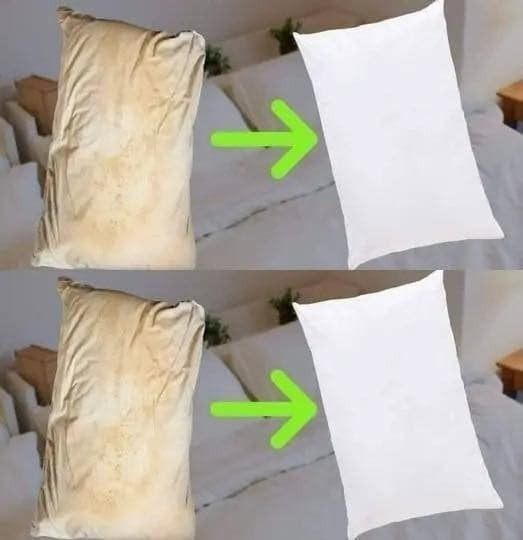
How to Clean Dirty Bed Pillows and Make Them Bright White & Fresh Again (Without Ruining Them)
Learn how to clean bed pillows the right way—remove stains, odors, and yellowing safely using simple methods that restore freshness and whiteness.
The Hidden Dirt in Your Pillow (And Why It Matters More Than You Think)
You sleep on it every night.
It absorbs sweat, body oils, dust, and even dead skin cells—slowly turning from crisp white to dull yellow.
And yet… most people rarely wash their pillows.
If you’ve ever caught a faint musty smell or noticed discoloration, you’re not alone. In many U.S. households, pillows are replaced far more often than they’re properly cleaned—mainly because people assume they can’t be restored.
The truth?
You can bring most pillows back to life—with the right method.
This guide walks you through exactly how to clean your pillows safely, whiten them naturally, and leave them smelling fresh—without damaging the fabric or filling.
Why Pillows Turn Yellow and Smell Over Time
Before cleaning, it helps to understand what you’re dealing with.
Common causes include:
- Sweat and body oils soaking into fabric
- Drool and moisture buildup
- Dust mites and allergens
- Product residue (lotions, hair oils, etc.)
Over time, these create:
- Yellow stains
- Lingering odors
- Heavier, flattened pillows
Cleaning isn’t just about appearance—it’s about hygiene and sleep quality.
Can You Wash All Pillows?
Not all pillows are created equal.
Here’s a quick breakdown:
| Pillow Type | Washable? | Notes |
|---|---|---|
| Cotton / Down | Yes | Machine washable |
| Polyester / Synthetic | Yes | Easy to clean |
| Memory Foam | No (machine) | Spot clean only |
| Latex | No | Hand clean carefully |
Always check the care label first.
The Best Way to Wash Pillows (Step-by-Step)
Step 1: Remove Covers and Inspect
- Take off pillowcases and protectors
- Check for tears or weak seams
- Pre-treat visible stains
Step 2: Pre-Treat Yellow Stains
Mix:
- ½ cup baking soda
- ½ cup hydrogen peroxide
- A few drops of dish soap
Apply directly to stains and let sit for 20–30 minutes.
This helps break down oils and brighten fabric.
Step 3: Load the Washing Machine Properly
- Wash two pillows at once to balance the machine
- Use warm water
- Select a gentle cycle
Step 4: Add the Right Cleaning Boosters
For deep cleaning and whitening:
- 1 cup laundry detergent
- 1 cup baking soda
- 1 cup white vinegar (add during rinse cycle)
This combination:
- Removes odors
- Breaks down buildup
- Restores whiteness
Step 5: Run an Extra Rinse Cycle
Pillows trap soap easily.
An extra rinse ensures:
- No residue
- No stiffness
- Better smell
How to Dry Pillows Without Ruining Them
Drying is where most people go wrong.
Best Method:
- Use low heat in the dryer
- Add clean tennis balls or dryer balls
This prevents clumping and keeps pillows fluffy.
Important:
- Dry thoroughly (even if it takes multiple cycles)
- Any remaining moisture can cause mildew
How to Clean Memory Foam Pillows (Without Destroying Them)
Memory foam requires a gentler approach.
Steps:
- Vacuum the pillow surface
- Spot clean using mild detergent and water
- Blot (don’t soak)
- Air dry completely
Avoid:
- Machine washing
- High heat
- Excess water
How to Naturally Deodorize Pillows
If your pillow smells but isn’t heavily stained:
Try This Quick Refresh Method:
- Sprinkle baking soda over the pillow
- Let sit for 1–2 hours
- Vacuum it off
Optional: Add a few drops of essential oil for a light scent.
Real-Life Scenario: Bringing a Pillow Back to Life
A homeowner in Texas noticed their pillows had turned yellow after years of use.
Instead of replacing them, they:
- Pre-treated stains
- Washed using baking soda and vinegar
- Dried with tennis balls
Result:
- Noticeably whiter fabric
- Fresh, clean smell
- Restored fluffiness
Total cost: under $5.
Common Mistakes That Ruin Pillows
1. Using Too Much Detergent
Leaves residue and makes pillows stiff.
2. Skipping the Second Rinse
Traps soap and odors inside.
3. Overheating in the Dryer
Damages fibers and causes clumping.
4. Washing Foam Pillows Like Regular Ones
Leads to permanent damage.
Expert Tips Most People Don’t Know
- Wash pillows every 3–4 months
- Use pillow protectors to extend lifespan
- Dry pillows in sunlight occasionally for natural freshness
- Replace pillows every 1–2 years if they lose support
2026 Cleaning Trend: Low-Toxin Laundry
More U.S. households are shifting toward:
- Fragrance-free detergents
- Natural whitening agents (like baking soda)
- Reduced chemical exposure
This not only protects fabrics—but also improves indoor air quality.
Pros and Cons of Washing vs Replacing Pillows
| Option | Pros | Cons |
|---|---|---|
| Washing | Saves money, eco-friendly | Requires effort |
| Replacing | Instant result | More expensive |
| Spot cleaning | Quick fix | Doesn’t deep clean |
Frequently Asked Questions
1. How often should I wash my pillows?
Every 3–4 months is ideal.
2. Can I bleach my pillows?
It’s not recommended—it can weaken fibers and cause yellowing.
3. Why do pillows still smell after washing?
Likely due to trapped moisture or detergent residue.
4. Can I air dry pillows?
Yes, but it takes longer—ensure complete dryness.
5. Are yellow stains permanent?
No, most can be significantly reduced with proper treatment.
6. Can I wash pillows with clothes?
Not recommended—pillows need space to clean properly.
7. What temperature is best?
Warm water works best for cleaning without damage.
8. How do I know when to replace a pillow?
If it stays flat when folded or feels lumpy.
Action Checklist: Restore Your Pillows Today
- Remove covers and inspect
- Pre-treat stains
- Wash with baking soda and detergent
- Add vinegar during rinse
- Run extra rinse cycle
- Dry with low heat and tennis balls
- Ensure complete dryness
Conclusion: Fresh Pillows, Better Sleep
Clean pillows aren’t just about aesthetics—they directly impact your comfort, hygiene, and sleep quality.
With the right method, you can:
- Restore whiteness
- Eliminate odors
- Extend pillow life
All without expensive products or complicated routines.
You don’t need to replace your pillows every time they look worn.
Most just need a proper clean.
If you’ve never washed your pillows before, try it this weekend—you’ll be surprised by the difference.
Have a go-to cleaning trick? Share it below—your tip might help someone sleep better tonight.