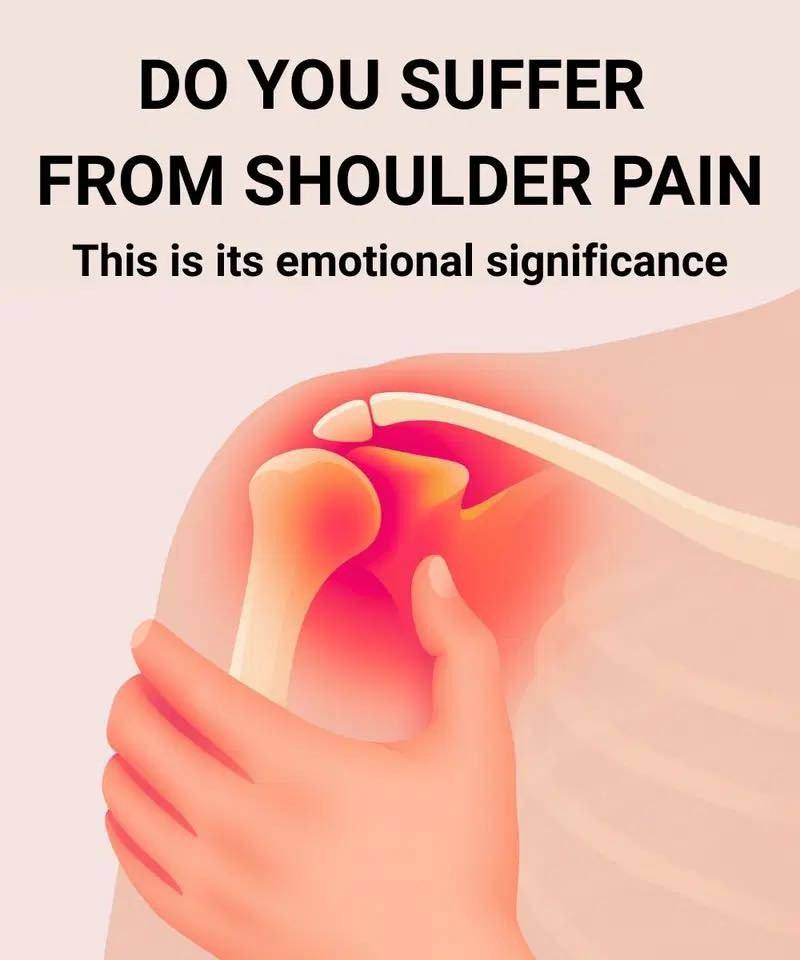
Does Your Shoulder Hurt? Here’s What It Might Mean Emotionally (And What Your Body Could Be Trying to Tell You)
Shoulder pain may reflect more than posture—discover emotional meanings, stress links, and practical ways to find relief and clarity.
You notice it in the quiet moments first.
That dull ache when you’re sitting at your desk too long. The tightness when you wake up in the morning. Or that sharp pull when you lift something light—but your body reacts like it’s heavy.
Shoulder pain is one of those symptoms people often dismiss as “just posture” or “just sleeping wrong.” And sometimes, that’s true. But for many people, especially in high-stress lifestyles common across the United States, shoulder discomfort can also reflect something deeper happening internally—emotionally and psychologically.
Not in a mystical or exaggerated way. But in a very real mind-body connection that modern psychology and stress research have been exploring for decades.
In this article, we’ll unpack what shoulder pain can sometimes mean emotionally, how stress and life pressure show up in the body, and—most importantly—what you can actually do about it in a grounded, practical way.
You’ll walk away with clarity, not confusion. Insight, not fear.
And a better understanding of what your body may be quietly communicating.
First Things First: Shoulder Pain Is Real—And Often Physical
Before diving into emotional interpretations, it’s important to be clear:
Shoulder pain has many physical causes, including:
- Muscle strain or overuse
- Poor posture (especially desk work)
- Rotator cuff injuries
- Arthritis or joint inflammation
- Sleeping position issues
- Repetitive movement injuries (sports, lifting, etc.)
If your pain is persistent, worsening, or limiting movement, it’s important to consult a medical professional. In the U.S., that might be a primary care physician, orthopedic specialist, or physical therapist.
But here’s where things get interesting:
Even when there’s a physical trigger, emotional and psychological stress can intensify pain, slow recovery, and make symptoms feel more persistent.
That’s where the mind-body connection comes in.
The Mind-Body Connection: Why Emotion Shows Up in the Shoulder
Modern research in behavioral medicine and psychology has consistently shown that stress and emotional strain can manifest physically.
Organizations like Harvard Health Publishing have discussed how chronic stress can contribute to muscle tension, inflammation, and heightened pain sensitivity.
The body doesn’t separate emotional and physical stress the way we often assume.
Instead, it responds as a whole system.
And the shoulders—structurally and symbolically—tend to take on a lot of that load.
Why the shoulders specifically?
Think about what your shoulders do:
- Carry weight
- Hold tension when stressed
- Tighten when you feel overwhelmed
- Rise unconsciously when anxious or alert
Now think about how language reflects this:
- “I’ve got the weight of the world on my shoulders”
- “She carries a lot on her shoulders”
- “Don’t shoulder all that responsibility alone”
Language often mirrors lived experience.
The shoulders become a storage space for pressure—both physical and emotional.
Emotional Meanings Commonly Associated with Shoulder Pain
While not a diagnostic rule, many psychologists and somatic therapists observe patterns where shoulder tension correlates with emotional states.
Here are some of the most commonly reported emotional themes:
1. Feeling Overburdened or Responsible for Too Much
This is one of the strongest patterns.
People experiencing shoulder pain often describe:
- Carrying too many responsibilities at work
- Feeling like they must “hold everything together”
- Being the dependable one in family or relationships
Over time, this internal pressure can show up physically as tight, sore shoulders.
2. Chronic Stress and Mental Overload
In the U.S., stress is often normalized—especially in:
- Corporate work environments
- Healthcare professions
- Parenting and caregiving roles
- Fast-paced gig or startup cultures
When the nervous system stays in a prolonged “fight or flight” state, muscles—especially in the neck and shoulders—stay contracted.
This can lead to:
- Tight upper traps
- Headaches
- Shoulder stiffness
- Fatigue that doesn’t fully resolve with rest
3. Emotional Suppression
Some people don’t process emotions outwardly. Instead, they:
- Push through discomfort
- Avoid expressing stress
- Minimize their emotional needs
Over time, unprocessed emotional energy can manifest as physical tension patterns.
Not because emotions are “stored” like objects—but because the nervous system stays activated.
4. Anxiety and Anticipation
Shoulders often rise subtly when someone is anxious.
If you’ve ever noticed yourself:
- Hunching forward at a screen
- Holding your breath during stressful tasks
- Tensing without realizing it
That constant low-level activation can build into pain.
5. Emotional Exhaustion or Burnout
Burnout doesn’t just feel mental.
It often shows up physically as:
- Heavy shoulders
- Deep fatigue
- Muscle soreness without exertion
This is especially common in high-responsibility roles.
Why This Matters in the United States Specifically
In the U.S., several lifestyle patterns make shoulder tension and stress-related pain more common:
- Long hours at desks and computers
- High productivity culture
- Limited recovery time between work cycles
- Increased screen time and poor posture habits
- Social pressure to “stay strong” and keep performing
According to occupational health discussions from institutions like the CDC and workplace wellness research, musculoskeletal discomfort is one of the most common complaints among office workers.
Combine that with emotional stress—and the shoulder becomes a frequent pressure point.
A Simple Framework: How to Interpret Shoulder Pain Holistically
Instead of trying to label your pain as “physical OR emotional,” a more useful approach is:
“What might be contributing to this from both sides?”
Here’s a grounded step-by-step way to reflect:
Step 1: Check the physical triggers
Ask yourself:
- Have I been sitting longer than usual?
- Did I sleep awkwardly?
- Have I been lifting or training differently?
- Is my posture poor during work hours?
Step 2: Check the emotional load
Ask:
- Am I feeling overwhelmed lately?
- Do I feel responsible for too many things?
- Have I been under ongoing stress?
- Am I holding in frustration or worry?
Step 3: Notice timing patterns
- Does pain increase during stressful weeks?
- Does it improve on vacation or weekends?
- Does it flare during emotional conversations or deadlines?
Step 4: Respond to both layers
Not just stretching—but also recovery and emotional regulation.
Real-Life Scenarios (What This Looks Like in Practice)
Scenario 1: The Remote Worker
A 34-year-old software engineer in Texas notices shoulder stiffness every weekday afternoon.
- Physical factor: long hours at laptop
- Emotional factor: tight deadlines, constant meetings, no breaks
Once he introduces micro-breaks and stress resets, pain decreases significantly.
Scenario 2: The Caregiver
A woman caring for both children and an aging parent develops chronic shoulder tension.
- Physical factor: lifting and caregiving strain
- Emotional factor: emotional responsibility, lack of personal time
Support systems and emotional decompression help reduce symptoms over time.
Scenario 3: The High-Achiever
A young professional in New York City experiences recurring shoulder pain during performance reviews.
- Physical factor: posture and desk stress
- Emotional factor: anxiety, self-pressure, fear of failure
Once anxiety management techniques are introduced, symptoms become less intense.
Pros and Cons of Looking at Shoulder Pain Emotionally
Pros
- Encourages self-awareness
- Helps identify hidden stress patterns
- Supports holistic healing approaches
- Can improve lifestyle habits
- Reduces chronic tension cycles
Cons
- Can lead to overthinking symptoms
- Risk of ignoring medical issues if misinterpreted
- Not all pain has emotional roots
- Requires balance with medical care
The key is integration, not replacement.
Common Mistakes People Make
1. Assuming it’s “all in your head”
Emotional factors are real physiological processes—not imagination.
2. Ignoring posture and ergonomics
No emotional insight replaces proper physical alignment.
3. Waiting too long to seek help
Persistent pain should always be evaluated medically.
4. Over-identifying with stress
Not every tension moment means emotional trauma.
Expert-Level Insights Most People Miss
- Chronic stress increases muscle sensitivity to pain
- The nervous system can stay “on alert” even after stress ends
- Movement variability is more important than perfect posture
- Breathing patterns directly influence shoulder tension
Small changes often create large improvements.
Emerging Trends (2026 and Beyond)
Health and wellness in the U.S. are increasingly shifting toward:
- Somatic therapy approaches (body-based emotional processing)
- Wearable stress tracking devices
- Corporate wellness programs focusing on musculoskeletal health
- Mindfulness integration in physical therapy
- AI-driven posture correction tools
The future of pain management is becoming more integrated—not purely physical or psychological.
Future Outlook: Where This Understanding Is Headed
We’re moving toward a more complete model of health where:
- Pain is not treated in isolation
- Emotional and physical systems are considered together
- Prevention is prioritized over reaction
- Lifestyle design becomes part of healthcare
Shoulder pain is increasingly seen as a signal—not just a symptom.
Mini Checklist: What To Do If Your Shoulder Hurts
- Check posture and workstation setup
- Take movement breaks every 30–60 minutes
- Stretch neck, upper back, and shoulders gently
- Track stress levels during pain flare-ups
- Practice slow breathing (especially during work)
- Reduce repetitive strain where possible
- Reflect on emotional load without overanalyzing
- Seek medical advice if pain persists or worsens
FAQs: What People Also Ask
1. Can emotional stress really cause shoulder pain?
Stress can increase muscle tension and sensitivity, which may contribute to shoulder discomfort.
2. Why do my shoulders hurt when I’m anxious?
Anxiety activates the nervous system, causing muscles—especially in the upper body—to tighten.
3. Is shoulder pain always posture-related?
No. It can be posture-related, stress-related, or a combination of both.
4. What emotion is linked to shoulder tension?
Commonly reported associations include stress, overwhelm, and emotional burden.
5. How do I relax tight shoulders quickly?
Gentle stretching, deep breathing, heat therapy, and posture resets can help.
6. When should I see a doctor for shoulder pain?
If pain lasts more than a few weeks, worsens, or limits movement, seek medical evaluation.
7. Can mental burnout cause physical pain?
Yes. Burnout often presents physically as fatigue, tension, and muscle soreness.
8. Does sitting too much cause shoulder pain?
Yes, prolonged sitting can strain upper back and shoulder muscles.
9. Can therapy help with physical pain?
Somatic and stress-related therapies can support pain reduction in some cases.
10. Is shoulder pain reversible?
Many cases improve with posture correction, stress management, and appropriate care.
Conclusion: Your Body Isn’t Working Against You—It’s Communicating
Shoulder pain is rarely just a mechanical issue. For many people, it reflects a combination of physical strain and emotional load that builds quietly over time.
The important takeaway isn’t to overinterpret every ache—but to become more aware of patterns:
- When does it happen?
- What’s going on in your life when it flares up?
- What can you adjust physically and emotionally?
Your shoulders aren’t just holding your posture—they’re often holding your pace of life.
And sometimes, they’re asking you—gently but persistently—to redistribute the weight you’ve been carrying.
Shoulder pain can be a mix of physical strain and emotional stress. Understanding both sides helps you respond more effectively, reduce discomfort, and improve long-term well-being.
If this resonates with you, share your experience or thoughts below—sometimes the most helpful insights come from real-life stories and shared understanding.