Perfect Prime Rib Roast: The Ultimate Juicy, Tender Holiday Showstopper (Step-by-Step Recipe Guide)
There are meals that feed you—and then there are meals that silence the entire room the moment they’re placed on the table.
A beautifully cooked Prime Rib Roast belongs firmly in the second category.
Picture this: it’s a holiday evening. The house is warm, lights are soft, and there’s a slow, savory aroma drifting from the oven—garlic, herbs, and beef roasting into something almost unreal. Conversations pause. People start wandering into the kitchen “just to check on it.”
And then it happens.
You slice into the roast.
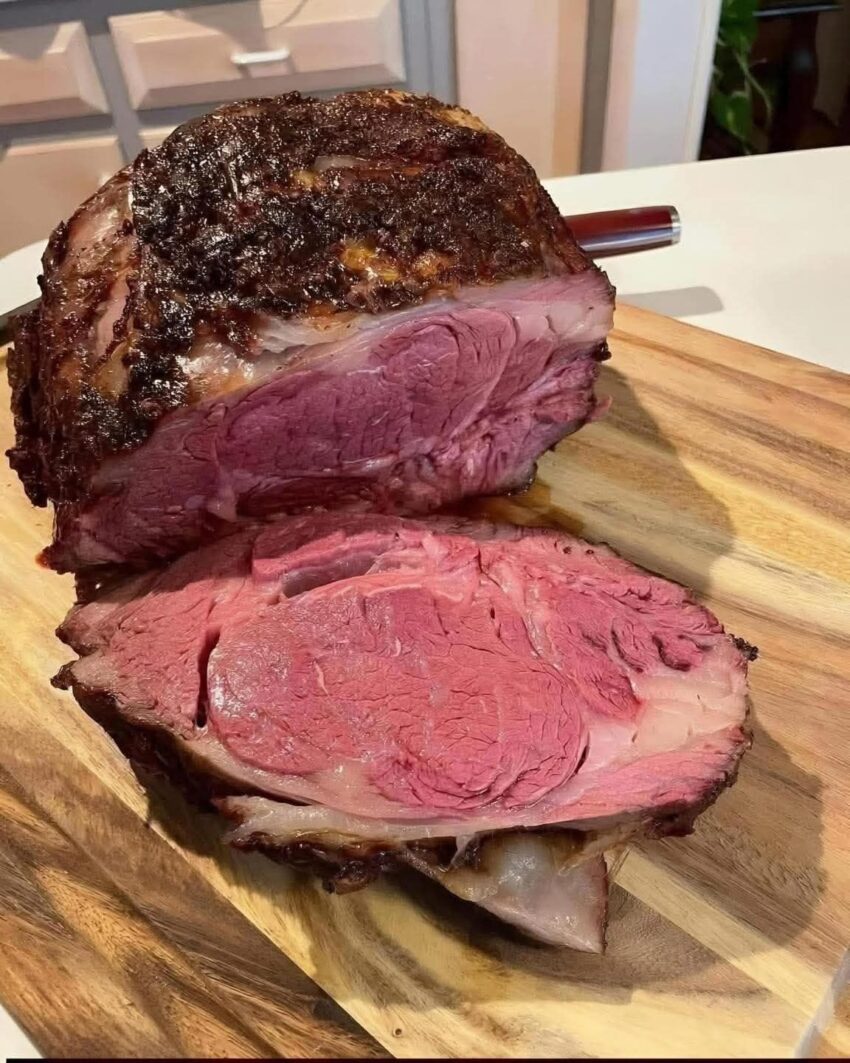
A deep crusty exterior gives way to a perfectly pink, juicy center. The juices shimmer as the knife glides through like butter. Someone whispers, “Oh my God…”
That’s the magic of prime rib.
This isn’t just dinner. It’s an experience. A celebration. A memory in the making.
Whether it’s Christmas, Thanksgiving, a birthday, or a Sunday family gathering, this roast turns an ordinary meal into something unforgettable.
Let’s make it together.
Why You’ll Love This Prime Rib Recipe
This recipe is designed for home cooks who want restaurant-level results without stress.
You’ll love it because:
- ✔ Incredibly juicy and tender every time
- ✔ Simple ingredients, big flavor payoff
- ✔ Perfect for holidays and celebrations
- ✔ Feeds a crowd effortlessly
- ✔ Looks impressive but is surprisingly easy
- ✔ Works with gluten-free, keto, and low-carb lifestyles
- ✔ Leftovers taste even better the next day
This is the kind of dish that earns you compliments all night long.
Ingredients (Exact Measurements for Perfect Results)
🥩 Main Roast:
- Prime rib roast (bone-in or boneless): 4–5 kg (9–11 lbs)
- Olive oil: 60 ml (¼ cup / 2 fl oz)
- Kosher salt: 2 tablespoons (30 g)
- Black pepper (freshly ground): 1 tablespoon (8 g)
🌿 Herb Garlic Rub:
- Garlic cloves (minced): 10–12 cloves (40 g)
- Fresh rosemary (chopped): 2 tablespoons (6 g)
- Fresh thyme (chopped): 2 tablespoons (6 g)
- Butter (softened): 100 g (7 tbsp / 3.5 oz)
Optional Flavor Boost:
- Dijon mustard: 1 tablespoon (15 g)
- Smoked paprika: 1 teaspoon (2 g)
🥕 Optional Vegetables (for roasting base):
- Carrots: 3 large (300 g)
- Potatoes: 4 medium (500 g)
- Onions: 2 large (250 g)
Healthy Substitutions:
- Use avocado oil instead of butter for lower saturated fat
- Reduce salt for heart-healthy version
- Use grass-fed beef for higher omega-3 content
Nutritional Information (Per Serving Approx.)
(Serves 8–10 people)
- Calories: 520–650 kcal
- Protein: 45–55 g
- Carbohydrates: 3–8 g
- Fats: 35–45 g
- Fiber: 1–2 g
Key Nutrients:
- Iron (supports energy)
- Zinc (immune support)
- Vitamin B12 (brain and nerve health)
- Selenium (antioxidant support)
Diet Type:
- ✔ Keto-friendly
- ✔ Low-carb
- ✔ Gluten-free
- ❌ Not vegan or vegetarian
Kitchen Tools You’ll Need
- Roasting pan with rack
- Meat thermometer (essential)
- Sharp carving knife
- Cutting board
- Mixing bowl
- Aluminum foil
- Basting brush
Step-by-Step Preparation (Perfect Results Every Time)
🔥 Step 1: Bring Meat to Room Temperature
Remove the roast from the fridge 2–3 hours before cooking.
Why?
Even cooking starts with even temperature.
🧂 Step 2: Season Generously
Pat the roast dry with paper towels.
Rub with:
- Olive oil
- Salt
- Black pepper
Massage it into every side like you mean it.
🌿 Step 3: Prepare the Herb Butter Rub
Mix:
- Butter
- Garlic
- Rosemary
- Thyme
- Optional Dijon mustard
Spread this mixture evenly over the roast.
🥕 Step 4: Set Up the Roasting Pan
Place vegetables (if using) at the bottom.
Place roast on a rack above them.
🔥 Step 5: Initial High-Heat Sear
Preheat oven to 230°C (450°F).
Roast for:
- 20–25 minutes until a golden crust forms
This locks in flavor.
🌡 Step 6: Slow Roast to Perfection
Lower temperature to 135°C (275°F).
Cook until internal temperature reaches:
- Rare: 50–52°C (125°F)
- Medium-rare: 54–57°C (130–135°F)
- Medium: 60–63°C (140–145°F)
Time estimate:
- 15–18 minutes per pound (33–40 min/kg)
Always use a thermometer.
⏳ Step 7: Rest the Roast (CRUCIAL)
Remove from oven and cover loosely with foil.
Rest for 20–30 minutes.
This allows juices to redistribute—don’t skip this step.
🔪 Step 8: Slice and Serve
Use a sharp knife and slice against the grain.
Watch the juices glisten as you cut.
Expert Tips & Mistakes to Avoid
✔ Pro Tips:
- Always use a meat thermometer
- Salt the roast overnight for deeper flavor
- Resting is non-negotiable
- Bone-in roast = more flavor
❌ Common Mistakes:
- Overcooking (ruins tenderness)
- Skipping resting time
- Not seasoning enough
- Cutting too early
Variations & Customizations
🌶 Spicy Version
Add:
- Crushed chili flakes
- Cayenne pepper
- Spicy mustard glaze
🥗 Healthy Version
- Use less butter
- Add more herbs
- Serve with roasted vegetables only
👶 Kid-Friendly Version
- Mild seasoning
- Slightly more buttery finish
- Serve with mashed potatoes
Storage & Reheating Instructions
🧊 Refrigerator:
- Store in airtight container
- Lasts 3–4 days
❄️ Freezer:
- Wrap tightly in foil + freezer bag
- Lasts 2–3 months
🔥 Reheating:
Best method:
- Oven at 150°C (300°F)
- Add broth or juices
- Heat gently to avoid drying
Serving Suggestions
Pair your prime rib with:
- Creamy mashed potatoes
- Roasted garlic carrots
- Yorkshire pudding
- Horseradish sauce
- Red wine gravy
- Fresh garden salad
Drink pairing:
- Cabernet Sauvignon
- Merlot
- Sparkling water with lemon
FAQs (People Also Ask)
1. What cut is prime rib?
It comes from the rib section of beef, known for tenderness and marbling.
2. What temperature should I cook prime rib at?
Start high (450°F), then slow roast at 275°F.
3. How do I keep prime rib juicy?
Don’t overcook and always rest before slicing.
4. Can I make it ahead of time?
Yes, but reheat gently to preserve texture.
5. Is prime rib expensive?
Yes, but it serves many people and is ideal for special occasions.
6. Do I need a bone-in roast?
Not required, but bone-in adds flavor and moisture.
7. What’s the best doneness?
Medium-rare is most popular for tenderness and juiciness.
If you’ve been waiting for the perfect centerpiece recipe that impresses without overwhelming you—this is it.
A Prime Rib Roast isn’t just food. It’s tradition, celebration, and connection carved into every slice.
So gather your ingredients, preheat that oven, and make something unforgettable this weekend.
And when you do—don’t keep it to yourself.
Share your experience, drop a comment, and tell others how it turned out. You might just inspire someone’s next holiday masterpiece.
A perfectly cooked prime rib is simple at its core—but unforgettable in its impact. With the right technique, anyone can create a restaurant-quality roast at home.
Now it’s your turn.