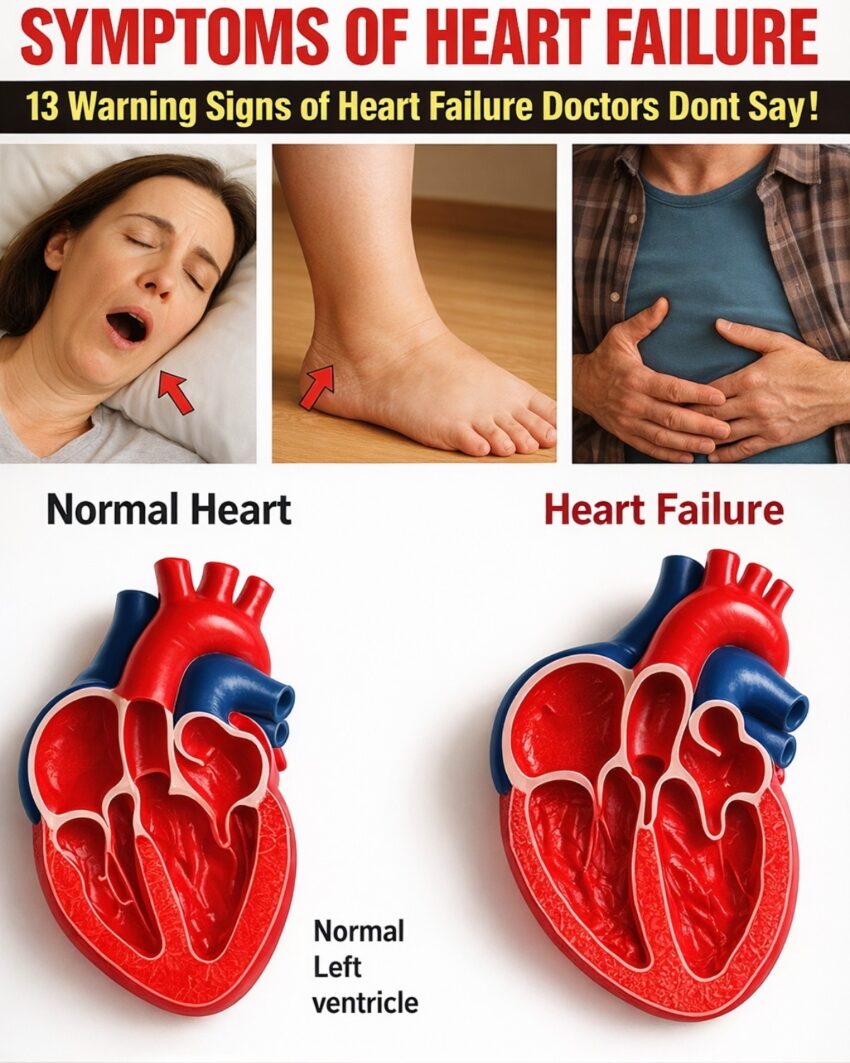
13 Early Signs of Heart Failure Most People Ignore Daily (Symptoms You Should Never Dismiss) ❤️⚠️
Learn the early warning signs of heart failure, how they appear in daily life, and when to seek medical attention. Clear, doctor-informed guidance for awareness.
Most serious heart conditions don’t begin with a dramatic collapse.
They start quietly.
A little shortness of breath when climbing stairs. A bit of swelling in the ankles at the end of the day. Feeling more tired than usual—but blaming it on stress, age, or being “out of shape.”
This is why early heart failure is often missed.
In the United States alone, heart failure affects millions of adults, and many don’t realize they have symptoms until the condition has already progressed. According to the CDC, it remains one of the most common reasons for hospital visits among older adults.
But here’s what cardiologists consistently emphasize:
The body often gives early warning signs—it’s just that people normalize them.
This article breaks down 13 early signs doctors pay attention to, explained in simple, real-life terms so you can recognize patterns early and take appropriate action.
This is for awareness only—not diagnosis—and any concerning symptoms should always be discussed with a healthcare professional.
Why Early Detection Matters
Heart failure doesn’t mean the heart stops working.
It means the heart is not pumping blood as efficiently as the body needs.
When caught early, lifestyle changes and medical care can significantly improve quality of life.
The challenge is that early symptoms often look like everyday discomfort.
1. Unusual Shortness of Breath
One of the earliest and most common signs.
You might notice:
- Breathlessness during light activity
- Trouble breathing when lying flat
- Waking up short of breath
This happens because fluid can build up in the lungs when the heart is under strain.
2. Persistent Fatigue
Not normal tiredness—but a deep, ongoing exhaustion.
Even simple tasks like walking or cooking may feel unusually draining.
This occurs because the body is receiving less oxygen-rich blood than usual.
3. Swelling in Feet, Ankles, or Legs
Doctors call this “edema.”
It may appear as:
- Tight shoes at the end of the day
- Puffy ankles
- Visible swelling in lower legs
This is caused by fluid retention when circulation slows.
4. Rapid or Irregular Heartbeat
You may feel:
- Fluttering in the chest
- Heart racing without exertion
- Skipped beats
The heart tries to compensate for reduced pumping efficiency.
5. Sudden Weight Gain (Fluid Retention)
A quick increase in weight over days—not weeks—can signal fluid buildup.
This is not fat gain but water retention.
6. Reduced Ability to Exercise
You might notice you can no longer:
- Walk as far as before
- Climb stairs easily
- Do normal physical activity without resting
This decline is often gradual, so it’s easy to miss.
7. Persistent Cough or Wheezing
Especially a cough that:
- Doesn’t go away
- Produces white or pink-tinged mucus
- Worsens at night
This can happen when fluid affects the lungs.
8. Difficulty Sleeping Flat
Many people begin sleeping with extra pillows.
This is due to breathing discomfort when lying down.
9. Loss of Appetite or Feeling Full Quickly
Fluid buildup can affect the digestive system, leading to:
- Reduced hunger
- Early fullness
- Nausea in some cases
10. Confusion or Difficulty Concentrating
Reduced blood flow can affect brain oxygen levels, leading to:
- Memory issues
- Brain fog
- Difficulty focusing
11. Cold Hands and Feet
Poor circulation may result in:
- Lower body temperature in extremities
- Pale or bluish skin in severe cases
12. Increased Nighttime Urination
Fluid shifts when lying down can increase kidney activity at night.
13. Chest Discomfort or Pressure
Not always sharp pain—sometimes it feels like:
- Tightness
- Pressure
- Heaviness
This symptom should always be taken seriously.
How These Symptoms Are Often Missed
Many people assume:
- “I’m just getting older”
- “I’m out of shape”
- “It’s stress”
- “It will go away”
Because symptoms are gradual, they don’t feel urgent—until they become more severe.
What Doctors Emphasize
Cardiologists and organizations like the American Heart Association highlight:
- Early recognition improves outcomes
- Symptoms vary from person to person
- Risk increases with age, high blood pressure, diabetes, and lifestyle factors
What You Should Do If You Notice These Signs
If symptoms are:
- New
- Persistent
- Getting worse over time
It is important to consult a healthcare provider.
Possible evaluations may include:
- Physical exam
- Blood tests
- ECG
- Echocardiogram
Early assessment helps guide proper care.
Healthy Heart Support Habits (General Wellness)
While medical care is essential when needed, general heart health habits include:
- Regular walking or light exercise
- Balanced diet (low in excess sodium)
- Managing stress
- Avoiding smoking
- Regular health checkups
Common Mistakes People Make
1. Ignoring mild symptoms
Early signs are often subtle but meaningful.
2. Self-diagnosing online
Heart conditions require medical evaluation.
3. Waiting too long
Many people delay care until symptoms worsen.
FAQs
1. Does shortness of breath always mean heart failure?
No. It can have many causes, but persistent symptoms should be checked.
2. Can heart failure be reversed?
It depends on cause and severity; many cases can be managed effectively.
3. Is swelling in legs always serious?
Not always, but persistent swelling should be evaluated.
4. Who is most at risk?
Older adults, people with high blood pressure, diabetes, or heart disease history.
5. Can lifestyle changes help?
Yes, they play an important role in heart health management.
6. Is chest pressure always a heart attack?
No, but it always requires medical attention.
7. Can young people get heart failure?
Yes, though less common, it can occur due to various conditions.
8. Should I panic if I have one symptom?
No—monitoring patterns matters more than one isolated symptom.
Your body rarely stays silent when something important is changing.
The challenge is learning to recognize signals that seem “normal” but aren’t.
Heart failure doesn’t usually begin with a sudden event—it develops gradually, often through signs that are easy to overlook in everyday life.
Awareness is not fear. It’s preparation.
And noticing changes early can make a meaningful difference in outcomes, treatment options, and long-term well-being.
Early heart failure symptoms are often subtle and easily ignored, but recognizing patterns like breathlessness, swelling, fatigue, and reduced activity tolerance can help prompt timely medical attention and better heart health outcomes.
If this helped you understand the warning signs better, share it with someone who values heart health—and encourage regular checkups and awareness conversations.