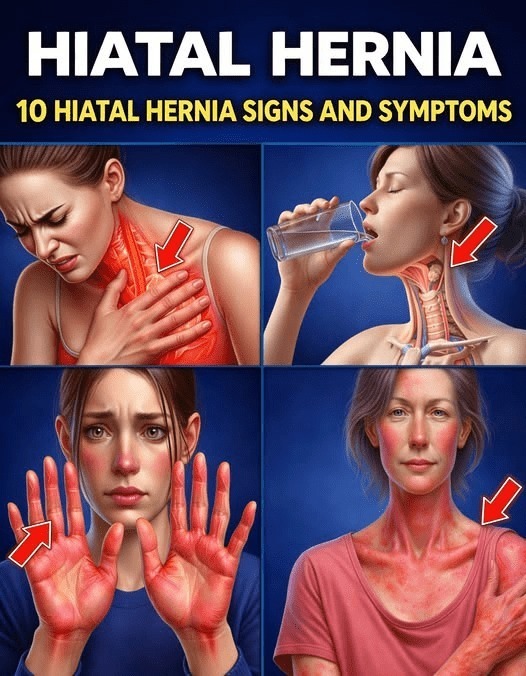
10 Hiatal Hernia Signs and Symptoms You Should Know (Before They Get Worse)
Hiatal hernia symptoms are often mistaken for acid reflux or heart issues. Learn 10 key warning signs and when to seek medical help.
Why Hiatal Hernias Often Go Undetected
A Hiatal Hernia can quietly develop without obvious warning signs.
Many people in the United States first assume their symptoms are:
- Acid reflux
- Stress
- Poor diet
- Even heart-related issues
That confusion is exactly why hiatal hernias are often discovered late or accidentally during medical tests.
The good news: once you understand the signs, it becomes much easier to recognize what your body is trying to tell you.
What Happens in a Hiatal Hernia?
Normally, your stomach sits below the diaphragm.
In a hiatal hernia:
- A portion of the stomach pushes upward through an opening in the diaphragm
- This can affect digestion and cause reflux-like symptoms
There are different types, but the most common is a sliding hiatal hernia.
1. Frequent Heartburn
One of the most common symptoms is burning in the chest.
You may feel:
- Burning after meals
- Worsening discomfort when lying down
- Sour taste in the mouth
This often mimics acid reflux.
2. Acid Reflux (GERD-Like Symptoms)
Stomach acid may move upward into the esophagus.
This can lead to:
- Chronic acid reflux
- Regurgitation of food or liquid
- Throat irritation
Many people are first diagnosed with GERD before discovering a hernia.
3. Chest Pain or Pressure
Some people feel chest discomfort that can be mistaken for heart problems.
It may feel like:
- Tightness
- Pressure after eating
- Burning sensation
Because of this overlap, doctors often rule out heart issues first.
4. Difficulty Swallowing
Food may feel like it’s “sticking” in the throat or chest.
This happens because:
- The esophagus is irritated
- Acid exposure affects normal swallowing
5. Bloating and Fullness
Even small meals can cause discomfort.
You may notice:
- Feeling full quickly
- Swollen stomach sensation
- Excess gas
6. Belching and Burping
Frequent burping is common because:
- Air becomes trapped in the stomach
- Digestion is disrupted
7. Shortness of Breath
In larger hernias, the stomach can press against the diaphragm.
This may cause:
- Feeling out of breath
- Discomfort when bending or lying down
8. Nausea
Some people experience:
- Mild nausea after eating
- Loss of appetite
- Occasional stomach discomfort
9. Sore Throat or Hoarseness
Stomach acid reaching the throat can irritate vocal cords.
You might notice:
- Hoarse voice
- Chronic throat clearing
- Scratchy throat
10. Worsening Symptoms When Lying Down
One of the strongest clues.
Symptoms often get worse:
- At night
- After large meals
- When lying flat
This is due to gravity allowing acid to move upward more easily.
Who Is More Likely to Develop a Hiatal Hernia?
Risk increases with:
- Age (especially over 50)
- Obesity or excess abdominal pressure
- Smoking
- Chronic coughing
- Heavy lifting habits
Real-Life Scenario
Someone experiences:
- Frequent heartburn
- Chest discomfort after meals
- Nighttime reflux
They assume it’s diet-related.
After medical evaluation, they discover a hiatal hernia causing the symptoms all along.
When You Should See a Doctor
Seek medical advice if you experience:
- Persistent heartburn
- Chest pain (especially unexplained)
- Difficulty swallowing
- Symptoms affecting sleep or daily life
Doctors may use imaging or endoscopy for diagnosis.
Common Mistakes People Make
1. Ignoring symptoms as “just acidity”
This delays diagnosis.
2. Self-medicating long-term
Over-the-counter acid reducers may mask symptoms without addressing the cause.
3. Eating large meals before bed
This worsens reflux significantly.
Lifestyle Tips That May Help Manage Symptoms
1. Eat smaller meals
Reduces pressure on the stomach.
2. Avoid lying down after eating
Wait at least 2–3 hours.
3. Elevate your head while sleeping
Helps reduce nighttime reflux.
4. Avoid trigger foods
Such as:
- Spicy foods
- Fatty meals
- Caffeine
5. Maintain a healthy weight
Reduces abdominal pressure.
Pros and Cons of Early Awareness
Pros
- Earlier diagnosis
- Better symptom control
- Reduced complications
Cons
- May cause anxiety if misunderstood
- Symptoms overlap with other conditions
FAQs (People Also Ask)
1. Is a hiatal hernia serious?
Most are mild, but some require treatment.
2. Can it go away on its own?
No, but symptoms can be managed.
3. Is surgery always needed?
No—only in severe cases.
4. Can it cause chest pain?
Yes, and it can mimic heart pain.
5. What is the main symptom?
Heartburn and acid reflux are most common.
6. Can stress make it worse?
Yes, indirectly through digestion changes.
7. Is it common?
Yes, especially in older adults.
8. How is it diagnosed?
Through imaging or endoscopy.
Action Checklist
- ✔ Watch for recurring heartburn
- ✔ Track symptoms after meals
- ✔ Avoid lying down too soon
- ✔ Maintain healthy weight
- ✔ Seek medical advice if symptoms persist
A hiatal hernia is often not dangerous—but it can significantly affect quality of life if ignored.
The key is recognizing patterns early and making simple lifestyle adjustments that reduce symptoms.
Awareness leads to control—and control leads to comfort.
Hiatal hernias are common and often silent at first, but understanding the signs helps you manage them before they disrupt daily life.
Have you ever experienced persistent heartburn or chest discomfort after meals?
What helped you most—diet changes, medication, or lifestyle adjustments?