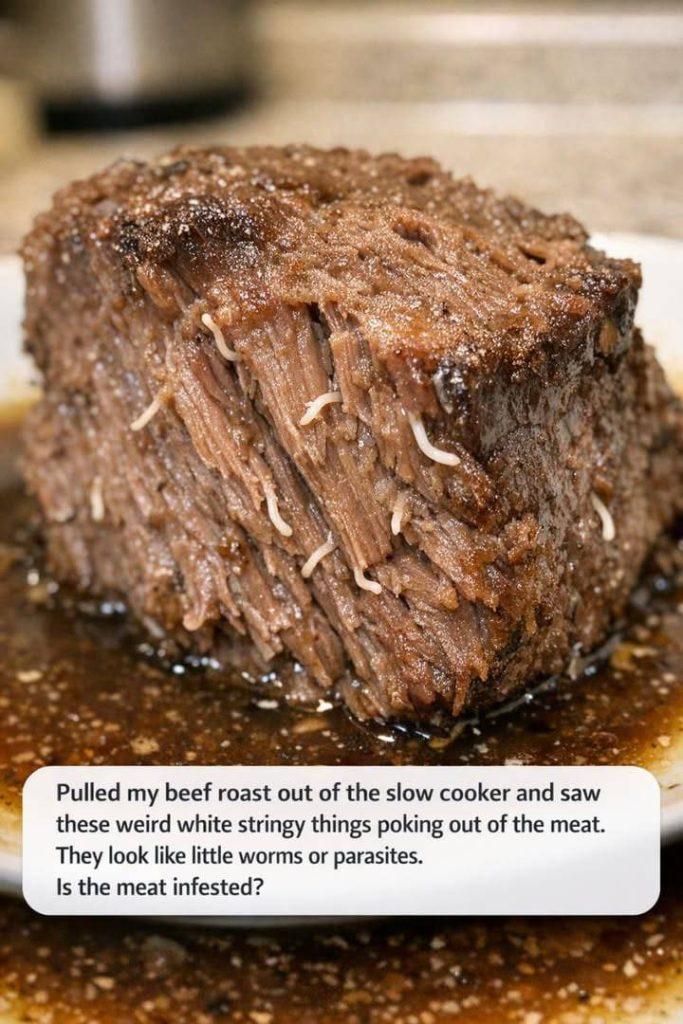
Pulled Beef Roast From the Slow Cooker and Saw White Stringy “Worms”? Here’s What It Really Is
Seeing white stringy things in slow-cooked beef roast? Learn what they really are, why they appear, and when you should or shouldn’t worry about food safety.
You lift the lid off your slow cooker expecting a tender, juicy beef roast.
Instead, you freeze.
There they are—tiny white, stringy things poking out of the meat. They look unsettling. Almost like worms. Your stomach drops for a second as you wonder: “Did I just cook contaminated meat?”
If that moment made you pause, you’re not alone. This reaction is incredibly common, especially with slow-cooked cuts of beef where texture changes dramatically.
The good news? In almost all cases, what you’re seeing is completely normal and safe.
Let’s break down exactly what those “weird white strings” are, why they appear, and when (rarely) you should actually be concerned.
First: Take a Breath — It’s Almost Never Parasites
Let’s address the biggest fear immediately:
In properly sourced and cooked beef in countries like the United States, visible parasites in cooked roast beef are extremely rare.
What most people mistake for worms are usually just natural parts of the meat that change during slow cooking.
According to food safety guidelines from the USDA Food Safety and Inspection Service, properly cooked beef is safe when it reaches recommended internal temperatures.
So What Are Those White Stringy Things?
There are a few very normal explanations.
1. Collagen and Connective Tissue (Most Common)
Beef contains natural connective tissue made of collagen.
When slow-cooked, especially in a slow cooking, collagen breaks down and transforms.
What you’re seeing:
- White or pale strands
- Gel-like or stringy texture
- Soft fibers separating from the meat
What it actually is:
Rendered connective tissue turning into gelatin
This is what makes slow-cooked beef tender and juicy.
2. Muscle Fibers Separating
As beef cooks for several hours:
- Muscle fibers loosen
- Protein structures break apart
- The meat becomes shreddable
These fibers can look like thin white threads sticking out.
3. Fat Deposits Rendering Out
Some of the white strands may actually be softened fat that has:
- Melted
- Re-solidified slightly
- Separated from muscle tissue
This is especially common in fattier cuts like chuck roast.
4. Protein “Skein” Effect
When beef is overcooked or slow-cooked for a long time, proteins can:
- Contract
- Separate
- Form string-like textures
This is a natural chemical reaction—not contamination.
Why Slow Cookers Make This More Noticeable
Slow cookers gently break down meat over time.
That’s the entire purpose—but it also means:
- Structures inside the meat loosen visibly
- Fat and collagen separate clearly
- Shredded fibers become more obvious
So instead of a firm steak-like texture, you get tender strands and fibers.
What It Is NOT
Let’s be clear about what you are NOT seeing:
- ❌ Not intestinal worms
- ❌ Not parasites
- ❌ Not food contamination
- ❌ Not bacterial growth
Parasites in beef (like tapeworms) are not visible in this form after proper cooking.
When Should You Actually Be Concerned?
While this situation is almost always harmless, there are a few red flags to watch for:
1. Strange Smell Before Cooking
- Sour or rotten odor
- Ammonia-like smell
2. Slimy Texture Before Cooking
Raw beef should never feel sticky or slimy.
3. Expired or Improper Storage
- Meat left too long in the fridge
- Frozen and thawed multiple times
4. Undercooking
Always ensure safe internal temperature (about 63°C / 145°F for whole cuts with rest time).
Real-Life Scenario
A home cook in Texas shared a similar experience after slow-cooking a chuck roast for 8 hours.
When shredding the meat, they noticed white strands and panicked.
After consulting a food safety guide, they learned it was simply collagen breaking down into gelatin—the exact process that makes pot roast tender and flavorful.
Why This Is Actually a Good Sign
Believe it or not, those “stringy bits” often mean:
- Your meat is tender
- The collagen has properly broken down
- The roast will be juicy and easy to shred
In culinary terms, this is exactly what chefs aim for in slow-cooked dishes.
How to Make Slow-Cooked Beef Better Next Time
1. Choose the Right Cut
Best options:
- Chuck roast
- Brisket
- Short ribs
2. Cook Low and Slow
- 6–10 hours on low heat
- Avoid high heat shortcuts
3. Add Moisture
- Broth
- Onion base
- Light seasoning liquids
4. Don’t Overreact to Texture
Shredded, stringy beef is often perfectly cooked beef.
Common Mistakes People Make
- ❌ Assuming normal meat fibers are parasites
- ❌ Overcooking to “kill everything” unnecessarily
- ❌ Throwing away perfectly good food
- ❌ Not understanding collagen breakdown
Expert Insight
Food science explains this clearly:
Slow cooking converts collagen into gelatin, which improves texture and flavor.
This process is widely used in professional kitchens and recommended by culinary experts and food safety authorities.
FAQs
1. Are white strings in beef worms?
No, they are almost always connective tissue or muscle fibers.
2. Is my slow-cooked beef safe to eat?
Yes, if it was properly cooked and stored.
3. Why does beef fall apart in slow cooker?
Because collagen breaks down into gelatin.
4. Can parasites survive slow cooking?
Proper cooking temperatures eliminate harmful organisms.
5. Should I throw the meat away?
Not unless there are signs of spoilage.
6. Does this happen with all beef cuts?
More common in tougher, collagen-rich cuts.
Action Checklist
✔ Check smell and storage history
✔ Ensure proper cooking temperature
✔ Understand collagen breakdown
✔ Don’t panic over texture changes
✔ Enjoy properly cooked slow roast
Seeing white stringy fibers in slow-cooked beef can be unsettling—but in nearly every case, it’s simply science at work, not something dangerous.
What looks strange is often just the natural transformation of collagen and muscle fibers into tender, flavorful meat.
Understanding that process not only removes fear—it makes you a better cook.
Those “worm-like” strings in your beef roast are almost always harmless connective tissue breaking down during slow cooking—not parasites or contamination.
Next time you open your slow cooker and see those white strands, don’t panic.
Recognize them for what they are: proof your roast is doing exactly what it’s supposed to do.
And if this helped ease your worry, share it with someone who might panic the same way—because good food knowledge is always worth spreading.