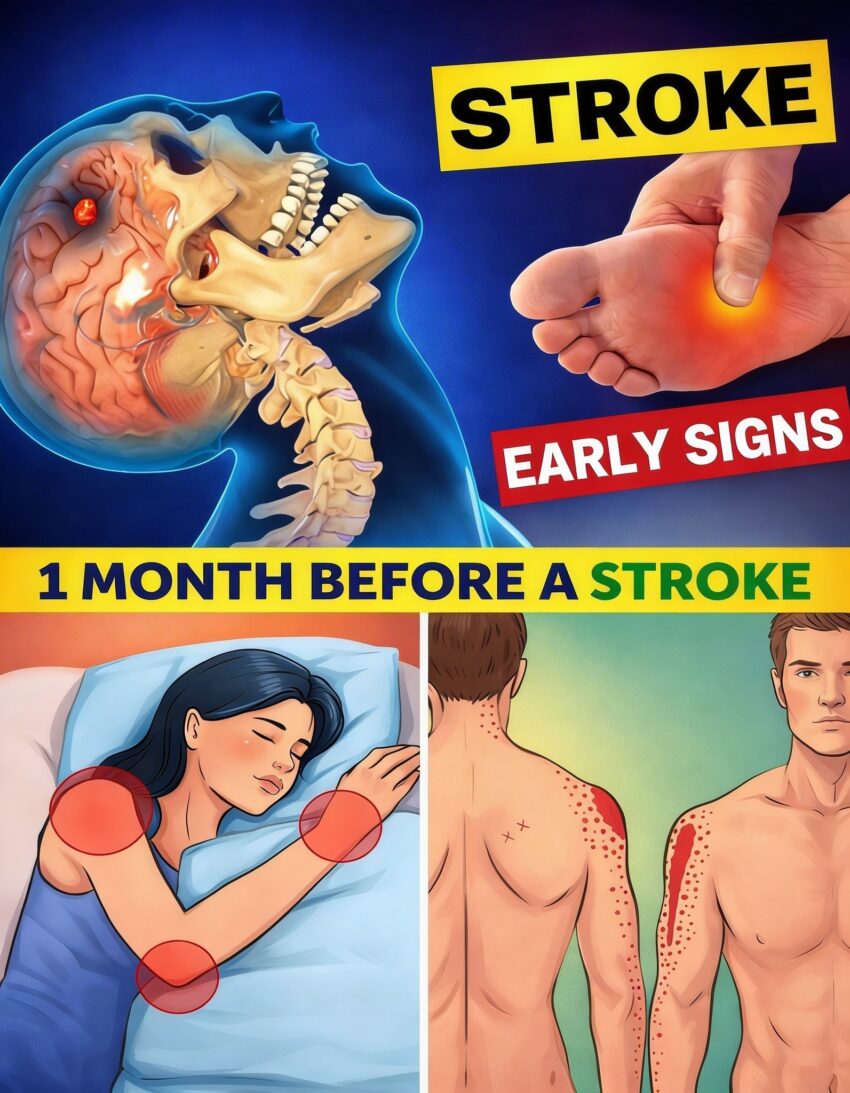
8 Early Warning Signs of Stroke That Can Appear Weeks Before—and 9 Proven Ways to Lower Your Risk
Learn 8 early stroke warning signs that may appear weeks before and 9 doctor-backed prevention tips. Know when to act and how to protect your brain health.
Most people think of a stroke as something that happens suddenly—out of nowhere, without warning.
But in many cases, the body starts sending quiet signals weeks in advance.
The problem? These early warning signs are often subtle, easy to dismiss, or mistaken for everyday stress or fatigue. And that delay in recognition can make all the difference.
In the United States, stroke remains a leading cause of disability and death. According to organizations like the Centers for Disease Control and Prevention, recognizing symptoms early—and acting fast—can dramatically improve outcomes.
This guide walks you through:
- 8 early warning signs that may show up weeks before a stroke
- What these symptoms might mean
- 9 practical, doctor-recommended ways to reduce your risk
If you’ve ever brushed off unusual symptoms, this is worth your full attention.
Why Early Stroke Warning Signs Matter
Not every stroke comes without warning.
Some people experience what doctors call “mini-strokes”, medically known as Transient Ischemic Attack. These are temporary blockages in blood flow to the brain.
They may last minutes—or hours—but they often resolve on their own.
That’s exactly why they’re dangerous.
They can feel insignificant… until a major stroke follows days or weeks later.
8 Warning Signs That May Appear Before a Stroke
These symptoms don’t guarantee a stroke—but they should never be ignored.
1. Sudden Weakness or Numbness on One Side
This is one of the most common early signs.
What it feels like:
- Tingling or numbness in the face, arm, or leg
- Usually affects one side of the body
Real-world example:
Someone notices their right hand feels “off” while typing—but it fades after an hour.
That’s not something to brush off.
2. Brief Episodes of Slurred Speech
Speech changes can come and go.
Watch for:
- Words coming out unclear
- Trouble forming sentences
- Feeling like your mouth isn’t cooperating
Even if it lasts just a few minutes, it’s a red flag.
3. Sudden Vision Problems
Vision changes can be subtle or dramatic.
Possible signs:
- Blurred vision in one eye
- Double vision
- Temporary loss of sight
These symptoms are often misattributed to eye strain—but they can signal reduced blood flow to the brain.
4. Unexplained Severe Headaches
Not all headaches are equal.
Concerning features:
- Sudden and intense
- Different from your usual headaches
- Accompanied by nausea or dizziness
5. Dizziness or Loss of Balance
Feeling off-balance without a clear reason?
Symptoms include:
- Trouble walking straight
- Sudden dizziness
- Loss of coordination
This can be especially concerning when paired with other symptoms.
6. Sudden Confusion or Difficulty Understanding
This goes beyond simple forgetfulness.
Look for:
- Trouble understanding conversations
- Confusion about familiar tasks
- Mental “fog” that comes suddenly
7. Short Episodes of Paralysis or “Mini-Freezes”
Some people report brief moments where:
- An arm won’t move
- A leg feels temporarily paralyzed
- The body doesn’t respond as expected
Even if it resolves quickly, it’s serious.
8. Unusual Fatigue or Weakness
This one is often overlooked.
What makes it different:
- Sudden onset
- Extreme fatigue without clear cause
- Often more noticeable in women
Important Note
These symptoms may come and go—but that does not make them harmless.
They may indicate a Transient Ischemic Attack, which significantly raises your risk of a full stroke.
When to Seek Immediate Help
Call emergency services immediately if you notice:
- Face drooping
- Arm weakness
- Speech difficulty
This is often remembered as the FAST method:
- Face
- Arms
- Speech
- Time
Quick action can save brain function—and lives.
9 Doctor-Recommended Tips to Help Prevent Stroke
Prevention isn’t complicated—but it requires consistency.
1. Control Blood Pressure
High blood pressure is the #1 risk factor.
Action steps:
- Monitor regularly
- Reduce salt intake
- Follow medical advice
2. Manage Blood Sugar Levels
Conditions like Type 2 Diabetes increase stroke risk.
Focus on:
- Balanced meals
- Regular checkups
- Medication adherence
3. Stay Physically Active
You don’t need intense workouts.
Effective options:
- Brisk walking
- Cycling
- Light strength training
Even 30 minutes a day makes a difference.
4. Improve Your Diet
A heart-healthy diet supports brain health.
Prioritize:
- Fruits and vegetables
- Whole grains
- Healthy fats
Reduce:
- Processed foods
- Trans fats
5. Quit Smoking
Smoking damages blood vessels and increases clot risk.
Quitting—even later in life—has immediate benefits.
6. Maintain a Healthy Weight
Excess weight increases strain on the cardiovascular system.
Small, sustainable changes work best.
7. Limit Alcohol Intake
Moderation matters.
Too much alcohol raises blood pressure and stroke risk.
8. Manage Stress Effectively
Chronic stress impacts your body more than you think.
Helpful strategies:
- Mindfulness
- Deep breathing
- Regular breaks
9. Get Regular Health Checkups
Many risk factors are silent.
Routine screenings can catch:
- High blood pressure
- Cholesterol issues
- Blood sugar imbalances
Quick Comparison Table
| Risk Factor | Impact Level | Prevention Strategy |
|---|---|---|
| High blood pressure | Very High | Medication + diet |
| Smoking | High | Quit programs |
| Poor diet | Medium | Balanced nutrition |
| Inactivity | Medium | Daily movement |
Real-Life Scenario
A 52-year-old office manager experiences occasional slurred speech and mild dizziness over two weeks.
They assume it’s stress.
A few days later, they suffer a full stroke.
Doctors later identify earlier episodes as mini-strokes—missed warning signs that could have prompted early treatment.
This situation is more common than most people realize.
Common Mistakes to Avoid
- Ignoring symptoms because they “went away”
- Self-diagnosing using random online sources
- Delaying medical care due to cost concerns
- Assuming stroke only affects older adults
Expert Tips Most People Don’t Know
- Sleep quality matters—poor sleep increases stroke risk
- Hydration plays a role in circulation
- Even mild symptoms deserve attention
- Women may experience different warning signs
2026 Health Trends in Stroke Prevention
- Increased use of wearable health devices
- Growth in telehealth screenings
- Better public awareness campaigns
- Focus on preventive care over emergency care
FAQs (People Also Ask)
1. Can stroke warning signs appear weeks before?
Yes, especially in the form of transient ischemic attacks.
2. Are mini-strokes dangerous?
Yes—they significantly increase the risk of a major stroke.
3. Do symptoms always last long?
No, they can last minutes and disappear.
4. Can young people have strokes?
Yes, though risk increases with age.
5. What is the fastest way to respond?
Call emergency services immediately.
6. Can lifestyle changes really prevent stroke?
Yes, they can significantly reduce risk.
7. Is stress a major factor?
Chronic stress contributes indirectly.
8. Are symptoms different in women?
Sometimes—fatigue and confusion may be more common.
9. Should I see a doctor after symptoms disappear?
Absolutely.
10. How often should I get checked?
At least annually—or more often if at risk.
Action Checklist
- ✔ Learn the early warning signs
- ✔ Monitor blood pressure
- ✔ Stay active daily
- ✔ Eat a balanced diet
- ✔ Avoid smoking
- ✔ Limit alcohol
- ✔ Manage stress
- ✔ Schedule regular checkups
Stroke rarely arrives without warning—but those warnings are easy to miss.
The difference between recovery and long-term disability often comes down to awareness and timing.
Pay attention to your body. Take symptoms seriously. And make small, consistent changes that protect your health over time.
Early warning signs of stroke can appear weeks before—but recognizing them and acting quickly can save your life.
If this article helped you, consider sharing it with family or friends. You never know who might need to recognize these signs in time.