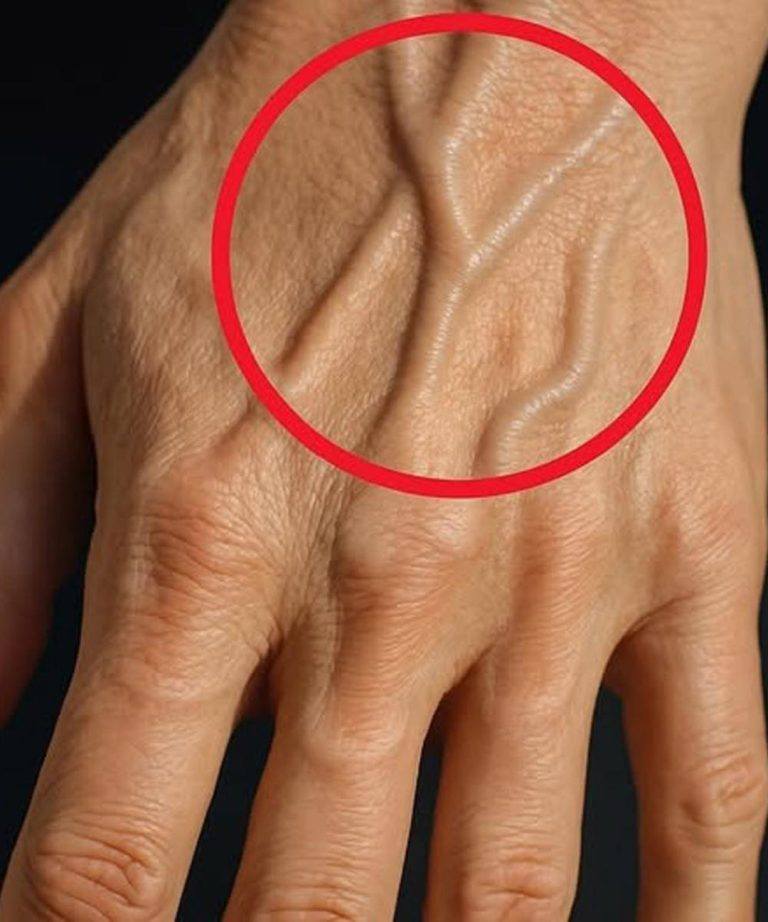
If Your Veins Are Visible, Here’s What It Really Means (7 Causes You Shouldn’t Ignore)
Visible veins on your hands, arms, or legs? Learn 7 common causes, when it’s normal, and when to see a doctor—expert-backed and easy to understand.
You Look Down… and Suddenly Notice Your Veins
Maybe it happened after a workout.
Or in bright sunlight.
Or one day, out of nowhere—you noticed your veins looked more prominent than usual.
Blue, green, or even slightly purple lines beneath your skin… more visible than before.
It can feel surprising. Sometimes even alarming.
But here’s the truth most people don’t hear clearly:
Visible veins are often completely normal—but not always.
In some cases, they’re simply a sign of healthy circulation. In others, they can be your body quietly signaling a change worth paying attention to.
Let’s break down what’s actually going on—without the fear, confusion, or internet myths.
What Causes Veins to Become Visible?
Veins carry blood back to your heart. When they appear more prominent, it usually means one of two things:
- They’re closer to the surface of your skin
- They’re under more pressure or flow than usual
Several factors influence this—and many are completely harmless.
7 Common Reasons Your Veins Are Visible
1. Low Body Fat (Completely Normal)
When there’s less fat under your skin, veins become easier to see.
This is especially common in:
- Athletes
- Lean individuals
- People who’ve recently lost weight
What it means:
Your veins aren’t changing—your body composition is.
2. Exercise and Increased Blood Flow
After a workout, your muscles need more oxygen.
This causes:
- Blood vessels to expand
- Veins to temporarily “pop”
Good news: This is a sign of healthy circulation, not a problem.
3. Aging and Thinning Skin
As we age:
- Skin becomes thinner
- Collagen decreases
- Veins become more visible
This is a natural and expected change, especially after age 50.
4. Heat and Temperature Changes
Hot weather or warm showers cause veins to expand.
You may notice:
- More visible veins in summer
- Temporary prominence after heat exposure
Why it happens:
Your body is trying to cool itself.
5. Genetics
Some people simply have more visible veins due to inherited traits.
If your parents had noticeable veins, chances are—you might too.
6. Dehydration
When your body lacks fluids:
- Blood volume decreases
- Veins may appear more pronounced
Other signs include:
- Dry skin
- Fatigue
- Headaches
7. Underlying Circulation Issues (Less Common but Important)
In some cases, visible veins may signal:
- Varicose veins
- Chronic venous insufficiency
- Blood flow irregularities
These are more likely if veins are:
- Bulging or twisted
- Painful
- Accompanied by swelling
When Visible Veins Are Completely Normal
You can usually relax if your veins are:
- Not painful
- Not swollen
- Not changing rapidly
- Only visible in certain conditions (heat, exercise, lighting)
In these cases, visible veins are often a sign of good blood flow, not a health issue.
When You Should Pay Attention
Visible veins may need medical evaluation if you notice:
- Sudden appearance with no clear cause
- Persistent swelling in legs or feet
- Pain, throbbing, or heaviness
- Skin discoloration around veins
- Itching or burning sensation
If any of these occur, it’s worth speaking with a healthcare provider.
Real-Life Scenario: A Common Misunderstanding
A 38-year-old office worker noticed her hand veins becoming more visible and assumed something was wrong.
After evaluation, the cause was simple:
- Mild dehydration
- Weight loss
- Increased gym activity
Once hydration improved and lifestyle stabilized, her concern faded.
The key takeaway?
Context matters more than appearance.
What You Can Do If You’re Concerned
Step 1: Check Your Hydration
Aim for steady water intake throughout the day—not just when thirsty.
Step 2: Observe Patterns
Ask yourself:
- Do veins appear after exercise?
- Only in heat?
- More visible over time or suddenly?
Patterns provide clues.
Step 3: Support Circulation
- Stay active
- Avoid long periods of sitting
- Elevate legs when resting
Step 4: Maintain Skin Health
Healthy skin can reduce visibility:
- Stay hydrated
- Use moisturizers
- Protect from sun damage
Step 5: Seek Medical Advice If Needed
If symptoms go beyond appearance, don’t ignore them.
Pros and Cons of Visible Veins
| Pros | Cons |
|---|---|
| Can indicate good circulation | May signal vein issues in some cases |
| Common in healthy individuals | Can cause cosmetic concerns |
| Often temporary | May require evaluation if symptoms exist |
Common Mistakes People Make
- Panicking over normal vein visibility
- Ignoring warning signs like pain or swelling
- Self-diagnosing based on internet images
- Over-focusing on appearance instead of symptoms
Expert Insights Most People Miss
- Vein visibility fluctuates daily—it’s not static
- Hydration alone can change appearance significantly
- Lighting and skin tone affect how veins look
- Visible veins ≠ unhealthy veins
2026 Health Trend: Body Awareness Over Body Fear
In the U.S., there’s a shift toward understanding the body rather than fearing it.
People are learning to:
- Recognize normal vs. abnormal changes
- Track patterns instead of reacting instantly
- Focus on function, not just appearance
Visible veins are part of this conversation.
Frequently Asked Questions (People Also Ask)
1. Are visible veins a sign of good health?
Often, yes—especially in active or lean individuals.
2. Why are my veins more visible suddenly?
It could be due to exercise, heat, dehydration, or weight changes.
3. Are visible veins dangerous?
Not usually, unless accompanied by pain, swelling, or other symptoms.
4. Can dehydration make veins more visible?
Yes, reduced fluid levels can make veins appear more pronounced.
5. Do visible veins mean poor circulation?
No—many times, it’s actually the opposite.
6. Should I be worried about hand veins?
Hand veins are commonly visible and usually harmless.
7. Can veins go back to normal?
Yes, depending on the cause (hydration, temperature, activity).
8. When should I see a doctor?
If veins are painful, swollen, or changing rapidly.
Action Checklist
- ✔ Stay hydrated daily
- ✔ Monitor changes over time
- ✔ Stay physically active
- ✔ Watch for warning symptoms
- ✔ Don’t panic—observe first
- ✔ Seek help if needed
Conclusion: Not Everything That Looks Different Is Dangerous
Visible veins can feel unexpected—but they’re often just a reflection of how your body works, not a sign that something is wrong.
Your body changes. It adapts. It responds.
And sometimes, it simply becomes more visible.
The real skill is learning when to observe… and when to act.
Visible veins are usually normal and harmless—but context matters.
Pay attention to symptoms, not just appearance, and let your body guide you.
Have you noticed your veins becoming more visible recently?
What changed—your routine, diet, or activity?
Share your experience in the comments. Your insight might help someone else understand their body a little better.