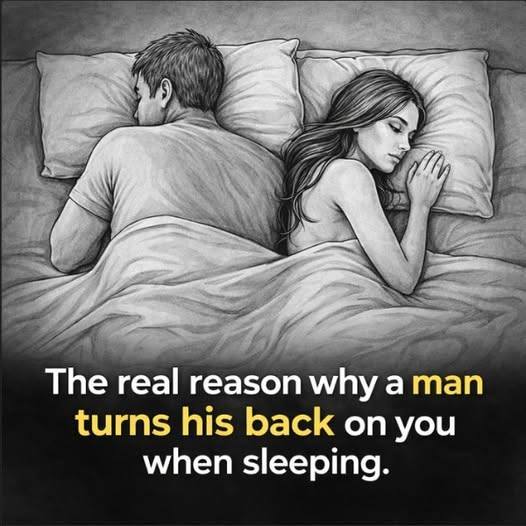
If Your Partner Turns Their Back on You While Sleeping, It Means This (Psychology-Based Explanation)
Does your partner sleep facing away from you? Learn what sleep positions may actually mean in relationships and what psychology says about it.
Few things feel more emotionally loaded than noticing how your partner sleeps.
You might lie awake thinking:
“Why are they turning their back on me?”
“Did something change between us?”
It’s a common concern, especially in long-term relationships where small behaviors can feel meaningful. But here’s the important truth:
Sleeping position is rarely a direct reflection of love or emotional distance.
Still, it can reveal useful clues about comfort, sleep quality, and relationship dynamics—when interpreted correctly.
Let’s break it down in a realistic, psychology-informed way.
First, The Reality Most People Don’t Consider
Sleep behavior is influenced more by biology than emotion.
During sleep, the brain prioritizes:
- Comfort
- Temperature regulation
- Spinal alignment
- Reduced disturbance
So when someone turns away, it is often about physical comfort—not emotional rejection.
1. They May Simply Sleep More Comfortably That Way
One of the most common reasons is physical comfort.
People often turn away because:
- It reduces heat between bodies
- It allows more space to stretch
- It supports better spinal alignment
Sleep positions are often unconscious and change throughout the night.
2. They Are Trying to Improve Sleep Quality
Research in sleep science shows that individuals shift positions multiple times during the night.
Turning away may help:
- Reduce disturbances from movement
- Improve breathing comfort
- Minimize pressure points
Good sleep often requires repositioning—regardless of relationship status.
3. It Can Be a Neutral Habit, Not an Emotional Signal
Many people naturally sleep facing away even when deeply in love.
This may simply reflect:
- Childhood sleep habits
- Personal comfort preferences
- Temperature sensitivity
There is no universal “relationship meaning” attached to it.
4. They May Be Seeking Personal Space While Sleeping
Even in close relationships, people still need a sense of individual space during rest.
Sleeping slightly apart can:
- Improve relaxation
- Reduce subconscious alertness
- Help the brain fully rest
This is often healthy, not negative.
5. Emotional Distance Is Rarely Expressed Through Sleep Alone
If emotional distance exists in a relationship, it usually shows up in waking behavior, such as:
- Communication changes
- Reduced affection during the day
- Less emotional engagement
- Avoidance of meaningful interaction
Sleep position alone is not a reliable indicator.
Important Psychology Insight
Sleep researchers and relationship therapists generally agree:
Physical closeness during sleep does not always correlate with emotional closeness in relationships.
People can:
- Sleep facing away and still feel deeply connected
- Sleep cuddled and still experience emotional conflict
Sleep is a biological state, not a communication tool.
When It Might Be Worth Paying Attention
While sleep position alone is not meaningful, changes in overall behavior might be.
Consider the broader picture if you notice:
- Sudden shift in affection patterns
- Emotional withdrawal during the day
- Reduced communication
- Increased tension or avoidance
Context matters far more than posture.
Healthy Ways to Interpret It
Instead of assuming meaning, try:
- Observing patterns over time
- Considering stress or fatigue levels
- Asking gentle, open questions if concerned
- Focusing on daytime emotional connection
Real-Life Scenario
A couple in a long-term relationship notices that one partner has started sleeping facing away more often.
At first, it causes worry. But later they realize:
- Work stress increased
- Sleep quality improved in that position
- Emotional connection during the day remained strong
The change had nothing to do with relationship dissatisfaction.
Common Misunderstandings
1. “Facing away means rejection”
Not supported by sleep psychology.
2. “Couples must sleep face-to-face to be close”
Not true—comfort varies widely.
3. “It always signals emotional distance”
Only true if other relationship issues are present.
How to Strengthen Connection Instead
If you feel uncertain, focus on:
- Quality time during the day
- Open communication
- Small affectionate gestures
- Emotional check-ins
- Shared routines
Sleep is only one small part of intimacy.
Frequently Asked Questions
1. Does sleeping back-to-back mean problems?
Not necessarily. It’s often just comfort.
2. Should couples sleep facing each other?
Only if both partners prefer it.
3. Can stress affect sleep position?
Yes, stress can change sleep behavior.
4. Is spooning necessary for a healthy relationship?
No, emotional connection matters more.
5. Why does my partner move away during sleep?
Likely comfort, temperature, or habit.
6. Does sleep position reflect attraction?
Not reliably.
7. Can relationships stay strong with different sleep styles?
Yes, many do.
8. What matters more than sleep position?
Communication and emotional connection.
Action Checklist
- ✔ Avoid overinterpreting sleep behavior
- ✔ Focus on daytime emotional connection
- ✔ Communicate if you feel uncertain
- ✔ Respect sleep comfort differences
- ✔ Strengthen relationship habits outside the bedroom
Conclusion
Sleeping position is one of the most misunderstood aspects of relationships.
While it can sometimes raise emotional questions, it is usually driven by comfort, habit, and biology—not relationship quality.
The real strength of a relationship is not how you sleep together, but how you connect when you are awake.
If your partner turns their back while sleeping, it usually reflects comfort—not emotional distance.