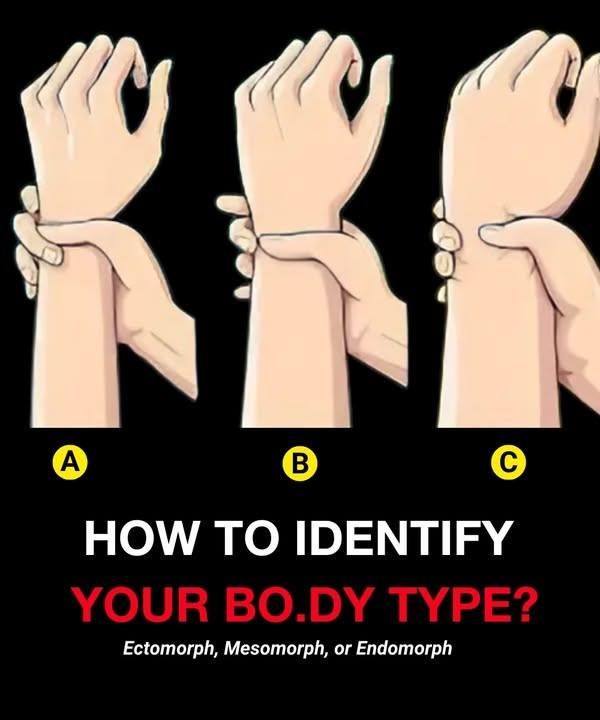
Body Types Explained: Are You an Ectomorph, Mesomorph, or Endomorph? (And Why It Actually Matters for Your Fitness Goals)
Learn the three body types—ectomorph, mesomorph, and endomorph—how to identify yours, and how it affects weight loss, muscle gain, and fitness results.
Why Some People Gain Muscle Easily… and Others Don’t
You’ve probably noticed it:
Some people eat more and stay slim.
Others gain weight quickly.
Some build muscle fast, while others struggle for months.
It’s tempting to think it’s just “metabolism” or discipline—but there’s another layer many people overlook:
body structure tendencies, often described as body types.
While not a strict scientific classification, the concept of ectomorph, mesomorph, and endomorph helps explain common patterns in how bodies respond to diet and exercise.
Let’s break it down in a simple, practical way.
The Three Main Body Types
The idea of body types was popularized in the 1940s by psychologist William Sheldon. Today, it’s mostly used as a fitness framework, not a strict medical system.
Most people are actually a mix of all three, but one usually dominates.
1. Ectomorph Body Type
The “Naturally Lean” Build
Ectomorphs are often described as:
- Slim and narrow-framed
- Fast metabolism
- Hard time gaining weight or muscle
- Long limbs
Common Characteristics:
- Thin shoulders and hips
- Low body fat
- Small bone structure
- Eats a lot but doesn’t gain easily
Fitness Challenge:
Building muscle and weight can be difficult.
Best Approach:
- Higher calorie intake
- Strength training focus
- Fewer long cardio sessions
2. Mesomorph Body Type
The “Naturally Athletic” Build
Mesomorphs tend to have:
- Broad shoulders
- Muscular structure
- Easier muscle gain
- Balanced metabolism
Common Characteristics:
- Gains muscle easily
- Responds quickly to exercise
- Can gain or lose weight relatively easily
Fitness Advantage:
They often see faster results from training.
Best Approach:
- Balanced diet (not extreme)
- Mix of strength + cardio
- Consistency over intensity
3. Endomorph Body Type
The “Curvier or Heavier” Build
Endomorphs typically have:
- Wider frame
- Higher body fat storage tendency
- Slower metabolism
- Gains weight easily
Common Characteristics:
- Rounded body shape
- Difficulty losing fat
- Strong strength potential
Fitness Challenge:
Managing body fat while maintaining muscle.
Best Approach:
- Controlled calorie intake
- Regular strength training
- Moderate cardio
Why Body Types Matter (But Don’t Define You)
Understanding your body type helps you:
- Set realistic expectations
- Choose better workout styles
- Avoid comparing yourself to others
- Adjust nutrition more effectively
But here’s the important truth:
Your body type is not your destiny—it’s just a starting point.
The Science Perspective (Important Reality Check)
Modern research suggests body types are not strict categories. Instead, they are general patterns influenced by genetics, lifestyle, and metabolism.
Your body is constantly shaped by:
- Diet
- Activity level
- Sleep
- Hormones
- Stress
So instead of rigid labels, think of them as tendencies, not rules.
Real-Life Example
Two people start the same fitness program:
- Person A builds muscle quickly (mesomorph tendency)
- Person B struggles to gain weight (ectomorph tendency)
- Person C gains weight easily (endomorph tendency)
After 6 months:
- All three improve—but at different speeds
- All require different adjustments
This is why personalization matters more than comparison.
How to Identify Your Body Type
Ask yourself:
Do you struggle to gain weight?
→ Likely ectomorph tendency
Do you gain muscle easily?
→ Likely mesomorph tendency
Do you gain fat easily?
→ Likely endomorph tendency
Most people fall somewhere in between.
How Each Body Type Should Approach Fitness
Ectomorph Strategy
- Eat more calorie-dense foods
- Focus on compound lifts
- Limit excessive cardio
Mesomorph Strategy
- Maintain balanced nutrition
- Mix strength and cardio
- Avoid overtraining
Endomorph Strategy
- Prioritize whole foods
- Control calorie intake
- Stay consistent with movement
Common Mistakes People Make
1. Using Body Type as an Excuse
“I can’t lose weight because I’m an endomorph.”
Not true—habits still matter most.
2. Copying Others Blindly
What works for a friend may not work for you.
3. Ignoring Nutrition
Exercise alone doesn’t determine results.
4. Expecting Fast Transformation
Body changes take time regardless of type.
Pros and Cons of Body Type Thinking
Pros
- Helps understand personal tendencies
- Improves fitness planning
- Reduces unrealistic expectations
Cons
- Can oversimplify biology
- May lead to labeling or excuses
- Not scientifically rigid
Expert Insight Most People Miss
The most successful fitness transformations don’t rely on body type—they rely on:
- Consistency
- Progressive training
- Sustainable eating habits
Your body adapts over time. That means:
You are not stuck in one category forever.
FAQs (People Also Ask)
1. Can you change your body type?
Not genetically—but you can significantly change your body composition.
2. Which body type is best?
None. Each has strengths and challenges.
3. Are body types scientifically accurate?
They are simplified models, not strict medical classifications.
4. Can someone be a mix of body types?
Yes—most people are.
5. Do body types affect metabolism?
Indirectly, but lifestyle has a major influence.
6. Which body type gains muscle fastest?
Mesomorphs tend to respond faster on average.
7. Which body type loses weight fastest?
Ectomorphs may lose weight more easily, but not always healthily.
8. Should I train differently based on my body type?
Slight adjustments can help, but fundamentals remain the same.
Action Checklist
- ✔ Identify your natural tendencies
- ✔ Adjust nutrition based on goals
- ✔ Focus on consistency over labels
- ✔ Avoid comparisons
- ✔ Track progress over time
Body types can help you understand your starting point—but they should never limit your expectations.
Your body is adaptable. Responsive. Changeable.
What matters most is not the label you fall into—but the habits you build consistently.
Ectomorph, mesomorph, and endomorph are helpful guides—but your lifestyle ultimately shapes your results far more than your category.
Which body type do you relate to most—and do you think it reflects your real-life experience?
Share your thoughts below. Your perspective might help someone else better understand their own fitness journey.