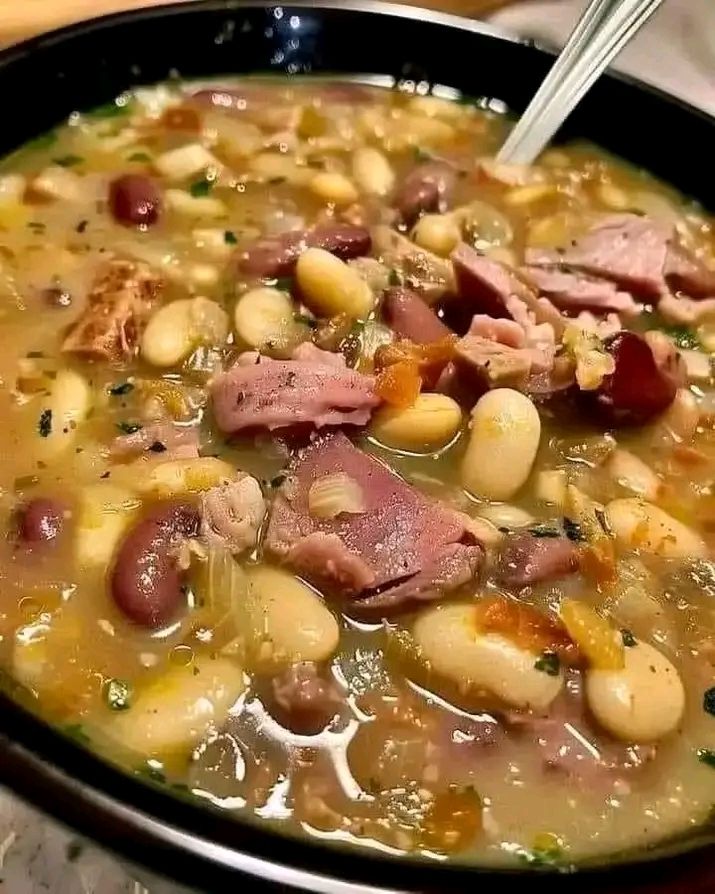
𝐖𝐎𝐔𝐋𝐃 𝐘𝐎𝐔 𝐄𝐀𝐓 𝐓𝐇𝐈𝐒 𝐁𝐄𝐀𝐍 𝐀𝐍𝐃 𝐇𝐀𝐌 𝐇𝐎𝐂𝐊 𝐒𝐎𝐔𝐏 ? 🫘🥓🍲
A Rustic, Slow-Simmered Bowl of Pure Comfort You Can’t Ignore
There are recipes that feel like they belong in a cookbook… and then there are recipes that feel like they belong in people’s memories.
Bean and ham hock soup is one of those memory recipes.
It’s the kind of dish that quietly simmers in the background of life—on cold afternoons, rainy evenings, or slow weekends when the house feels still. The aroma starts soft and smoky, then builds into something rich and deeply comforting: tender beans breaking down into the broth, smoky ham hock releasing its savory depth, garlic and onions melting into the pot like they were always meant to be there.
You don’t rush this soup. You let it become what it wants to be.
And when you finally lift the spoon to your lips, it’s thick, hearty, and full of old-fashioned flavor that feels both humble and unforgettable.
So the question really is:
Would you eat this bean and ham hock soup?
One spoonful usually answers that for you.
Why You’ll Love This Recipe
- Incredibly rich, smoky flavor from slow-cooked ham hock
- Budget-friendly ingredients that feed a whole family
- High in protein and fiber – surprisingly filling
- Perfect cold-weather comfort food
- One-pot recipe = minimal cleanup
- Even better the next day as flavors deepen
- Traditional, old-fashioned taste that feels nostalgic
Ingredients (With Exact Measurements)
Soup Base:
- 1 large smoked ham hock (700–900 g / 1.5–2 lbs)
- 2 cups (400 g) dried white beans (navy, cannellini, or great northern)
- 1 large onion, chopped (150 g / 1 cup)
- 3 cloves garlic, minced (10 g / 2 tsp)
- 2 medium carrots, diced (150 g / 1 cup)
- 2 celery stalks, chopped (100 g / 1 cup)
- 8 cups (2 liters) water or low-sodium broth
- 2 bay leaves
- 1 tsp dried thyme
- 1 tsp black pepper
- 1 tsp salt (adjust after cooking)
Optional Add-Ins:
- 1 tsp smoked paprika (extra depth)
- 1 potato, diced (for thicker texture)
- 1 cup (150 g) spinach or kale (added at end)
- Chili flakes for heat
- Fresh parsley for garnish
Healthy Substitutes:
- Use smoked turkey leg instead of ham hock
- Choose low-sodium broth
- Add more vegetables for a lighter version
Nutritional Information (Per Serving)
(Approx. 6 servings)
- Calories: 350 kcal
- Protein: 25 g
- Carbohydrates: 40 g
- Fats: 10 g
- Fiber: 11 g
Vitamins & Minerals:
- Rich in iron, magnesium, potassium, and folate
- Beans support gut health and digestion
- Ham hock provides collagen and savory depth
Dietary Notes:
- ✔ High-protein
- ✔ High-fiber
- ✔ Gluten-free
- ❌ Not vegetarian
- ❌ Not vegan
Kitchen Tools Needed
- Large heavy pot or Dutch oven
- Cutting board
- Sharp knife
- Wooden spoon
- Bowl for soaking beans
- Ladle
Step-by-Step Preparation (Detailed)
Step 1: Soak the Beans (8–12 hours)
Place dried beans in a large bowl and cover with plenty of water.
Let soak overnight, then drain and rinse.
Pro Tip: Soaking helps beans cook evenly and reduces cooking time.
Step 2: Sauté Aromatics (5–7 minutes)
In a large pot, sauté onion, carrots, and celery until softened.
Add garlic and cook for another minute until fragrant.
Step 3: Add Ham Hock and Beans
Place ham hock into the pot along with soaked beans, bay leaves, thyme, and pepper.
Step 4: Add Liquid and Simmer
Pour in water or broth until everything is fully covered.
Bring to a boil, then reduce to low heat.
Cover and simmer gently for 2.5–3 hours.
What to look for: Beans should be soft and creamy; meat should fall off the bone.
Step 5: Shred the Ham
Remove ham hock carefully. Shred the meat using forks and discard bone and excess fat.
Return shredded meat to the pot.
Step 6: Adjust Flavor
Taste and adjust salt, pepper, and seasoning.
Add smoked paprika or chili flakes if desired.
Step 7: Final Simmer (10–15 minutes)
Let everything simmer together so flavors fully blend.
Expert Cooking Tips & Mistakes to Avoid
Tips:
- Use real smoked ham hock for authentic flavor
- Cook low and slow—never rush beans
- Stir occasionally to prevent sticking
- Let soup rest before serving for deeper flavor
Mistakes:
- ❌ Not soaking beans → uneven cooking
- ❌ Adding salt too early → beans stay tough
- ❌ Boiling too aggressively → beans break apart
- ❌ Skipping aromatics → flat flavor
Variations & Customizations
🌶 Spicy Version:
- Add chili flakes or cayenne pepper
- Stir in hot sauce before serving
🥗 Healthier Version:
- Use smoked turkey instead of ham
- Add extra greens like kale or spinach
- Reduce salt and use low-sodium broth
🧒 Kid-Friendly Version:
- Blend part of the soup for creamy texture
- Add small pasta for fun texture
- Reduce smoky intensity slightly
Storage & Reheating Instructions
Refrigerator:
- Store in airtight container for up to 4–5 days
Freezer:
- Freeze for up to 3 months
Reheating:
- Stovetop (best): Heat slowly with added water or broth
- Microwave: Heat in intervals, stirring often
Pro Tip: Soup thickens over time—add liquid when reheating.
Serving Suggestions
Bean and ham hock soup pairs beautifully with:
- Warm cornbread
- Crusty sourdough bread
- Buttered toast
- Steamed rice
- Pickled onions or vegetables
- Simple green salad
For extra comfort, serve in deep bowls with a drizzle of olive oil or fresh parsley on top.
FAQs
1. Can I use canned beans instead of dried?
Yes, but reduce cooking time to about 1 hour.
2. Can I make this in a slow cooker?
Absolutely—cook on LOW for 7–8 hours.
3. Why is my soup too salty?
Ham hock can be salty—use low-sodium broth and adjust at the end.
4. Can I freeze this soup?
Yes, it freezes very well for up to 3 months.
5. What can I use instead of ham hock?
Smoked turkey leg or bacon works as a substitute.
6. Do I have to soak the beans?
Recommended, but quick-soak methods also work.
7. Why is my soup too thick?
Add more broth or water when reheating.
Bean and ham hock soup isn’t flashy. It doesn’t try to impress you with presentation or trends. Instead, it wins you over slowly—with depth, warmth, and honest flavor that feels like it’s been cooking for generations.
So… would you eat this bean and ham hock soup?
If you try it, don’t be surprised if it becomes one of those quiet comfort recipes you return to every winter. Simple. Hearty. Unforgettable.
And when you make it, share it—because the best soups aren’t just cooked… they’re passed on.