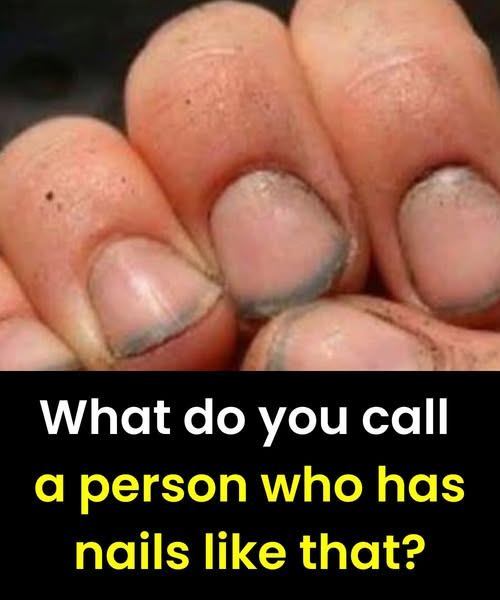
What Do You Call a Person With Nails Like That? (From Medical Terms to Modern Trends Explained)
Curious what to call unusual, long, damaged, or unique nails? Learn the correct terms, causes, and meanings behind different nail types.
You Noticed the Nails… But What Do You Call It?
Maybe you saw someone with extremely long nails.
Or nails that looked thick, curved, bitten, or even claw-like.
It’s one of those things people notice immediately—but don’t always know how to describe without sounding awkward or offensive.
So what do you call a person with nails like that?
The answer depends entirely on what kind of nails you’re talking about—because the meaning can range from:
- A simple grooming habit
- A fashion choice
- A medical condition
- Or even a psychological behavior
Let’s break it down clearly so you can understand—and describe it accurately.
First: There Isn’t Just One Term
There’s no single universal label for “a person with unusual nails.”
Instead, there are specific terms based on appearance or cause.
Here’s how to identify the right one.
If the Nails Are Extremely Long
Common Terms
- “Long-nailed” (neutral, descriptive)
- “Clawed nails” (if curved or sharp-looking)
- “Nail enthusiast” (if styled or intentional)
In beauty culture, especially in the U.S., long nails are often a fashion statement, not a problem.
Think:
- Acrylic nails
- Sculpted gel nails
- Artistic nail extensions
👉 In this case, the person isn’t defined negatively at all—they’re simply expressing style.
If the Nails Are Thick, Yellow, or Deformed
This may point to a medical condition, not just appearance.
Medical Terms
- Onychomycosis (fungal nail infection)
- Onychauxis (thickened nails)
- Clubbing (rounded, bulb-like nails linked to health issues)
In this case, instead of labeling the person, it’s more appropriate to say:
- “They may have a nail condition”
This keeps the language respectful and accurate.
If the Nails Are Severely Curved or Claw-Like
There are a couple of specific terms:
- “Ram’s horn nails” (a condition where nails grow thick and curved)
- “Pincer nails” (nails that curve inward tightly)
These are usually associated with:
- Aging
- Neglect
- Certain medical conditions
If the Nails Are Bitten or Damaged
This is very common and has a behavioral term.
The Correct Term
- Onychophagia (chronic nail biting)
You might casually describe someone as:
- “A nail biter”
This is often linked to:
- Anxiety
- Stress
- Habitual behavior
If the Nails Look Dirty or Unkempt
Instead of labeling the person, it’s better to describe the condition:
- “Poor nail hygiene”
- “Unmaintained nails”
Avoid calling someone offensive names—this keeps your language respectful and socially appropriate.
If It’s a Cultural or Personal Style
In some communities and fashion trends, nails may be:
- Extra long
- Heavily decorated
- Sharply shaped
Common descriptors:
- “Statement nails”
- “Designer nails”
- “Acrylic set”
In the U.S., this is especially popular in:
- Beauty and fashion culture
- Social media trends
Why the Words You Use Matter
Describing someone based on appearance—especially something visible like nails—can easily come across as judgmental.
A better approach:
- Focus on description, not labeling the person
- Use neutral or factual language
- Avoid assumptions about hygiene or health
Real-Life Example
Imagine you see someone with very thick, curved nails.
Instead of saying:
❌ “That person has gross nails”
You could say:
✔ “Their nails look thick—maybe a nail condition like fungal infection”
This shifts from judgment → observation.
Common Mistakes People Make
1. Using Insulting Terms
Words like “dirty,” “gross,” or “creepy” aren’t accurate or respectful.
2. Assuming It’s Always Hygiene
Not all nail issues come from neglect—many are medical.
3. Confusing Style With Problems
Long or sharp nails are often intentional.
4. Labeling the Person Instead of the Trait
Better:
- “They have bitten nails”
Not:
- “They’re a…” (label)
Expert Insight: Nails Can Reflect Health
According to dermatology research, nails can reveal:
- Nutritional deficiencies
- Circulation issues
- Infections
- Stress behaviors
So what you’re noticing might actually be a health signal, not just appearance.
FAQs
1. Is there a general word for someone with unusual nails?
No single word—use descriptive or condition-specific terms.
2. What do you call someone who bites nails?
A nail biter, or medically, someone with onychophagia.
3. Are long nails unhealthy?
Not necessarily—they’re often a fashion choice.
4. What causes thick nails?
Often fungal infections, aging, or health conditions.
5. Are curved nails normal?
Slight curves are normal—extreme curves may indicate a condition.
6. Should I point it out to someone?
Only if necessary and done respectfully.
7. Can nail appearance be treated?
Yes—depending on the cause (medical or cosmetic).
8. Is it rude to describe someone by their nails?
It can be—neutral language is best.
Quick Reference Guide
| Nail Type | Correct Term | Meaning |
|---|---|---|
| Bitten nails | Onychophagia | Nail-biting habit |
| Thick nails | Onychauxis | Nail thickening |
| Fungal nails | Onychomycosis | Infection |
| Curved/claw nails | Ram’s horn / pincer nails | Structural nail condition |
| Long styled nails | Acrylic / fashion nails | Personal style |
Conclusion: It’s Not About Labeling—It’s About Understanding
When you notice unusual nails, the goal isn’t to label the person—it’s to understand what you’re seeing.
Sometimes it’s fashion.
Sometimes it’s habit.
Sometimes it’s health.
The smartest—and most respectful—approach is to describe accurately, stay neutral, and avoid assumptions.
There’s no single name for a person with “nails like that.” The correct term depends on the cause—whether it’s style, habit, or a medical condition.
Have you ever noticed a nail condition and wondered what it was? Share your experience—your question might help someone else understand it too.