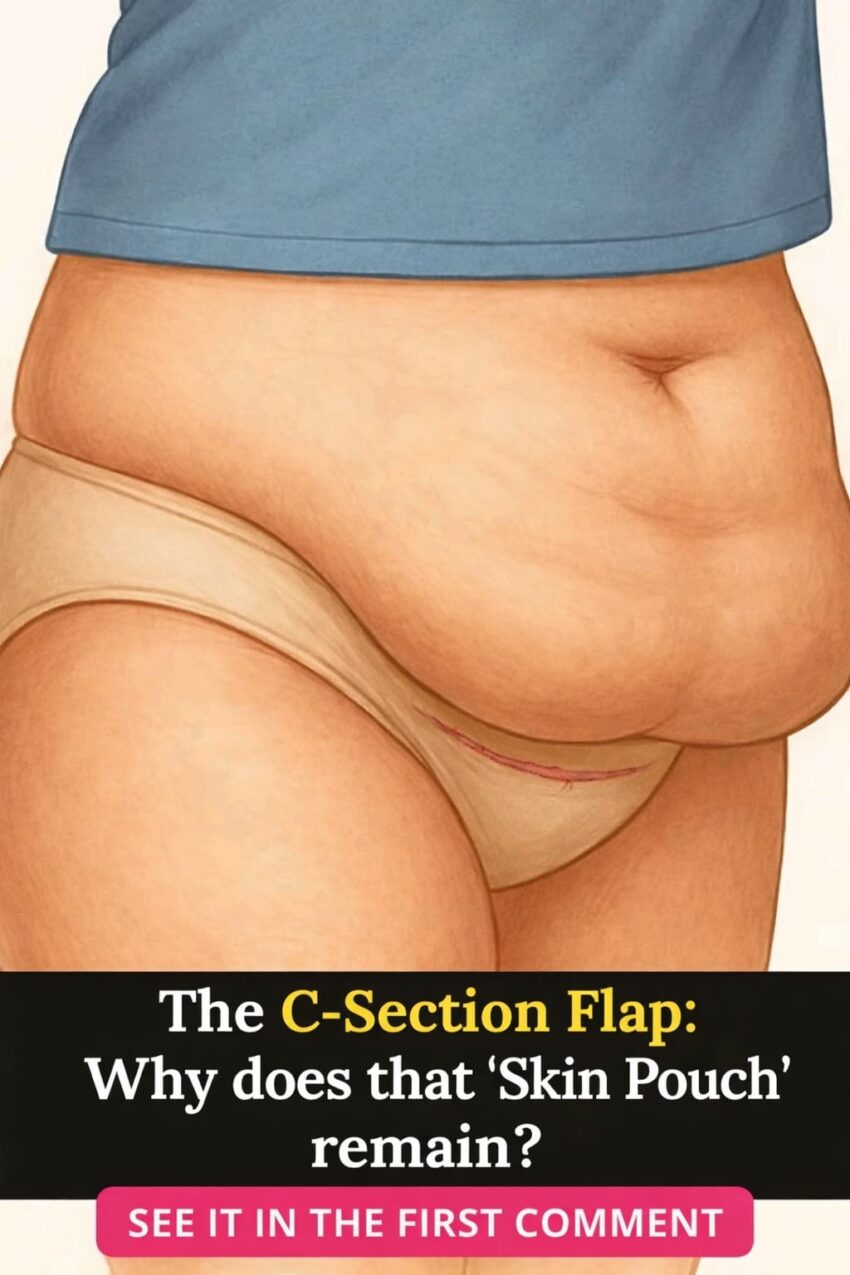
The C-Section “Pooch” Explained: 11 Real Reasons That Postpartum Skin Fold Sticks Around (and What Actually Helps)
Struggling with a C-section “shelf”? Learn why that lower belly pouch lingers, what’s normal, and proven, safe ways to improve it over time.
The moment no one warns you about
You finally make it through pregnancy, delivery, and recovery—only to look down weeks later and notice something unexpected: a soft, rounded “bag” of skin sitting just above your C-section scar.
It doesn’t go away when the swelling fades.
It doesn’t respond quickly to crunches.
And for many women across the U.S., it feels confusing, frustrating, and deeply personal.
This isn’t vanity. It’s about understanding your body.
If you’ve ever wondered why this happens—and more importantly, what you can realistically do about it—this guide walks you through the science, the myths, and the practical steps that actually make a difference.
What Is the “C-Section Flap,” Really?
That “pouch,” often called a C-section shelf or overhang, is a combination of:
- Loose skin
- Fat distribution changes
- Scar tissue beneath the surface
- Weakened abdominal muscles
It typically appears just above the incision line and can vary in size—from barely noticeable to more pronounced.
Important: This is extremely common. You are not alone, and it’s not a sign you’ve done anything wrong.
Why It Matters (Especially in the U.S.)
In the United States, nearly 1 in 3 births are via C-section, according to data from the CDC. That means millions of women experience this exact concern—but it’s rarely talked about honestly.
Why it matters:
- Postpartum body image is strongly tied to mental health
- Social media often promotes unrealistic “bounce-back” expectations
- Many women don’t receive clear guidance during recovery
- It can impact confidence, clothing choices, and physical comfort
Understanding what’s happening beneath the surface removes shame and replaces it with control.
11 Real Reasons That “Bag” of Skin Stays
1. Skin Stretching Beyond Its Elastic Limit
During pregnancy, your skin stretches significantly to accommodate your baby.
But here’s the key detail:
Skin doesn’t always snap back fully—especially after rapid or prolonged stretching.
Factors that influence this:
- Genetics
- Age
- Amount of weight gained
- Skin elasticity (collagen levels)
2. The Way C-Section Incisions Heal
A C-section involves cutting through multiple layers:
- Skin
- Fat
- Fascia
- Uterus
As your body heals, scar tissue forms and can anchor the skin downward, creating that slight “ledge” effect above the scar.
3. Fat Redistribution After Pregnancy
Hormonal changes during and after pregnancy can shift where your body stores fat.
For many women, the lower abdomen becomes a “storage zone.”
Even if you lose overall weight, this area may be more resistant.
4. Diastasis Recti (Abdominal Separation)
This is one of the most overlooked contributors.
During pregnancy, your abdominal muscles separate. If they don’t fully reconnect:
- Your core becomes weaker
- Your belly can protrude outward
- The pouch appears more prominent
5. Loss of Muscle Tone
Pregnancy stretches and weakens core muscles.
After a C-section, recovery time limits early exercise, which can lead to:
- Reduced abdominal support
- Softer, less structured midsection
6. Scar Adhesions Beneath the Skin
Scar tissue doesn’t always heal smoothly.
Sometimes it binds to deeper layers, creating:
- Tightness
- Pulling sensations
- Uneven skin contours
This can exaggerate the appearance of a “fold.”
7. Hormonal Shifts Postpartum
Hormones like estrogen and cortisol influence:
- Fat storage
- Skin repair
- Inflammation
After birth, these fluctuate dramatically, affecting how your body heals and reshapes.
8. Rapid Weight Changes
Quick weight gain and loss can leave skin with less time to adapt.
The result:
- Loose skin
- Reduced elasticity
- Persistent softness in the lower belly
9. Genetics Play a Bigger Role Than You Think
Some bodies naturally:
- Store more fat in the lower abdomen
- Produce less collagen
- Heal with thicker scar tissue
No workout or cream can override genetics completely—but you can still improve outcomes.
10. Posture and Core Engagement
After pregnancy, posture often shifts:
- Pelvis tilts forward
- Core disengages
- Lower belly protrudes more visibly
Small alignment changes can significantly impact appearance.
11. Unrealistic Expectations
This one matters more than most people realize.
The pressure to “snap back” quickly leads many women to:
- Overexercise too soon
- Feel discouraged
- Misinterpret normal healing as failure
Your body isn’t broken—it’s recovering from major surgery.
What Actually Helps (Step-by-Step, Realistically)
There’s no overnight fix—but there are effective, evidence-based strategies.
Step 1: Give Your Body Enough Time
Healing timeline:
- 0–6 weeks: recovery phase
- 6–12 weeks: gradual rebuilding
- 3–12 months: visible improvements
Rushing this process often backfires.
Step 2: Rebuild Your Core (The Right Way)
Skip traditional crunches early on.
Focus instead on:
- Deep core activation (transverse abdominis)
- Breathing exercises
- Pelvic floor strengthening
Examples:
- Heel slides
- Pelvic tilts
- Dead bugs (modified)
Step 3: Address Diastasis Recti
If you suspect muscle separation:
- Work with a pelvic floor physical therapist
- Avoid exercises that worsen bulging
- Use controlled, slow movements
This alone can significantly reduce the appearance of the pouch.
Step 4: Scar Massage (Often Overlooked)
Once healed, gentle scar massage can:
- Improve circulation
- Reduce adhesions
- Smooth tissue underneath
How to do it:
- Use clean hands or oil
- Apply light pressure
- Move in small circular motions
Consistency matters more than intensity.
Step 5: Strength Training (Not Just Cardio)
Cardio burns calories—but strength training reshapes your body.
Focus on:
- Core
- Glutes
- Back
This improves posture and overall abdominal support.
Step 6: Nutrition That Supports Skin Recovery
Your skin needs:
- Protein (for repair)
- Vitamin C (collagen production)
- Healthy fats (elasticity)
Quick examples:
- Eggs, fish, chicken
- Citrus fruits
- Nuts and seeds
Step 7: Hydration Matters More Than You Think
Dehydrated skin = less elasticity.
Aim for consistent daily water intake—not just occasional hydration.
Step 8: Compression Garments (Short-Term Support)
These can:
- Provide structure
- Improve posture
- Offer comfort early postpartum
But they are not a permanent solution.
Real-Life Scenario: What Progress Actually Looks Like
Jessica, a 34-year-old mom from Texas, noticed a pronounced C-section shelf 3 months postpartum.
Instead of jumping into intense workouts, she:
- Focused on physical therapy
- Practiced core breathing daily
- Incorporated light strength training at 8 weeks
By 8 months:
- Her core felt stronger
- The overhang reduced significantly
- Her posture improved
Not perfect—but noticeably better.
That’s a realistic, sustainable outcome.
Pros and Cons of Common Approaches
| Approach | Pros | Cons |
|---|---|---|
| Core rehab exercises | Safe, effective, long-term | Requires consistency |
| Cardio workouts | Burns calories | Doesn’t target root cause |
| Waist trainers | Temporary shape | No lasting change |
| Scar massage | Improves texture | Takes time |
| Surgery (tummy tuck) | Immediate visible result | Costly, invasive, recovery required |
Common Mistakes to Avoid
Starting intense workouts too early
This can worsen muscle separation and delay healing.
Ignoring your core completely
Avoiding exercise out of fear leads to weaker support over time.
Comparing yourself to social media
Many “after” photos don’t show reality—lighting, angles, and editing matter.
Skipping professional help
Pelvic floor therapists are underutilized but incredibly effective.
Expecting fast results
This is a long-term recovery—not a 30-day transformation.
Expert Tips Most People Don’t Know
- Breathing affects your core more than crunches
Proper diaphragmatic breathing activates deep muscles. - Walking is underrated
It improves circulation, posture, and gentle core engagement. - Scar mobility impacts appearance
Flexible scars = smoother skin contour. - Sleep influences recovery
Poor sleep disrupts hormones and slows healing.
2026 Trends in Postpartum Recovery
Across the U.S., postpartum care is shifting:
- More women are seeking pelvic floor therapy early
- Virtual rehab programs are growing
- Functional fitness is replacing “bounce-back” culture
- Awareness around realistic healing timelines is improving
This is a positive shift—less pressure, more support.
Future Outlook: What You Can Expect Long-Term
Over time, most women experience:
- Gradual tightening of skin
- Improved muscle tone
- Reduced prominence of the pouch
However, some level of softness may remain—and that’s normal.
For those seeking further change, medical options like body contouring exist, but they’re personal decisions—not necessities.
Frequently Asked Questions (People Also Ask Style)
1. Will my C-section pouch ever go away completely?
It can improve significantly, but complete disappearance varies based on skin elasticity, muscle recovery, and genetics.
2. When can I start exercising after a C-section?
Most women can begin gentle movement around 6 weeks—but always follow your doctor’s guidance.
3. Do sit-ups help flatten the pouch?
Not early on. They can worsen muscle separation if done incorrectly.
4. Is the pouch caused by fat or loose skin?
Usually both, along with scar tissue and muscle changes.
5. Can creams or oils remove it?
They may improve skin texture but won’t eliminate the pouch alone.
6. Is surgery the only permanent fix?
It’s the most immediate option, but many women see meaningful improvement without it.
7. Why is the area above the scar uneven?
Scar tissue can pull the skin downward, creating that uneven look.
8. How long does it take to see improvement?
Noticeable changes often occur between 3–12 months with consistent effort.
9. Can weight loss alone fix it?
Weight loss helps, but it doesn’t address muscle separation or loose skin fully.
10. Should I see a specialist?
Yes—especially a pelvic floor physical therapist if you want targeted recovery.
Action Checklist: What to Do Next
- ✔ Give your body at least 6–12 months to recover
- ✔ Start gentle core activation exercises
- ✔ Check for diastasis recti
- ✔ Practice scar massage regularly
- ✔ Add strength training gradually
- ✔ Stay hydrated and eat for recovery
- ✔ Improve posture daily
- ✔ Seek professional guidance if needed
That “bag” of skin after a C-section isn’t a flaw—it’s a combination of biology, healing, and adaptation.
You can improve it.
You can strengthen your body.
You can feel confident again.
But it won’t come from quick fixes or pressure—it comes from understanding, patience, and consistent care.
Your body just did something extraordinary.
The goal isn’t to erase every sign of it—it’s to rebuild strength, function, and confidence in a way that actually lasts.
If this helped you understand your body better, share it with another mom who might be silently wondering the same thing.
And if you’ve experienced this yourself, your story matters—drop a comment and add your voice to the conversation.