If Your Hands “Fall Asleep,” It Could Be a Sign of Something You Shouldn’t Ignore (Here’s What It Really Means)
Hands falling asleep can be harmless—or a warning sign. Learn the real causes, when to worry, and what your body may be telling you.
It usually happens at the worst time.
You’re scrolling your phone, sleeping on your arm, or sitting in an awkward position—and suddenly your hand feels strange.
Tingling starts. Numbness kicks in. You shake it a bit and feel that “pins and needles” sensation return.
Most people shrug it off as normal.
And often, it is.
But sometimes, frequent or unexplained numbness in the hands can be your body’s way of signaling something deeper going on with nerves, circulation, or even the spine.
Let’s break it down clearly—without panic, but with real awareness.
What Does It Mean When Your Hands “Fall Asleep”?
That “falling asleep” feeling is medically known as temporary nerve compression.
It happens when pressure reduces blood flow or irritates nerves in the arm, wrist, or neck.
In most cases, it resolves quickly once pressure is removed.
But when it happens often, or without a clear reason, it may need attention.
Common Harmless Causes (Most People Experience These)
1. Sleeping in an awkward position
Pressing on nerves while sleeping is the most common cause.
2. Sitting on your hand or arm
This temporarily blocks blood flow and nerve signaling.
3. Holding a phone or device too long
Repetitive posture strain can compress nerves.
4. Cold exposure
Cold temperatures can reduce circulation temporarily.
When It Might Be More Than Just “Sleeping Wrong”
If hand numbness becomes frequent or persistent, it may be linked to nerve or circulation issues.
Possible Medical Causes to Be Aware Of
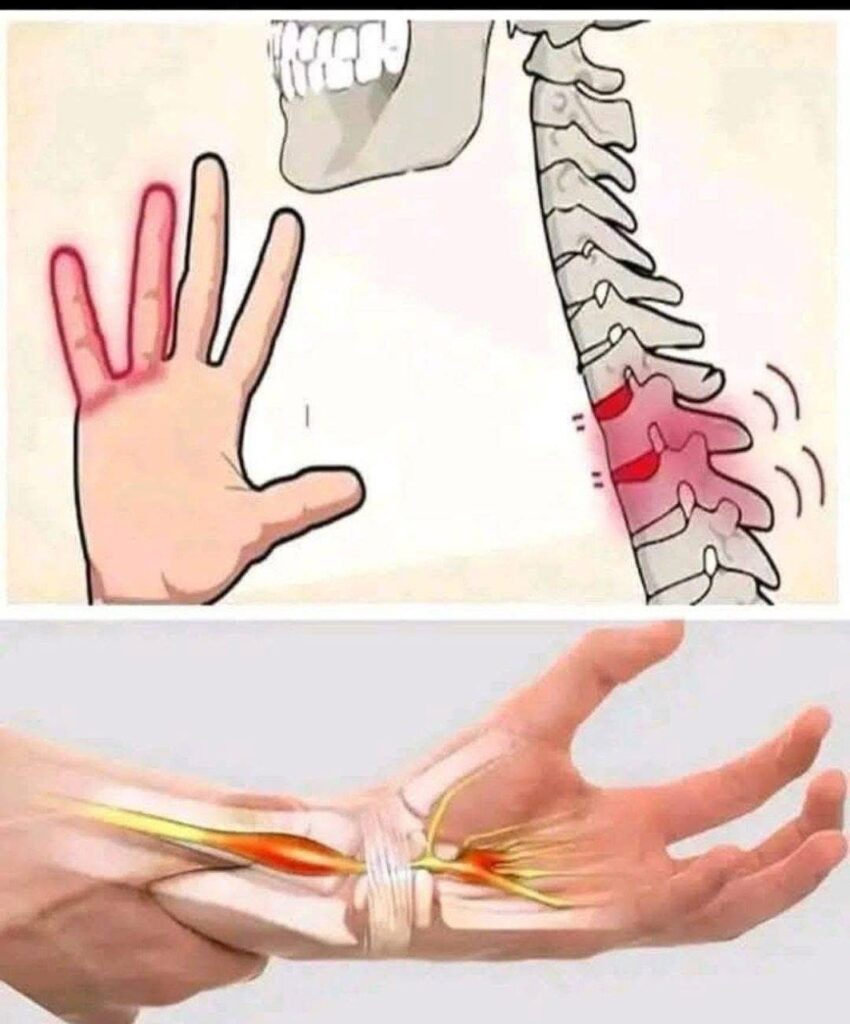
1. Carpal tunnel syndrome
This happens when the median nerve in the wrist is compressed.
Common symptoms include:
- Tingling in thumb and fingers
- Weak grip
- Worsening symptoms at night
It’s common in people who use computers or phones frequently.
2. Peripheral nerve irritation
Nerves outside the brain and spinal cord can become irritated due to:
- Injury
- Repetitive strain
- Poor posture
3. Circulation problems
Reduced blood flow may cause:
- Cold hands
- Numbness
- Tingling sensations
4. Cervical spine (neck) issues
Problems in the neck can affect nerve signals going to the arms and hands.
This may include stiffness or nerve compression in the cervical spine.
5. Diabetes
Over time, diabetes can damage nerves, leading to:
- Tingling in hands or feet
- Burning sensations
- Reduced sensation
This is called diabetic neuropathy.
When You Should Start Paying Attention
Occasional numbness is usually harmless.
But you should be more alert if:
- It happens frequently without pressure
- It affects both hands often
- It lasts longer than a few minutes
- It is accompanied by weakness
Red Flags You Should Not Ignore
Seek medical advice if you notice:
- Persistent numbness or tingling
- Weakness in grip strength
- Pain spreading from neck to arms
- Difficulty performing daily tasks
These may indicate nerve or circulation issues that need evaluation.
Real-Life Scenario
A 45-year-old office worker notices frequent hand tingling while typing.
At first, it only happens occasionally.
Over time, it becomes more frequent and starts affecting sleep.
A medical evaluation reveals early carpal tunnel syndrome.
With small changes—ergonomics, rest breaks, and treatment—symptoms improve significantly.
How to Reduce Hand Numbness Naturally
1. Improve posture
- Keep wrists straight while typing
- Avoid bending wrists for long periods
2. Take movement breaks
Every 30–60 minutes:
- Stretch hands
- Rotate wrists
- Move fingers
3. Adjust sleeping position
Avoid sleeping with pressure on arms or wrists.
4. Stay active
Light exercise improves circulation and nerve health.
5. Manage underlying conditions
If conditions like diabetes are present, proper management is essential.
Pros and Cons of Occasional Hand Numbness
Pros
- Often harmless and temporary
- Easy to fix with position changes
- Acts as a warning signal for posture
Cons
- Can indicate nerve compression if frequent
- May affect daily comfort
- Sometimes linked to chronic conditions
Common Mistakes People Make
- Ignoring frequent numbness
- Assuming it’s always “normal”
- Not adjusting posture or habits
- Delaying medical evaluation
Expert Insight
Doctors often emphasize:
Occasional numbness is common. Repeated numbness is a signal worth investigating.
The key difference is frequency and pattern.
FAQs (People Also Ask Style)
1. Why do my hands fall asleep at night?
Usually due to pressure on nerves during sleep.
2. Is hand numbness dangerous?
Not always—but frequent numbness should be checked.
3. Can stress cause tingling in hands?
Stress can contribute indirectly through muscle tension.
4. What vitamin deficiency causes numbness?
Vitamin B12 deficiency can contribute in some cases.
5. Is carpal tunnel permanent?
Not always—early treatment can improve symptoms.
6. When should I see a doctor?
If symptoms are frequent, persistent, or worsening.
7. Can exercise help?
Yes, gentle movement improves circulation and nerve function.
8. Does diabetes cause hand numbness?
Yes, in some cases due to nerve damage.
9. Can posture really cause numbness?
Yes, poor posture is a very common cause.
10. Should I worry about occasional tingling?
Usually no, if it resolves quickly.
Action Checklist
- ✔ Check posture during daily activities
- ✔ Avoid prolonged pressure on arms
- ✔ Take regular movement breaks
- ✔ Monitor frequency of symptoms
- ✔ Seek medical advice if persistent
Hands “falling asleep” is usually harmless—but it’s also your body’s way of communicating how pressure, posture, or nerve health is being affected.
Most of the time, it’s simple and temporary.
But when it becomes frequent or unexplained, it’s worth paying attention—not ignoring.
Occasional tingling is normal.
Repeated numbness is a signal.
Understanding the difference helps you protect long-term nerve and circulation health.