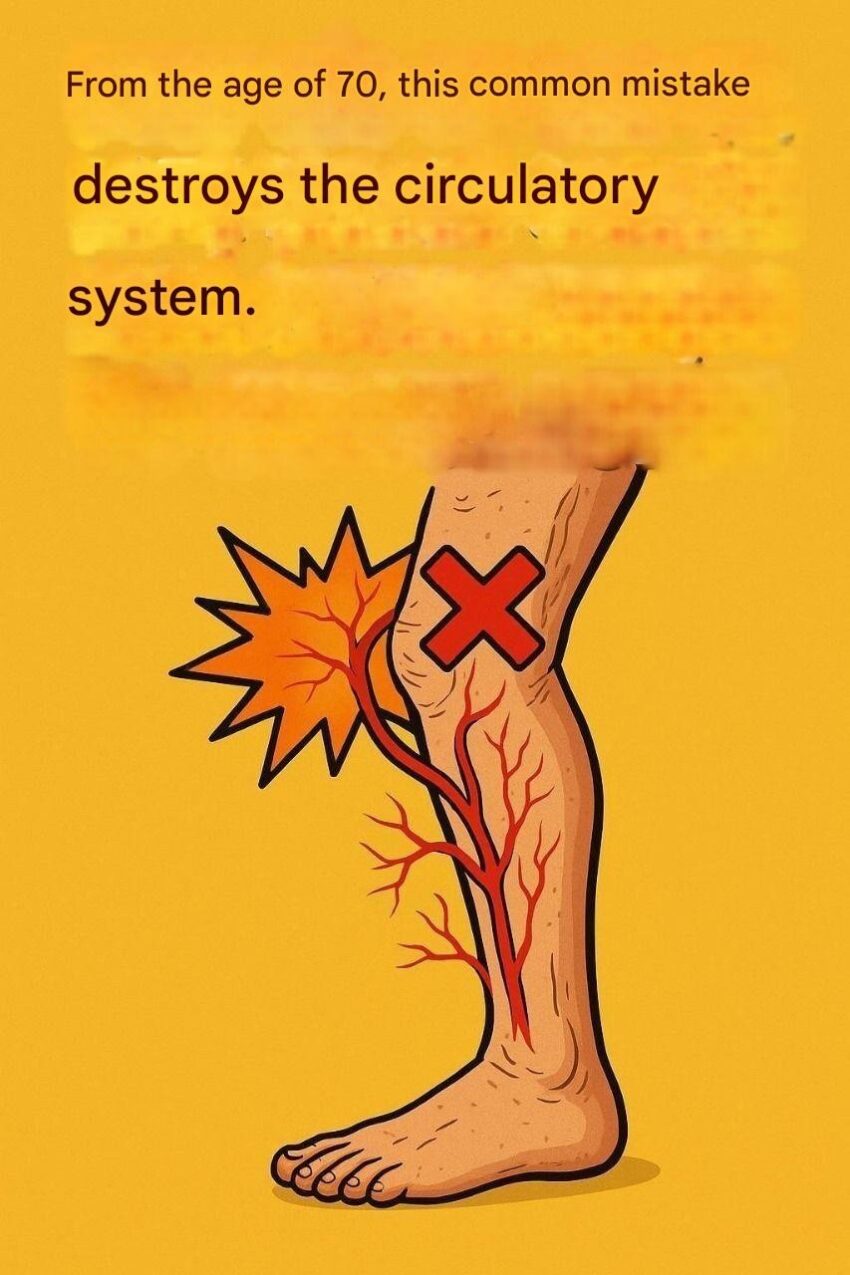
After 70, This Common Daily Mistake Can Quietly Ruin Your Circulation (And How to Fix It Today)
Poor circulation after 70 is often caused by one overlooked daily habit. Learn what it is, why it matters, and simple ways to improve blood flow safely.
It doesn’t happen overnight.
Circulation problems tend to creep in slowly—cold feet that never seem to warm up, swelling around the ankles, occasional numbness, or that heavy, tired feeling in your legs after sitting too long.
Many people over 70 assume it’s just “part of getting older.”
But in many cases, there’s a single, common daily mistake making things worse—and it’s one you can start correcting today.
This article breaks down what that mistake is, why it matters more as you age, and what you can realistically do to protect your circulation without complicated routines or risky shortcuts.
The Common Mistake: Sitting Too Long Without Movement
The biggest culprit?
Extended, uninterrupted sitting.
Whether it’s watching TV, reading, driving, or scrolling on a tablet, long periods of sitting slow down blood flow—especially to the legs and feet.
And after 70, your body doesn’t compensate the way it used to.
Why Circulation Declines With Age
As we get older, several natural changes occur:
- Blood vessels lose some elasticity
- Muscle contractions (which help pump blood) decrease
- Activity levels often drop
- Underlying conditions become more common
Conditions like Peripheral artery disease or Varicose veins can make things worse—but even without these, lifestyle plays a major role.
What Happens When You Sit Too Long?
When you stay seated for extended periods:
- Blood pools in the lower legs
- Circulation slows significantly
- Swelling can develop
- Oxygen delivery to tissues decreases
Over time, this may contribute to:
- Numbness or tingling
- Increased risk of clots
- Muscle weakness
- Reduced mobility
It’s not just discomfort—it can affect overall health and independence.
Why This Matters in the United States
In the U.S., many older adults spend a large portion of the day sitting:
- Watching television
- Using digital devices
- Driving or commuting
- Resting due to fatigue or joint pain
According to public health data from organizations like Centers for Disease Control and Prevention, sedentary behavior is a growing concern, especially among seniors.
The good news?
Small, consistent changes can make a meaningful difference.
Warning Signs Your Circulation May Need Attention
If you notice any of these regularly, it’s worth paying attention:
- Cold hands or feet
- Swelling in ankles or calves
- Frequent leg cramps
- Skin discoloration
- Slow healing of minor cuts
These signs don’t always mean something serious—but they shouldn’t be ignored either.
Simple Ways to Improve Circulation After 70
You don’t need an intense workout plan.
What matters most is consistent, gentle movement.
1. Follow the “30-Minute Rule”
Every 30 minutes:
- Stand up
- Stretch
- Walk around for 2–5 minutes
This alone can significantly improve blood flow.
2. Add Light Daily Movement
Options include:
- Walking around the house or neighborhood
- Light gardening
- Household chores
Even small activities help keep blood moving.
3. Try Seated Leg Exercises
If standing is difficult, try:
- Ankle circles
- Heel-to-toe raises
- Gentle leg lifts
These mimic the natural pumping action of muscles.
4. Stay Hydrated
Proper hydration helps maintain blood volume and flow.
Aim for consistent water intake throughout the day.
5. Elevate Your Legs
When resting:
- Prop your legs slightly above heart level
- Use a pillow or recliner
This helps reduce swelling and improve return circulation.
6. Wear Comfortable Clothing
Avoid tight clothing that restricts blood flow, especially around:
- Waist
- Thighs
- Calves
7. Consider Compression Socks (If Recommended)
These can help support circulation—but it’s best to consult a healthcare provider before using them regularly.
Real-Life Scenario
A 74-year-old retiree noticed persistent ankle swelling and leg fatigue.
After reviewing daily habits, the issue wasn’t diet or medication—it was sitting for hours at a time while watching TV.
By simply:
- Standing every 30 minutes
- Adding two short walks per day
- Doing light leg exercises
Within weeks, the swelling reduced and mobility improved.
No drastic changes—just consistent ones.
Pros and Cons of Addressing This Early
Pros
- Better mobility and independence
- Reduced discomfort
- Lower risk of complications
- Improved overall energy
Cons
- Requires consistency
- May feel inconvenient at first
- Progress can be gradual
Common Mistakes to Avoid
- Waiting for symptoms to get worse
- Overdoing exercise too quickly
- Ignoring hydration
- Assuming circulation issues are “normal aging”
Expert Insight
Circulation isn’t just about the heart—it’s about movement.
Muscles act like pumps. When they’re inactive, blood flow slows.
That’s why even light, regular activity can outperform occasional intense effort.
2026 Trend: Movement Over Intensity
There’s a growing shift in health advice:
- Less focus on intense workouts
- More focus on frequent, gentle movement
Especially for older adults, consistency beats intensity every time.
FAQs (People Also Ask Style)
1. Is poor circulation inevitable after 70?
No. While aging affects circulation, lifestyle plays a major role.
2. How often should I move during the day?
Ideally every 30–60 minutes.
3. Are cold feet always a sign of poor circulation?
Not always, but frequent coldness can be a sign worth checking.
4. Can walking really help?
Yes—walking is one of the simplest and most effective ways to improve circulation.
5. Are supplements necessary?
Not usually. Focus on movement and lifestyle first.
6. When should I see a doctor?
If you notice persistent swelling, pain, or skin changes.
7. Do compression socks work?
They can help, but should be used appropriately.
8. Can dehydration affect circulation?
Yes, it can reduce blood volume and efficiency.
9. Is sitting completely bad?
No—prolonged, uninterrupted sitting is the issue.
10. Can circulation improve at this age?
Absolutely—with consistent habits.
Action Checklist
- ✔ Stand up every 30 minutes
- ✔ Add light daily movement
- ✔ Stay hydrated
- ✔ Elevate legs when resting
- ✔ Monitor warning signs
- ✔ Talk to a healthcare provider if needed
The mistake isn’t obvious.
It doesn’t feel dangerous in the moment.
But over time, sitting too long without movement can quietly affect how your body functions—especially after 70.
The encouraging part?
You don’t need drastic changes.
Just small, consistent actions repeated daily.
Good circulation isn’t about doing more—it’s about moving more often.
Start simple. Stay consistent. And give your body the movement it was designed for.
Have you noticed changes in your circulation—or found simple habits that helped? Share your experience below.