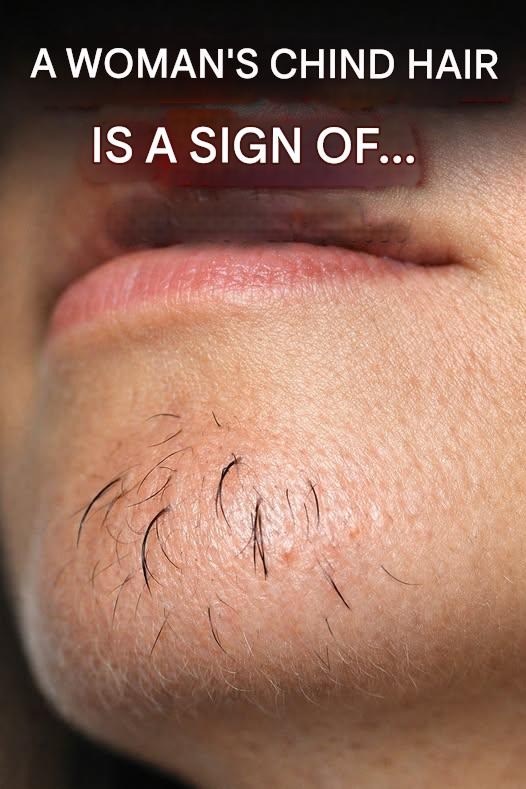
🧠 A Woman’s Chin Hair Is a Sign of What? Doctors Explain the Real Causes Behind Facial Hair Growth
Discover what chin hair in women really means, common medical causes like hormones and PCOS, and when it’s normal vs. when to see a doctor.
🌿 The Truth Behind Something Many Women Notice—but Rarely Talk About
It often starts as a surprise.
You’re in front of the mirror, maybe applying makeup or skincare, and you notice a single coarse hair on your chin. Then another. Over time, it may become a pattern that feels confusing—or even frustrating.
And the first thought many women have is:
“Is this a sign of something wrong with my body?”
The short answer is: not always—but sometimes it can be a clue worth understanding.
Facial hair in women, especially chin hair, is actually more common than most people think. But the reason behind it can vary widely—from completely normal hormonal changes to underlying medical conditions.
Let’s break it down clearly, calmly, and without unnecessary fear.
🧬 First: Understanding Why Chin Hair Appears in Women
Women naturally produce small amounts of androgens (male hormones), including testosterone.
In most cases, these hormones are balanced by estrogen.
But when the balance shifts—even slightly—it can lead to:
- Coarser hair growth
- Darker facial hair
- Hair appearing in new areas (chin, upper lip, jawline)
This process is called hirsutism.
According to clinical guidance from the American Academy of Dermatology, mild facial hair in women can be completely normal, especially with age or hormonal changes.
⚖️ Common Causes of Chin Hair in Women
Let’s look at the most common explanations—starting with the most harmless and moving toward medical causes.
🌸 1. Normal Hormonal Changes (Most Common)
Chin hair can appear due to natural life stages such as:
- Puberty
- Pregnancy
- Menopause
- Aging
As estrogen levels fluctuate, androgens may become slightly more noticeable.
👉 This is usually mild and not a sign of disease.
🧬 2. Genetics (Family History)
Sometimes, chin or facial hair simply runs in the family.
If your mother, grandmother, or sisters have similar hair growth patterns, it may be inherited.
👉 In this case, it is completely harmless.
⚖️ 3. Polycystic Ovary Syndrome (PCOS)
One of the most well-known medical causes of increased facial hair is PCOS (Polycystic Ovary Syndrome).
It can lead to higher androgen levels, which may cause:
- Chin and jawline hair
- Irregular periods
- Acne
- Weight changes
- Thinning scalp hair
PCOS is relatively common and manageable with medical guidance.
🧪 4. Hormonal Imbalance (Without PCOS)
Even without PCOS, hormonal shifts can occur due to:
- Stress
- Thyroid issues
- Certain medications
- Perimenopause
These can subtly influence hair growth patterns.
💊 5. Medications and Medical Conditions
Some medications or conditions may increase hair growth, including:
- Steroid medications
- Hormone therapy
- Rare adrenal gland disorders
This is less common but important to evaluate if changes are sudden.
🧠 When Chin Hair Is Completely Normal
Chin hair is often not a medical concern when:
- It is light or occasional
- It appears slowly over time
- There are no other symptoms
- It runs in your family
- It increases with age (especially after 40–50)
Many dermatologists consider a few chin hairs part of normal human variation.
⚠️ When It Might Be a Sign to Check Hormones
You should consider speaking to a healthcare provider if chin hair is accompanied by:
- Sudden increase in facial or body hair
- Irregular or missed periods
- Severe acne
- Unexplained weight gain
- Hair thinning on the scalp
- Deepening of voice (rare but important)
These may indicate hormonal imbalance that needs evaluation.
🏡 Real-Life Scenario: Why Context Matters
A 35-year-old woman in California noticed chin hair increasing over a year.
At first, she worried it was something serious.
After medical evaluation, she learned:
- She had mild PCOS
- Her hormone levels were slightly elevated
- Lifestyle changes helped manage symptoms
With diet adjustments and medical support, symptoms improved over time.
👉 The key takeaway: not all chin hair signals danger—but it can sometimes point to an underlying condition worth understanding.
🧴 How Women Commonly Manage Chin Hair
✔️ Cosmetic Options
- Tweezing
- Waxing
- Threading
- Laser hair removal
- Depilatory creams
✔️ Medical Approaches (If Needed)
- Hormone regulation treatments
- Birth control (in some cases)
- PCOS management plans
- Lifestyle adjustments
✔️ Natural Support Habits
- Balanced diet
- Regular exercise
- Stress management
- Sleep improvement
💡 Expert Insight: What Dermatologists Emphasize
Experts highlight an important point:
👉 Chin hair alone is not a diagnosis—it is a symptom.
It must always be interpreted with:
- Age
- Medical history
- Other physical symptoms
- Hormone levels (if tested)
That’s why self-diagnosis based on appearance alone is not reliable.
📊 Why This Topic Matters More in the United States Today
In the U.S., awareness of hormonal health conditions like PCOS has increased significantly.
Organizations like the Mayo Clinic emphasize early recognition of hormonal symptoms to improve long-term health outcomes.
At the same time, social media has amplified concerns—sometimes accurately, sometimes not.
That makes clear, balanced information more important than ever.
🧠 Common Myths About Chin Hair in Women
❌ Myth 1: It means something is seriously wrong
✔️ Truth: Often completely normal or mild hormonal variation
❌ Myth 2: It only happens in older women
✔️ Truth: It can occur at any age
❌ Myth 3: Plucking makes it grow thicker
✔️ Truth: Hair may feel coarser when regrowing, but follicles are unchanged
❌ Myth 4: It always means PCOS
✔️ Truth: PCOS is just one possible cause, not the only one
🔮 Future Outlook: Better Understanding of Hormonal Health
Modern healthcare is moving toward:
- Earlier hormone screening
- Personalized women’s health care
- Better PCOS awareness
- Non-invasive diagnostic tools
This means fewer uncertainties and more clarity for women experiencing changes like facial hair growth.
❓ FAQs (People Also Ask Style)
1. Is chin hair normal in women?
Yes, mild chin hair is very common and often harmless.
2. What causes chin hair growth in females?
Hormones, genetics, aging, and sometimes PCOS.
3. Does chin hair mean PCOS?
Not always—PCOS is just one possible cause.
4. Can stress cause facial hair?
Indirectly, stress may affect hormones but is rarely a direct cause.
5. Should I remove chin hair?
It is a personal choice; cosmetic removal is common.
6. When should I worry about chin hair?
If it appears suddenly or comes with other hormonal symptoms.
7. Can diet affect facial hair growth?
Diet can influence hormone balance but is not a direct cause.
8. Does plucking increase hair growth?
No, it does not increase the number of hairs.
Chin hair in women is not something to panic about—it is often just a normal variation in how the body responds to hormones, genetics, and aging.
But in some cases, it can also be a helpful signal that the body’s hormonal balance may need attention.
The key is not fear—but awareness.
Understanding your body allows you to make informed choices, whether that means simple cosmetic management or speaking with a healthcare professional for deeper insight.
A woman’s chin hair is usually a normal result of hormones, genetics, or aging—but in some cases, it can indicate conditions like PCOS or hormonal imbalance, especially when accompanied by other symptoms.
Have you noticed changes in facial hair over time? Share your experience and help others understand what’s normal and what might need attention 🧠✨