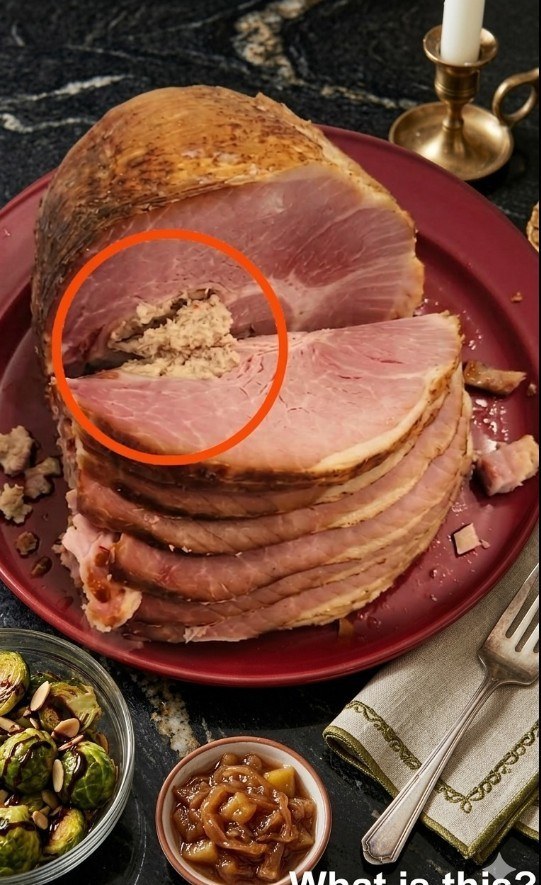
🥩 “I Found Something Strange in My Ham” — What It Could Be, Why It Happens, and What You Should Do
Found something unusual inside store-bought ham? Learn what it might be, why it happens, and when to worry or return the product safely.
😳 The Moment That Makes You Stop Slicing
You bring home a simple grocery item—ham for sandwiches, maybe breakfast, maybe a quick dinner. Everything feels normal. The bag is sealed, the expiration date looks fine, and you’re already thinking about how good it’ll taste.
Then you start slicing it.
And suddenly… something doesn’t look right.
A strange texture. A hard piece. A color variation. Something unexpected hidden inside what was supposed to be a straightforward processed meat product.
Your first thought is usually the same:
“What is that… and how did it get in there?”
Before panic sets in, it’s important to understand something reassuring: in most cases, these findings are not dangerous—but they are worth investigating properly.
Let’s break down what it could be, why it happens, and what steps you should take next.
🧠 First: Understand What “Store-Bought Ham” Actually Is
Most supermarket ham is not a single whole cut of meat.
Instead, it is typically:
- Processed pork muscle pieces
- Reformed and shaped
- Injected with brine or seasoning solutions
- Cooked or smoked
- Pressed into uniform logs or slices
Because of this processing method, variations inside the product are more common than people expect.
Even reputable food safety systems like the U.S. Food and Drug Administration allow certain natural and processing-related variations in meat products.
🔍 What That “Strange Thing” in Your Ham Might Be
Let’s go through the most common explanations calmly and clearly.
🟤 1. Natural Fat or Connective Tissue
One of the most common surprises in ham is:
- Fat pockets
- Collagen-rich connective tissue
- Muscle grain variations
These can appear:
- Whiter
- Firmer
- Slightly rubbery
👉 This is completely normal in processed pork products.
🧂 2. Salt or Mineral Crystallization
Sometimes brined ham develops:
- White crystalline spots
- Hard salt deposits
- Slightly grainy areas
This happens when curing solutions concentrate in certain parts of the meat.
🧊 3. Ice Crystal or Freezer Burn (If Previously Frozen)
If ham was frozen at any point, you may notice:
- Dry patches
- Slight discoloration
- Texture changes
This is a quality issue—not a safety issue.
🧫 4. Protein or Binder Clumps
Some processed meats use binders like:
- Milk proteins
- Starches
- Gelatin-based compounds
If not evenly mixed, they can appear as:
- Pale lumps
- Gel-like sections
- Slightly different textures
⚙️ 5. Manufacturing Artifacts (Most Common Surprise)
During processing, ham is:
- Mixed
- Pressed
- Molded into shape
Occasionally, you may see:
- Air pockets
- Fiber clusters
- Slightly darker or lighter sections
These are harmless but visually unexpected.
⚠️ 6. Rare but Important: Foreign Material
Although uncommon in regulated supply chains, foreign materials can occasionally include:
- Plastic fragments
- Packaging material
- Equipment residue
This is why food safety systems are strict, and why reporting matters.
If you suspect this, you should not consume the product.
🧪 Why This Happens in Processed Meat
To understand it better, think of ham production like this:
👉 It is less like slicing a single muscle
👉 More like rebuilding meat from multiple pieces
During this process:
- Meat is trimmed
- Mixed with curing agents
- Pressed into uniform shapes
- Heat-treated for safety
Even small inconsistencies in mixing or natural variation can create visible differences in the final product.
🏡 Real-World Example: Why This Is More Common Than You Think
A grocery shopper in Illinois once noticed a firm, white section inside sliced ham and assumed it was plastic.
After returning it to the store, staff explained it was:
- A concentrated fat and collagen section from muscle trimming
- Completely safe, though visually unusual
👉 This type of confusion is one of the most common customer complaints in deli meats.
⚖️ When It’s Normal vs When You Should Be Concerned
✔️ Usually Normal
- Fatty or chewy white sections
- Slight color variation
- Salt crystals
- Texture differences
- Small air pockets
❌ Potential Concern
- Hard plastic-like pieces
- Sharp fragments
- Metallic objects
- Strong chemical smell
- Mold (green, black, fuzzy growth)
If you notice any of these, stop eating immediately.
🧾 What You Should Do Next
🧊 Step 1: Stop Eating It
If something seems unusual, pause immediately.
📸 Step 2: Take a Photo
Document what you found for reference.
🏪 Step 3: Return or Report It
Contact the store or manufacturer.
Most reputable brands will:
- Replace the product
- Investigate the batch
- Provide a refund
🧼 Step 4: Clean Cutting Tools
Wash knives and surfaces to ensure hygiene.
🛡️ Food Safety Systems Are Still Very Strong
It’s important to keep perspective.
In the United States, processed meat production is heavily regulated by agencies like the U.S. Department of Agriculture, which enforces strict inspection rules for meat processing facilities.
While no system is perfect, large-scale contamination is rare.
Most “weird finds” are:
- Natural variations
- Processing artifacts
- Quality inconsistencies
Not dangerous foreign objects.
🧠 Why These Situations Feel Worse Than They Are
Psychologically, this moment feels alarming because:
- You didn’t expect it
- It appears inside food
- It breaks “trust expectations”
- It looks unfamiliar
Your brain automatically assumes risk when something in food is unexpected—even if it’s harmless.
💡 Expert Tips to Avoid Future Surprises
🥩 1. Buy Whole Cuts When Possible
Less processed = fewer structural surprises.
🧊 2. Check Packaging Quality
Avoid packages with:
- Excess liquid
- Broken seals
- Air leaks
🏷️ 3. Stick to Trusted Brands
Established producers tend to have more consistent quality control.
🔪 4. Slice Slowly and Inspect
Especially with deli meats.
❓ FAQs (People Also Ask Style)
1. Is it normal to find white spots in ham?
Yes, often fat or salt deposits.
2. Can processed ham contain plastic?
It is rare but possible—report if suspected.
3. Is it safe to eat ham with texture differences?
Usually yes, if it smells and looks normal.
4. Why does ham sometimes look grainy inside?
Due to muscle fiber and curing processes.
5. Should I return ham if something looks strange?
Yes, if you are unsure or concerned.
6. Can spoiled ham look normal?
Sometimes, but it usually smells off or feels slimy.
7. What causes hard lumps in deli meat?
Fat, collagen, or protein clumps.
Finding something unusual inside ham can be unsettling, especially when you weren’t expecting anything but a simple meal.
But in most cases, what you’re seeing is a result of how processed meats are made—not a danger.
Still, your reaction is valid. Food is something we trust deeply, and anything unexpected deserves attention.
The key is simple:
👉 Observe
👉 Verify
👉 Act if needed
Most unusual textures or objects found in store-bought ham are harmless processing variations, but any suspicious or foreign material should always be reported to the store or manufacturer for safety.
Have you ever found something unexpected in packaged food? Share your experience, and it might help someone else know what’s normal—and what isn’t 🥩🔍✨