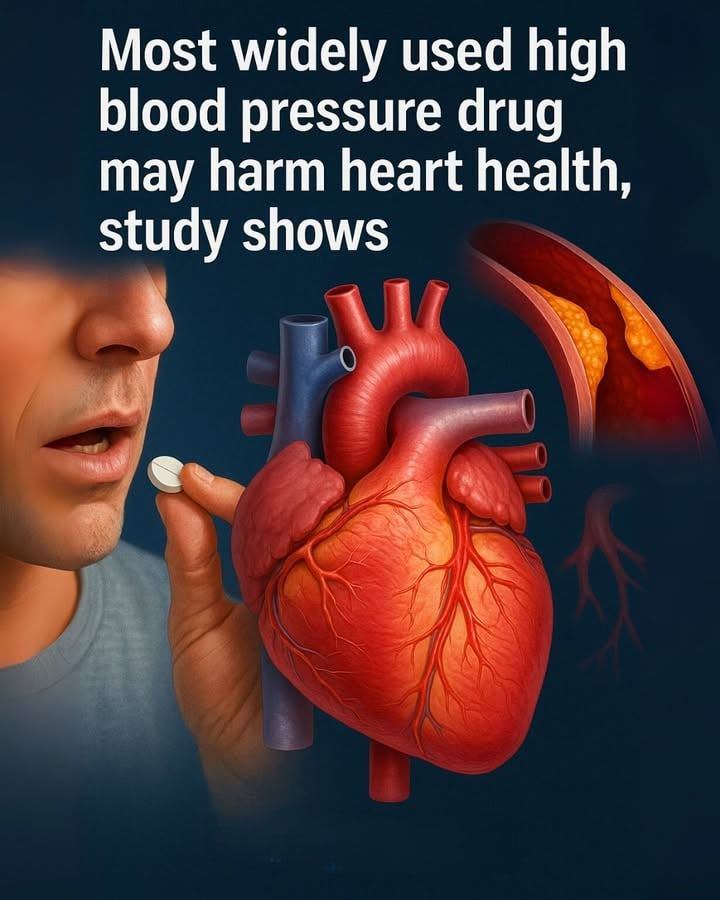
Penn State Research Raises Questions About a Common Blood Pressure Drug and Heart Failure Risk 🫀⚠️
Penn State research suggests a widely used blood pressure drug may affect blood flow and increase heart failure risk in certain cases.
When a “Trusted” Medication Becomes a Headline Concern
For millions of Americans living with high blood pressure, medication is part of daily life.
So when headlines suggest that a commonly prescribed drug might do the opposite of what it’s supposed to—naturally, it raises concern.
A study associated with researchers at Penn State College of Medicine has drawn attention because it suggests that a widely used class of blood pressure medications, L-type calcium channel blockers (LCCBs), may in certain conditions:
- Affect blood vessel function
- Reduce blood flow efficiency
- Be linked with a higher risk of heart failure in some patient groups
Before jumping to conclusions, it’s important to understand what the research actually found—and what it does NOT mean for patients currently taking these medications.
What the Penn State Study Actually Found
Researchers investigated how L-type calcium channel blockers work at the cellular level and in clinical data analysis.
Their findings suggested that:
- These drugs may influence vascular remodeling (changes in blood vessel structure)
- In lab studies, this could lead to stiffer blood vessels and altered blood flow regulation
- Analysis of patient data showed a possible association with higher heart failure incidence compared to other hypertension medications
Key clarification from researchers:
These results do not prove that the medication directly causes heart failure in all patients.
Instead, they highlight a potential mechanism that requires:
- More research
- Individual risk assessment
- Careful prescribing decisions
Why This Research Matters in the United States
High blood pressure is extremely common in the U.S.
- Nearly 1 in 2 adults has hypertension
- It is one of the leading risk factors for heart disease and stroke
- Millions rely on medications daily to manage it
Because of this, even small questions about long-term drug effects become important for public health.
The Penn State findings are part of a broader scientific effort to understand:
- How long-term medication use affects blood vessels
- Why some patients still develop heart failure despite treatment
- Whether different drug classes have different long-term outcomes
How Blood Pressure Drugs Are Supposed to Work
To understand the concern, it helps to know how these medications function.
Calcium channel blockers generally:
- Relax blood vessel walls
- Lower blood pressure by improving blood flow
- Reduce strain on the heart
They are widely prescribed because they are effective and well-tolerated for many patients.
However, the research suggests that long-term biological effects on vascular structure may be more complex than previously understood.
Important Reality Check: What This Does NOT Mean
This is where clarity matters most.
Based on current evidence:
❌ It does NOT mean:
- The drug is unsafe for everyone
- Patients should stop taking their medication
- Blood pressure treatment is harmful
✔ It DOES mean:
- Science is still studying long-term effects
- Different patients may respond differently
- Doctors may need to personalize treatment more carefully
Health organizations consistently emphasize that untreated high blood pressure is far more dangerous than medication risks.
Potential Warning Signs That Require Medical Attention
While taking any blood pressure medication, you should contact a doctor if you notice:
- Unusual swelling in legs or ankles
- Shortness of breath that worsens
- Chest discomfort or fatigue
- Sudden dizziness or weakness
These symptoms do not automatically mean heart failure—but they should always be evaluated.
What Experts Say About the Bigger Picture
Cardiovascular researchers generally agree on one key point:
Blood pressure control remains one of the most important ways to prevent heart failure.
Even in studies that raise concerns about specific medications, the broader conclusion is consistent:
- Managing blood pressure is essential
- Medication benefits often outweigh risks
- Treatment should be individualized
In fact, other research continues to show that controlling hypertension significantly reduces risk of heart attack, stroke, and heart failure.
Pros and Cons of This Research Finding
Potential Benefits of the Research
- Encourages safer, more personalized prescriptions
- Improves understanding of vascular biology
- May lead to better future medications
- Helps identify high-risk patient groups
Potential Concerns
- Can cause confusion or anxiety among patients
- Requires careful interpretation by non-experts
- Needs more long-term human studies
- Does not provide simple “yes or no” answers
Common Mistakes People Make When Reading Health Headlines
1. Stopping medication abruptly
This is extremely dangerous without medical guidance.
2. Assuming one study changes everything
Medical conclusions require multiple studies over time.
3. Ignoring individual risk factors
Age, lifestyle, and medical history matter greatly.
4. Self-diagnosing based on headlines
Only a healthcare provider can interpret personal risk.
Expert Tip: What Patients Should Actually Do
If you are currently on blood pressure medication:
- Do not stop or change dosage on your own
- Continue regular checkups
- Ask your doctor if you have concerns
- Focus on overall cardiovascular health
Doctors may already consider these research findings when tailoring treatment plans.
Future Outlook: Where This Research Is Going
The Penn State findings are part of a larger trend in cardiovascular medicine:
- More personalized hypertension treatment
- Genetic and cellular-level drug response studies
- Development of safer long-term medications
- Better prediction of heart failure risk
In the future, treatment may become more individualized than ever before.
Mini Scenario (Real-World Context)
John, 67, Pennsylvania
John has been taking a calcium channel blocker for years to manage blood pressure.
He sees a news headline about heart failure risk and becomes worried.
After speaking with his doctor, he learns:
- His blood pressure is well controlled
- He has no signs of heart failure
- His medication is appropriate for his condition
Result: He continues treatment safely with monitoring—no sudden changes needed.
FAQs
1. Does this mean blood pressure drugs are dangerous?
No. They are still widely used and beneficial for most patients.
2. Should I stop my medication?
No. Always consult a doctor before making changes.
3. What did Penn State researchers actually find?
A possible link between certain calcium channel blockers and vascular changes that may affect blood flow in some cases.
4. Are all blood pressure medications affected?
No. This research focused on a specific class of drugs.
5. Is more research needed?
Yes. Long-term human studies are still ongoing.
6. What is the biggest risk factor for heart failure?
High blood pressure itself remains a major cause.
7. Can lifestyle changes help reduce medication needs?
In some cases, yes—but only under medical supervision.
8. What should I do if I’m concerned?
Talk to your healthcare provider for personalized advice.
Medical research is constantly evolving—and that’s a good thing.
This Penn State study does not overturn decades of cardiovascular treatment knowledge. Instead, it adds another layer of understanding about how complex the human body really is.
The most important takeaway is simple:
Managing blood pressure remains essential for protecting heart health.
Awareness should lead to conversation—not panic.
A Penn State study suggests a possible link between certain blood pressure medications and changes in blood flow that may contribute to heart failure risk in some cases. However, more research is needed, and patients should never stop medication without medical guidance.
If this helped you understand the topic better, feel free to share it with someone managing blood pressure—and leave a comment with your questions or thoughts.