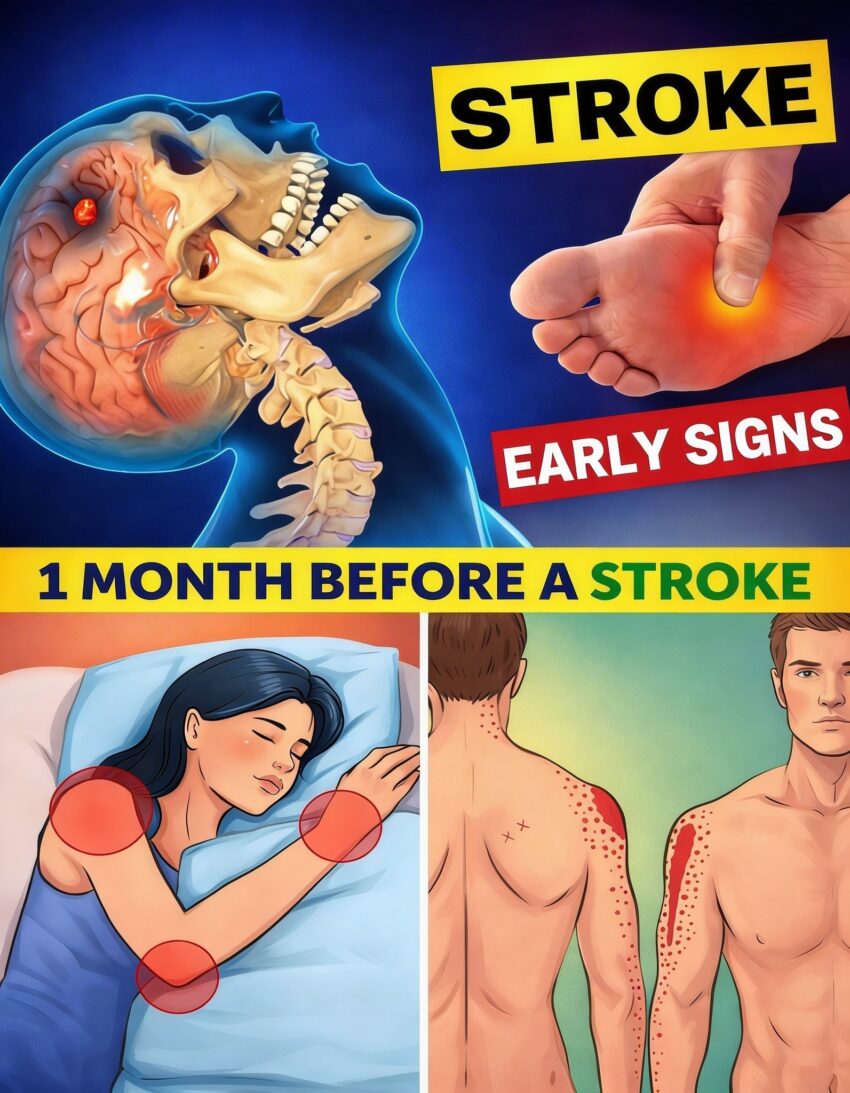
8 Warning Signs of Stroke That May Appear One Month Before + 9 Proven Ways to Help Prevent It 🧠⚠️
Learn 8 early warning signs of stroke that may appear weeks before and 9 practical prevention tips to reduce your risk.
When Your Body Starts Sending Quiet Warnings
A stroke is often imagined as something sudden—something that “just happens.”
But what many people in the United States don’t realize is this:
In some cases, the body sends subtle warning signals days or even weeks before a major stroke occurs.
These early signs are often brief, confusing, and easy to ignore. People brush them off as stress, fatigue, or aging.
But neurologists warn that recognizing these signals early can be life-changing.
This article breaks down the 8 warning signs that may appear up to one month before a stroke, plus 9 practical, evidence-based prevention strategies you can start today.
Why Stroke Awareness Matters More Than Ever
According to major health organizations like the CDC (Centers for Disease Control and Prevention), stroke is one of the leading causes of death and long-term disability in the United States.
What makes stroke especially dangerous is:
- It can happen suddenly
- It can cause permanent damage within minutes
- Early warning signs are often overlooked
But here’s the hopeful part:
Up to 80% of strokes may be preventable through lifestyle and medical management.
Understanding the “One Month Before” Warning Window
Not everyone experiences early warning signs, but some people do have symptoms that indicate reduced blood flow to the brain or mini-strokes (TIA—Transient Ischemic Attack).
These early signals may appear:
- Weeks before a major stroke
- Intermittently (on and off)
- Mild enough to ignore at first
That’s why awareness is critical.
8 Warning Signs of Stroke That May Appear Up to One Month Before
1. Sudden, Unexplained Headaches
A new type of headache—especially one that feels unusual—should not be ignored.
What it may feel like:
- Sharp or intense pressure
- Different from normal headaches
- Occurs without clear cause
Why it matters:
It may signal changes in blood flow or pressure in the brain.
2. Temporary Vision Problems
Vision changes can be one of the earliest neurological warning signs.
Possible symptoms:
- Blurred vision
- Double vision
- Partial loss of sight in one eye
These episodes may last minutes or come and go.
3. Short Episodes of Dizziness or Loss of Balance
Many people describe this as feeling “off” or unsteady.
What to watch for:
- Sudden dizziness while walking
- Trouble maintaining balance
- Feeling like the room is spinning
This may indicate reduced blood flow to the brain.
4. Numbness or Weakness on One Side of the Body
This is one of the most important early red flags.
Symptoms may include:
- Weakness in arm or leg
- Facial drooping
- Tingling on one side
Even if it disappears quickly, it should never be ignored.
5. Trouble Speaking or Finding Words
Speech changes can happen before a major stroke.
Signs include:
- Slurred speech
- Difficulty forming sentences
- Forgetting simple words
This may appear briefly and then resolve.
6. Confusion or Sudden Memory Problems
Cognitive changes may come and go.
What people notice:
- Difficulty focusing
- Feeling mentally “foggy”
- Trouble understanding conversations
This can be especially concerning if it is new or unusual.
7. Sudden Fatigue or Unusual Exhaustion
Extreme tiredness without explanation can be an early signal.
Symptoms:
- Feeling drained despite rest
- Weakness without physical effort
- Low energy out of nowhere
This is often overlooked but important in context with other symptoms.
8. Mini-Stroke (TIA) Symptoms
A Transient Ischemic Attack is often called a “warning stroke.”
Characteristics:
- Stroke-like symptoms that last minutes to hours
- Symptoms disappear completely
- No permanent damage—but serious warning sign
Common symptoms:
- Slurred speech
- Weakness
- Vision loss
- Confusion
A TIA is a medical emergency warning sign—even if symptoms go away.
9 Tips to Help Prevent Stroke
Prevention is where real control begins.
While not all strokes can be avoided, many risk factors can be managed effectively.
1. Control Blood Pressure
High blood pressure is the number one risk factor for stroke.
What helps:
- Regular monitoring
- Reducing salt intake
- Following prescribed medications
2. Maintain Healthy Blood Sugar Levels
Diabetes increases stroke risk significantly.
Focus on:
- Balanced meals
- Limiting processed sugar
- Regular checkups
3. Stay Physically Active
Movement improves circulation and heart health.
Goal:
- At least 150 minutes of moderate activity weekly
Examples:
- Walking
- Swimming
- Light cardio
4. Eat a Brain-Healthy Diet
A balanced diet supports blood vessels.
Include:
- Fruits and vegetables
- Whole grains
- Lean proteins
- Healthy fats (like olive oil, nuts)
5. Reduce Smoking and Alcohol Intake
Smoking damages blood vessels and increases clot risk.
Alcohol should be limited or avoided if advised by a doctor.
6. Manage Stress Effectively
Chronic stress impacts blood pressure and heart health.
Helpful practices:
- Deep breathing
- Meditation
- Regular sleep routine
7. Maintain a Healthy Weight
Excess weight increases risk of:
- High blood pressure
- Diabetes
- Heart disease
Even small improvements matter.
8. Monitor Cholesterol Levels
High cholesterol can lead to artery blockage.
Focus on:
- Regular testing
- Reducing saturated fats
- Following medical advice
9. Don’t Ignore Warning Signs
This is the most important tip.
Act immediately if you notice:
- Sudden weakness
- Speech difficulty
- Vision changes
- Severe headache
Early medical attention can be life-saving.
Pros and Cons of Early Stroke Awareness
Pros
- Faster medical intervention
- Reduced long-term damage
- Better prevention habits
- Increased survival chances
Cons
- Anxiety from symptom awareness
- Misinterpretation of minor symptoms
- Overthinking normal body changes
Common Mistakes People Make
1. Ignoring temporary symptoms
Even brief symptoms may signal a TIA.
2. Waiting for symptoms to return
Stroke prevention requires early action.
3. Assuming fatigue is normal
Sudden fatigue combined with other signs should be checked.
4. Not controlling blood pressure
This is one of the most preventable risk factors.
Expert Insight
Medical professionals consistently emphasize:
“Time lost is brain lost.”
This means even small delays during stroke symptoms can have serious consequences.
Real-Life Scenario
James, 62, Florida
He experienced:
- Occasional dizziness
- Brief speech difficulty
- Temporary vision blur
He ignored it, thinking it was stress.
Weeks later, he suffered a major stroke.
Doctors later confirmed the earlier episodes were warning TIAs.
Early intervention could have changed the outcome.
Frequently Asked Questions
1. Can stroke warning signs appear weeks before?
Yes, especially in the form of TIAs.
2. Are early symptoms always obvious?
No, they can be mild and temporary.
3. What is the biggest stroke risk factor?
High blood pressure.
4. Can young people have strokes?
Yes, though risk increases with age.
5. Does stress cause stroke?
Stress contributes indirectly by affecting blood pressure.
6. What should I do if symptoms appear?
Seek emergency medical attention immediately.
7. Can strokes be prevented?
Many risk factors are controllable.
8. Is dizziness always a stroke sign?
No, but it should be evaluated if sudden or unexplained.
Action Checklist
- ✔ Monitor blood pressure regularly
- ✔ Watch for recurring neurological symptoms
- ✔ Maintain healthy lifestyle habits
- ✔ Respond immediately to warning signs
- ✔ Schedule routine medical checkups
- ✔ Reduce smoking, alcohol, and stress
Stroke doesn’t always come without warning.
Sometimes, the body whispers before it screams.
The key is learning to recognize those early signals—and taking them seriously.
Awareness is not fear. It is protection.
Early stroke warning signs may include temporary weakness, vision issues, speech problems, dizziness, and unusual fatigue. Recognizing these symptoms early—and acting quickly—can significantly reduce risk and improve outcomes.
If this helped you understand stroke warning signs better, share it with someone you care about. Awareness saves lives—and sometimes, it starts with a simple conversation.