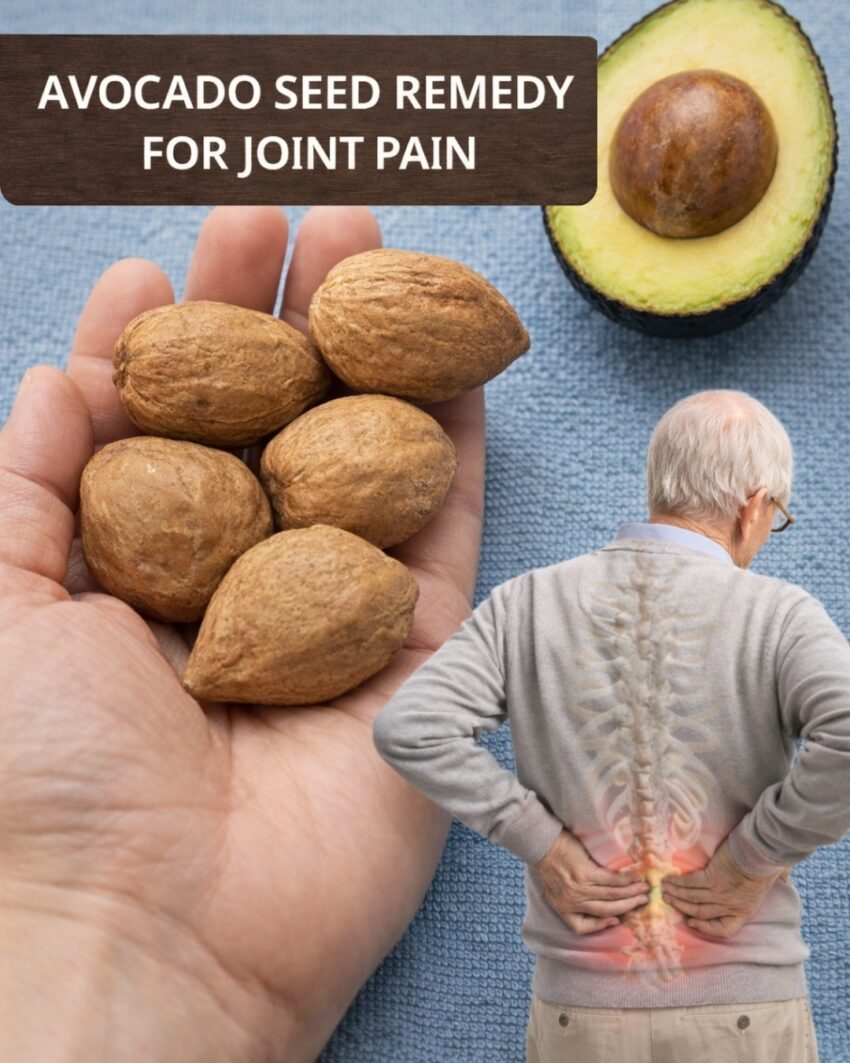
Avocado Seed Remedy for Joint Pain 🥑 — A Natural Anti-Inflammatory Solution or Just a Wellness Myth?
Discover whether avocado seed remedy can help joint pain. Learn benefits, risks, preparation methods, and what science actually says.
That “Hidden Part” of the Avocado Everyone Talks About…
You slice open a ripe avocado.
Creamy green flesh, perfect for toast or salad.
Then there’s the seed—large, hard, and usually tossed straight into the trash.
But lately, you may have heard something different:
“Don’t throw it away—it helps with joint pain!”
From homemade teas to powdered supplements, avocado seeds have gained attention in natural wellness circles as a potential remedy for inflammation and joint discomfort.
But is there real science behind it—or is it just another internet health trend?
Let’s break it down carefully and honestly.
Why Joint Pain Is So Common Today
Joint pain isn’t just an “older adult problem” anymore.
In the United States, millions of people deal with stiffness or inflammation due to:
- Aging
- Sports injuries
- Sedentary lifestyles
- Conditions like arthritis
A well-known condition is Osteoarthritis, which affects joint movement and comfort over time.
Because of this, many people look for natural anti-inflammatory solutions to support mobility and reduce discomfort.
What Exactly Is an Avocado Seed Remedy?
The avocado seed (or pit) is the large, hard center of the fruit.
Some traditional and modern wellness practices claim it can be:
- Dried and ground into powder
- Brewed into tea
- Added in small amounts to smoothies
The idea is that it contains antioxidants and plant compounds that may help reduce inflammation.
What’s Inside an Avocado Seed?
Researchers have identified several compounds, including:
- Polyphenols (antioxidants)
- Flavonoids
- Tannins
- Fiber
These compounds are also found in many plant-based foods known for supporting general health.
Can It Really Help with Joint Pain?
Here’s where things need clarity.
What some studies suggest:
Early laboratory research indicates avocado seeds may have:
- Antioxidant properties
- Anti-inflammatory potential
- Possible antimicrobial effects
These effects could theoretically support inflammation-related conditions.
But here’s the important truth:
There is currently no strong clinical evidence in humans proving that avocado seed directly treats joint pain or arthritis.
So while it may support general wellness, it is not a medically proven treatment.
How People Use Avocado Seed in Home Remedies
Despite limited scientific backing, here are common methods people use:
1. Avocado Seed Powder
- Dry the seed
- Grate or blend into fine powder
- Add small amounts to smoothies or tea
2. Avocado Seed Tea
- Boil chopped seed pieces in water
- Simmer for 10–15 minutes
- Strain and drink warm
3. Topical Use (Less Common)
Some people mix seed powder with oils for massage applications on sore joints.
Important Safety Considerations
Before trying it, here’s what you need to know:
⚠️ Possible concerns:
- Bitter taste and hard texture
- Limited safety research for long-term use
- Potential digestive irritation in large amounts
- Possible interactions with medications (not well studied)
Because of these unknowns, experts recommend caution.
What Actually Works Better for Joint Pain
If the goal is real joint relief, evidence-based strategies are more reliable.
Proven approaches include:
- Regular low-impact exercise (walking, swimming)
- Weight management to reduce joint pressure
- Anti-inflammatory diet (omega-3s, leafy greens)
- Physical therapy
- Medical treatments when necessary
Conditions like Rheumatoid Arthritis require professional diagnosis and treatment rather than home remedies alone.
Real-Life Scenario
Linda, 56, Texas
- Started experiencing knee stiffness
- Tried avocado seed tea after online recommendation
- Noticed mild digestive discomfort but no major joint change
Later, she combined:
- Walking routine
- Omega-3 supplements
- Physical therapy exercises
Result: noticeable improvement in mobility within a few weeks.
Pros and Cons of Avocado Seed Remedy
👍 Potential Benefits
- Rich in plant antioxidants
- May support general inflammation balance
- Easy to prepare at home
- Low-cost natural experiment
👎 Limitations
- No strong human clinical evidence
- Possible digestive side effects
- Bitter and unpleasant taste
- Not a replacement for medical care
Expert Insight (Simple Truth)
Nutrition researchers generally agree on this:
- Avocado seeds contain interesting plant compounds
- But most benefits are still theoretical or lab-based
- Whole-body lifestyle habits matter far more for joint health
In short: it may support wellness—but it is not a cure.
Safer Natural Anti-Inflammatory Options
If you’re looking for proven alternatives, consider:
- Turmeric (curcumin)
- Ginger
- Fatty fish (omega-3s)
- Olive oil
- Berries
These have stronger scientific backing for inflammation support.
Frequently Asked Questions
1. Is avocado seed safe to eat?
Small amounts are used in some home remedies, but safety data is limited.
2. Can it cure joint pain?
No. There is no scientific evidence supporting it as a cure.
3. Does it reduce inflammation?
It may have antioxidant properties, but human evidence is insufficient.
4. How do I prepare avocado seed powder?
Dry it fully, then grind into a fine powder and use sparingly.
5. Can I drink avocado seed tea daily?
Not recommended long-term without medical guidance.
6. Are there side effects?
Possible digestive discomfort and bitterness are common concerns.
7. What is better for joint pain?
Exercise, diet, and medical treatments are more effective and proven.
Action Checklist
- Don’t rely on a single home remedy
- Focus on anti-inflammatory lifestyle habits
- Consult a doctor for chronic joint pain
- Use natural remedies cautiously
- Prioritize evidence-based treatments
The avocado seed is an interesting natural ingredient with promising compounds—but it is not a proven solution for joint pain.
It may support overall wellness, but real relief comes from a combination of lifestyle, nutrition, movement, and medical care when needed.
Natural remedies can be intriguing, especially when they come from something as simple as a fruit seed.
But the key is balance—curiosity without misinformation.
If you try it, do so with realistic expectations.
And if this helped clarify things, share it with someone exploring natural joint pain solutions—or drop a comment with your experience or questions.