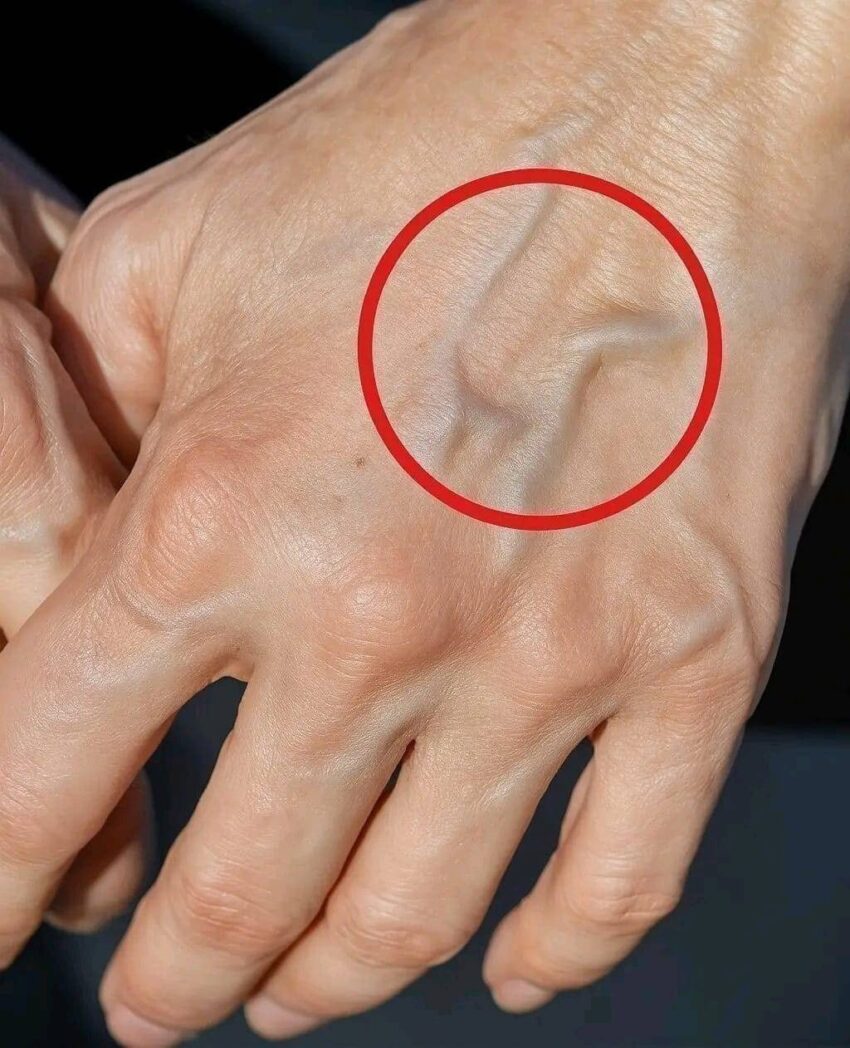
If You Have Visible Veins, It Means You Are… Lean, Active, or Just Hydrated? Here’s the Real Truth Behind Veiny Skin 🩸💪
Visible veins don’t always mean the same thing. Learn what vascularity really indicates about body fat, fitness, hydration, and health.
You Look Down and Notice It…
Maybe it’s your forearm after a workout.
Maybe it’s your hands in the morning light.
Or your legs after a long walk.
And suddenly, you see them clearly—those blue-green lines just beneath your skin.
Visible veins.
For some people, it feels like a fitness “badge of honor.” For others, it raises questions:
“Does this mean I’m in great shape… or is something going on with my body?”
The truth is more nuanced than social media makes it seem.
Visible veins can mean several different things—some related to fitness, others completely normal, and a few that depend on your physiology in the moment.
Let’s break it down properly.
First: What Are Visible Veins (Really)?
Visible veins—also called vascularity—are simply veins that appear closer to the surface of your skin.
They become noticeable when:
- Blood flow increases
- Body fat is lower
- Skin is thinner or more transparent
- Temperature or activity levels change
Your veins are always there. You’re just seeing them more clearly under certain conditions.
1. You May Have Lower Body Fat (But Not Always)
One of the most common assumptions is:
👉 “Visible veins = low body fat”
And sometimes, that’s true.
Why it happens:
When body fat decreases, there’s less tissue covering your veins, making them easier to see.
This is why athletes, bodybuilders, or very lean individuals often show more vascularity.
But here’s the important part:
You don’t need to be extremely lean to see veins. Genetics and other factors matter just as much.
2. You Might Be Physically Active or Pumped Up
Ever notice veins after:
- A workout
- Lifting something heavy
- Running or cardio
That’s because exercise increases blood flow and pressure in your muscles, pushing veins closer to the skin.
This is often called a “pump” in fitness culture.
What it means:
- Temporary increase in vascularity
- Completely normal response to activity
- Not a permanent body change
3. You Could Simply Be Well-Hydrated (Yes, Really)
Hydration plays a surprising role.
When your body is well-hydrated:
- Blood volume increases
- Circulation improves
- Veins can appear more prominent
But dehydration can also make veins more visible in some cases due to skin tightening—so it’s not always straightforward.
4. Your Genetics Play a Huge Role
This is where most people misunderstand things.
Some people naturally have:
- Thinner skin
- More superficial veins
- Higher natural vascularity
Even at higher body fat levels, they may still see visible veins.
Others may not see veins easily—even when very lean.
👉 Genetics = a major factor you cannot control.
5. Temperature Is a Hidden Factor
Your environment matters more than you think.
- Heat: Veins expand → more visible
- Cold: Veins contract → less visible
This is your body regulating temperature through blood flow.
That’s why veins often “pop” more in warm weather or after a hot shower.
6. You Might Be Experiencing Natural Age or Skin Changes
As skin changes over time:
- It may become thinner
- Collagen decreases
- Veins become more visible
This is a normal part of aging and doesn’t automatically indicate a health issue.
When Visible Veins Are NOT a Concern
In most cases, visible veins are:
- Normal
- Harmless
- Linked to lifestyle or genetics
You’ll often see them in:
- Athletes
- Lean individuals
- People after exercise
- Warm environments
When You Should Pay Attention
While vascularity is usually harmless, sudden changes can matter.
Consider checking with a healthcare professional if you notice:
- Sudden, unexplained swelling
- Pain in the veins
- Hard, rope-like veins
- Skin color changes around veins
These could indicate circulation issues or conditions that need attention.
Real-Life Scenario
Daniel, 29, gym-goer in California
- Noticed veins becoming more visible after starting strength training
- Initially worried something was wrong
- Later realized it was due to lower body fat and increased muscle pump
Result:
- Improved fitness awareness
- No medical issue
- Increased confidence in training progress
Common Myths About Visible Veins
❌ Myth 1: “Only extremely fit people have veins”
Not true. Genetics and temperature matter just as much.
❌ Myth 2: “Visible veins mean dehydration”
Not always. Hydration can actually increase vascularity in some cases.
❌ Myth 3: “It’s unhealthy to have visible veins”
False. It’s usually a normal anatomical variation.
❌ Myth 4: “Veins mean you’re losing weight”
Not necessarily. Temporary vascularity can happen anytime.
Simple Truth About Vascularity
Visible veins are influenced by a combination of:
- Body fat percentage
- Blood flow
- Genetics
- Temperature
- Activity level
- Skin thickness
There is no single meaning.
How to Naturally Improve Healthy Vascularity (If You Want To)
If fitness visibility is your goal:
- Build lean muscle through strength training
- Stay hydrated
- Improve cardiovascular health
- Reduce excess body fat gradually
- Eat balanced, nutrient-rich meals
But remember: vascularity is a side effect, not a requirement of health.
Frequently Asked Questions
1. Are visible veins a sign of good health?
Usually yes—but not exclusively. It depends on multiple factors.
2. Does low body fat always mean visible veins?
No. Genetics and skin thickness also matter.
3. Why do my veins pop after exercise?
Increased blood flow and muscle pump.
4. Can dehydration make veins more visible?
Sometimes, but it’s not a reliable indicator.
5. Are visible veins permanent?
No. They can change based on activity and temperature.
6. Do older people get more visible veins?
Often yes, due to thinner skin and reduced collagen.
Action Checklist
- Understand your natural baseline
- Don’t assume health issues based on appearance alone
- Stay hydrated consistently
- Monitor sudden or painful changes
- Focus on overall fitness, not just vascularity
Visible veins don’t define your health, fitness, or worth.
They are simply the result of how your body, genetics, environment, and activity interact in real time.
Sometimes they mean you’re lean.
Sometimes they mean you just worked out.
Sometimes they mean nothing at all.
And that’s the real truth.
It’s easy to overanalyze what you see in the mirror.
But your body isn’t sending hidden messages through every vein—it’s simply functioning as it should.
If this helped clear things up, share it with someone who’s ever wondered about their “veiny” hands—or drop a comment with your experience.