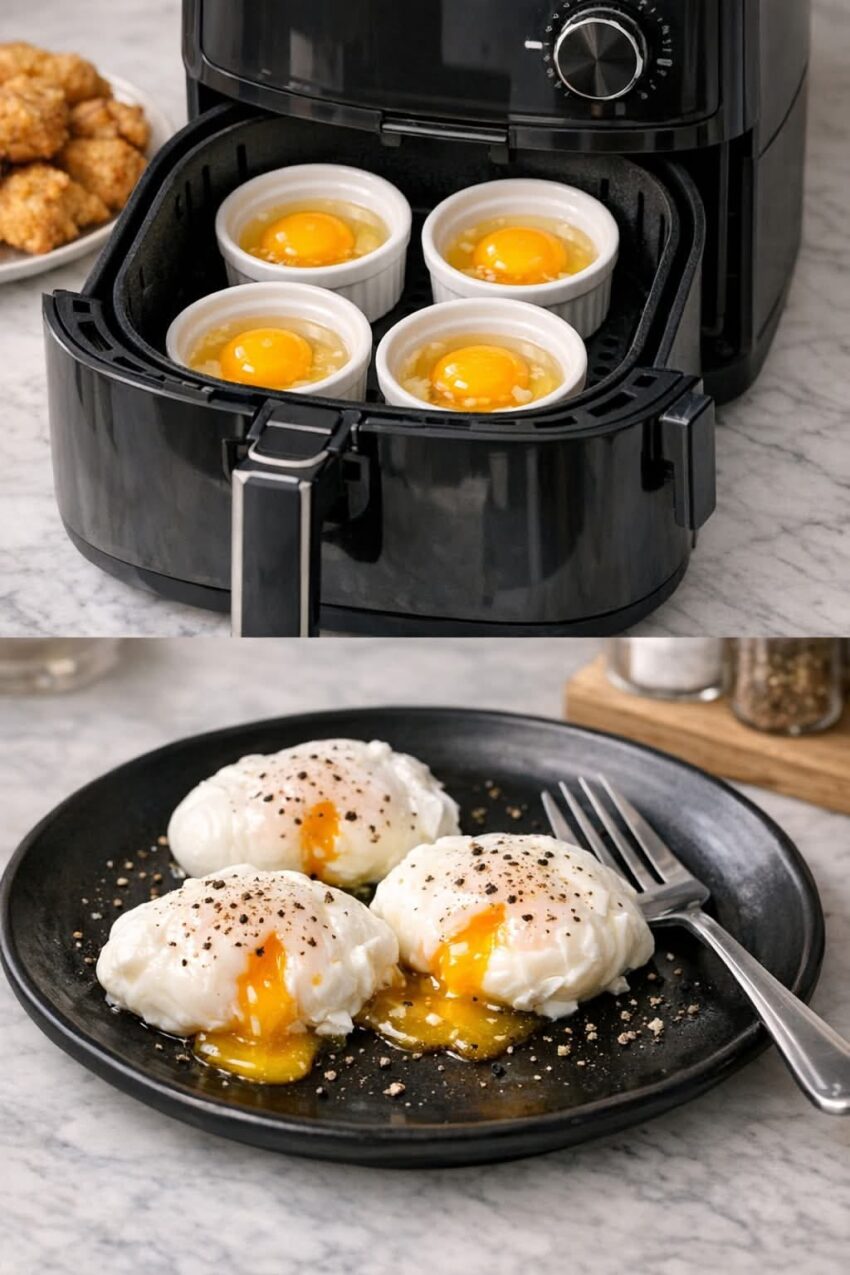
Air Fryer Poached Eggs: The Easiest No-Fuss Way to Get Perfect Eggs Every Time
There’s something quietly luxurious about a perfectly poached egg.
That delicate white, gently wrapped around a golden, runny yolk—just waiting to spill over warm toast or a fresh avocado slice. It feels like something you’d order at a cozy brunch spot, not something you’d casually make at home on a busy morning.
But let’s be honest… traditional poaching can be frustrating.
Boiling water, swirling vinegar, watching closely so it doesn’t fall apart—it’s a lot before you’ve even had coffee.
That’s where the air fryer changes everything.
No swirling. No stress. No babysitting the stove.
Just a simple, hands-off method that gives you beautifully soft, perfectly cooked poached eggs—every single time.
Why You’ll Love This Recipe
- No stove required – perfect for busy mornings
- Beginner-friendly – no special technique needed
- Consistent results – no guesswork
- Minimal cleanup – fewer dishes to wash
- Great for meal prep
- Works in small kitchens or dorms
- Perfect for healthy eating – high protein, low calorie
Ingredients (With Exact Measurements)
This recipe keeps it simple and reliable.
For One Serving:
- 1 large egg
- 2–3 tablespoons water (30–45 ml / 1–1.5 oz)
- Pinch of salt (optional)
- Pinch of black pepper (optional)
Optional Add-Ins:
- Chili flakes
- Fresh herbs (parsley, chives)
- Garlic powder
- A drizzle of olive oil
Nutritional Information (Per Egg)
- Calories: ~70 kcal
- Protein: 6g
- Carbohydrates: 0g
- Fats: 5g
- Fiber: 0g
Dietary Notes:
- Naturally gluten-free
- Low-carb / keto-friendly
- High in protein and healthy fats
Kitchen Tools Needed
- Air fryer
- Small oven-safe ramekin or silicone cup
- Spoon
- Tongs (optional, for handling hot ramekin)
Step-by-Step Preparation (Detailed)
Step 1: Preheat Your Air Fryer
Set your air fryer to 350°F (175°C) and let it preheat for about 3–5 minutes.
Pro Tip:
Preheating helps the egg cook evenly from the start.
Step 2: Prepare Your Ramekin
Add 2–3 tablespoons of water into a small ramekin.
This water is key—it creates a gentle cooking environment that mimics traditional poaching.
Step 3: Crack the Egg
Carefully crack your egg directly into the water.
Try to keep the yolk intact for that classic poached look.
Step 4: Place in Air Fryer
Carefully place the ramekin into the air fryer basket.
Cook at 350°F (175°C) for:
- 5–6 minutes for a runny yolk
- 7–8 minutes for a firmer yolk
Step 5: Check for Doneness
The egg white should be set, while the yolk remains soft (unless you prefer it firm).
Texture cue:
- White = opaque and firm
- Yolk = slightly jiggly
Step 6: Remove and Serve
Use tongs or a cloth to carefully remove the ramekin.
Gently scoop the egg out with a spoon and place it on your dish.
Expert Cooking Tips & Mistakes to Avoid
1. Don’t Skip the Water
Without water, the egg won’t “poach”—it will bake instead.
2. Use the Right Size Ramekin
Too large = egg spreads too thin
Too small = uneven cooking
3. Adjust for Your Air Fryer
All models vary slightly—test once and tweak timing.
4. Avoid Overcooking
Even 1 extra minute can fully set the yolk.
Variations & Customizations
🌶️ Spicy Version
- Add chili flakes or hot sauce
- Sprinkle smoked paprika after cooking
🥑 Healthy Brunch Version
- Serve over avocado toast
- Add cherry tomatoes and spinach
👶 Kid-Friendly Version
- Serve on buttered toast
- Lightly mash the yolk for easy eating
🧀 Savory Upgrade
- Add grated cheese after cooking
- Pair with sautéed mushrooms
Storage & Reheating Instructions
Fridge:
- Best eaten fresh
- Can store for up to 1 day, but texture may change
Freezer:
- Not recommended
Reheating:
- Microwave for 10–15 seconds
- Note: yolk may firm up
Serving Suggestions
Take your air fryer poached eggs to the next level:
- On toasted sourdough with avocado
- Over sautéed greens
- On top of a grain bowl
- With smoked salmon for a brunch-style meal
- As a protein boost for salads
FAQs
1. Are air fryer poached eggs the same as traditional?
They’re very similar in texture, though slightly less delicate.
2. Can I cook multiple eggs at once?
Yes—just use separate ramekins.
3. Why is my egg overcooked?
Cooking time may be too long—reduce by 1 minute.
4. Can I use silicone molds?
Yes, they work great and are easy to clean.
5. Do I need to cover the ramekin?
No, it’s not necessary.
6. Can I make them without preheating?
You can, but results may be less consistent.
If you’ve ever struggled with poached eggs—or avoided making them altogether—this method is your shortcut to getting it right every time.
No stress. No guesswork. Just simple, satisfying results.
Try it tomorrow morning and see the difference for yourself.
And when you do, come back and share how it turned out—or your favorite way to serve it. You might just inspire someone else’s next breakfast.